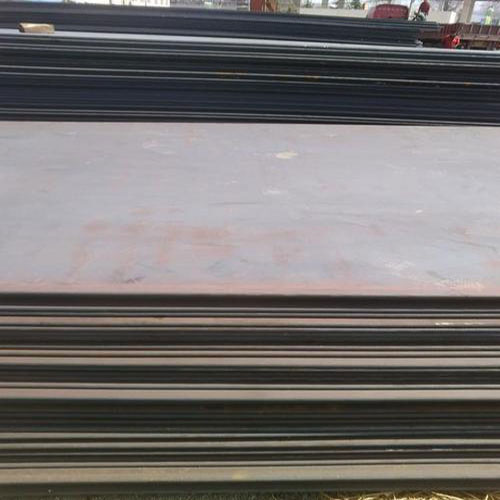
Buyers often specify thickness very carefully but leave flatness undefined. That gap causes trouble because many fabrication problems that look like cutting or forming issues actually begin with the incoming sheet shape. Carbon steel sheet that is technically on grade can still perform badly if flatness is unstable.
For production teams, words like wave, buckle, and coil set are not minor details. They affect nesting efficiency, fixture contact, bend consistency, and scrap rate. For buyers, that means flatness belongs in the commercial discussion, not only in the workshop complaint file.
Why flatness matters more than many buyers expect
Flat sheet loads better, cuts more predictably, and behaves more consistently in forming and welding. Sheet with visible shape distortion may still look acceptable in the warehouse, but once it reaches a laser table or forming line, the cost becomes obvious. Operators spend time correcting position, slowing output, or rejecting parts that should have been routine.
This is why sheet flatness should be matched to the real process, not judged only by casual visual inspection.
Common flatness problems in real supply
Buyers may encounter edge wave, center buckle, residual coil memory, or stress-related movement after cutting. These issues are not always caused by one single mistake. They can come from source material condition, rolling history, leveling quality, slitting, or how the sheet is packed and stored before use.
If the project depends on high-yield nesting or accurate formed parts, those shape issues should be discussed before the material is booked, not after the production team raises a claim.
Different processes need different flatness expectations
A sheet used for general welded brackets does not need the same flatness standard as a sheet used for precision laser cutting, exposed panels, or tightly formed parts. Buyers should not ask for the highest possible flatness by default, but they should define what the fabrication route requires. Over-specifying flatness raises cost. Under-specifying flatness raises waste.
The best buying position is to align flatness expectation with the part function and the shop process that follows.
How to write a better RFQ
Instead of treating flatness as an unwritten assumption, tell the supplier whether the sheet will be laser cut, bent, welded in fixtures, or used for visible finished surfaces. Ask what leveling process is applied and whether the source is known for stable processing behavior. If repeat orders are expected, ask for lot-to-lot consistency, not just acceptance of one delivery.
This gives the supplier a real basis to quote the correct product rather than the cheapest product.
A useful rule for buyers
If sheet shape will affect output, yield, or appearance, flatness is a specification issue. If it will not, do not pay for more precision than the job needs. The right buying decision is not maximum flatness at any cost. It is fit-for-process flatness with predictable results.
To tighten the purchasing standard, pair this topic with our carbon steel plate thickness tolerance guide, the pre-shipment inspection checklist, and the relevant Carbon Sheet & Plate product range.