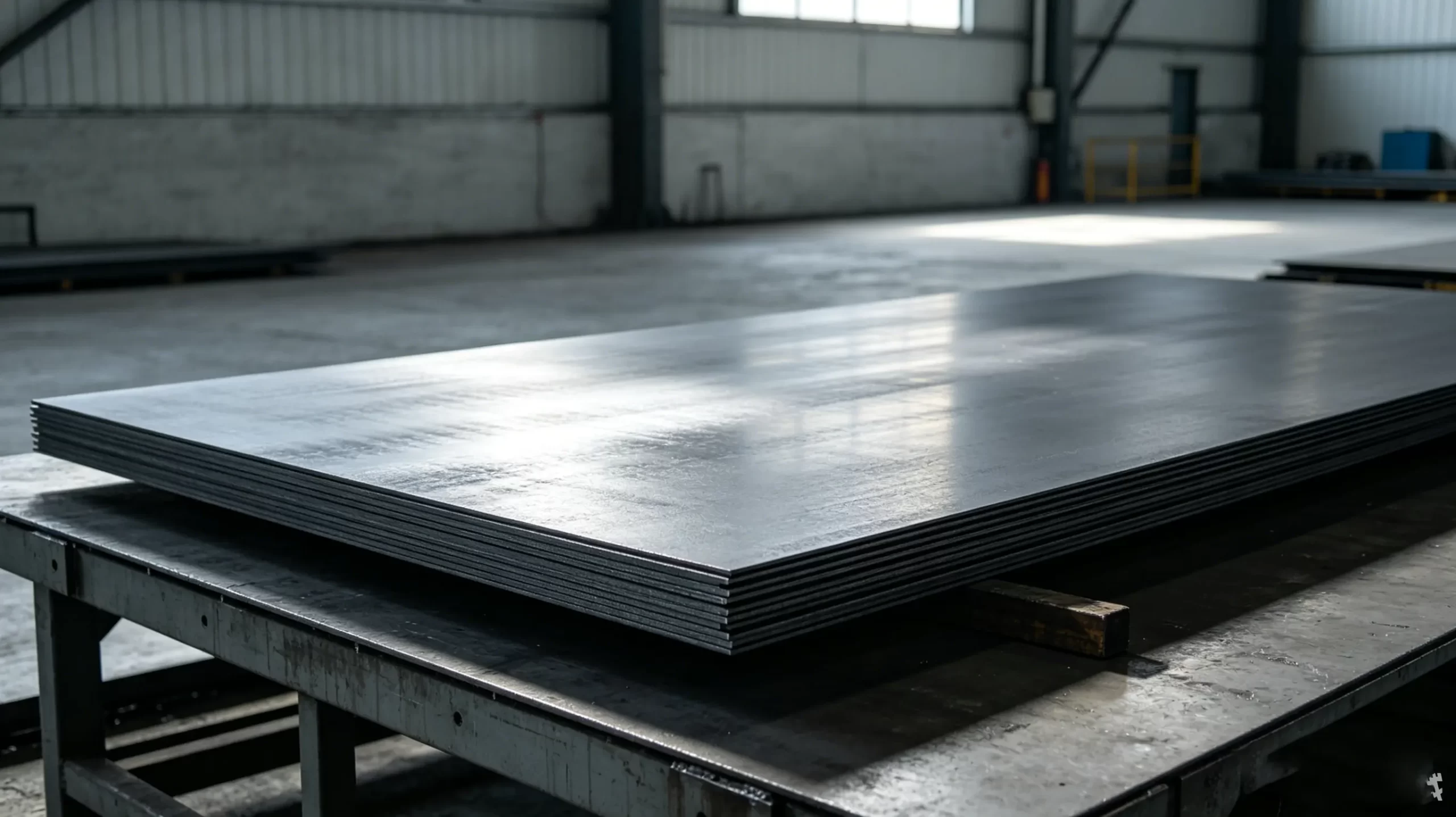
When a buyer says carbon steel sheet will be bent, that is useful information only if it changes the purchase specification. Too often, sheet is bought like general stock and only later does the fabrication team discover cracking, springback problems, inconsistent bend results, or unnecessary tooling adjustments.
Bending performance depends on more than nominal grade. Thickness consistency, material condition, and the relationship between the chosen grade and the forming severity all affect whether the job runs smoothly.
Grade selection should follow the forming demand
Some buyers focus only on strength level, but higher strength does not automatically mean easier forming. If the part includes tight bend radii, repeated forming, or appearance-sensitive edges, the most economical grade may not be the one with the highest strength claim. A sheet that looks strong in the quotation can create shop losses if it is poorly matched to the bend requirement.
The key question is simple: how demanding is the bend geometry, and what consistency does the shop need from batch to batch?
Thickness variation changes bending behavior
Even modest thickness variation can change bend force, final angle, and repeatability across production runs. This matters especially in serial production, where tooling is set for predictable material behavior. If the sheet varies too much, the workshop may spend time correcting parts instead of making them.
For buyers, this means thickness tolerance is not just a certificate topic. It affects production cost directly.
Surface and edge quality still matter
Bending problems are not always caused by the press brake. Surface defects, edge condition after blanking, and upstream cutting quality all influence how the part behaves in forming. If the sheet will be laser cut first and bent later, the full process route should be considered when material is ordered.
That is why the supplier should know whether the material is for structural blanks, visible housings, heavy brackets, or tighter fabricated components.
Buy for repeatability, not just compliance
A compliant mill test certificate does not guarantee easy forming. Buyers should ask whether the sheet source is stable, whether similar material is supplied regularly for fabrication work, and whether there are known recommendations by thickness range or grade family. Repeatability is what protects the production line.
When material is purchased only by a generic name, the workshop absorbs the variability.
A practical buying approach
Before ordering carbon steel sheet for bending, define the bend severity, thickness range, downstream cutting method, and appearance requirement. Then match the grade and supply condition to that real process. This is usually enough to prevent the most common forming complaints before they happen.
If your formed parts are still in the grade-selection stage, compare our A36 vs Q355 guide with Q235 Carbon Steel Plate, Q345B Carbon Steel Plate, and the wider Carbon Sheet & Plate category.