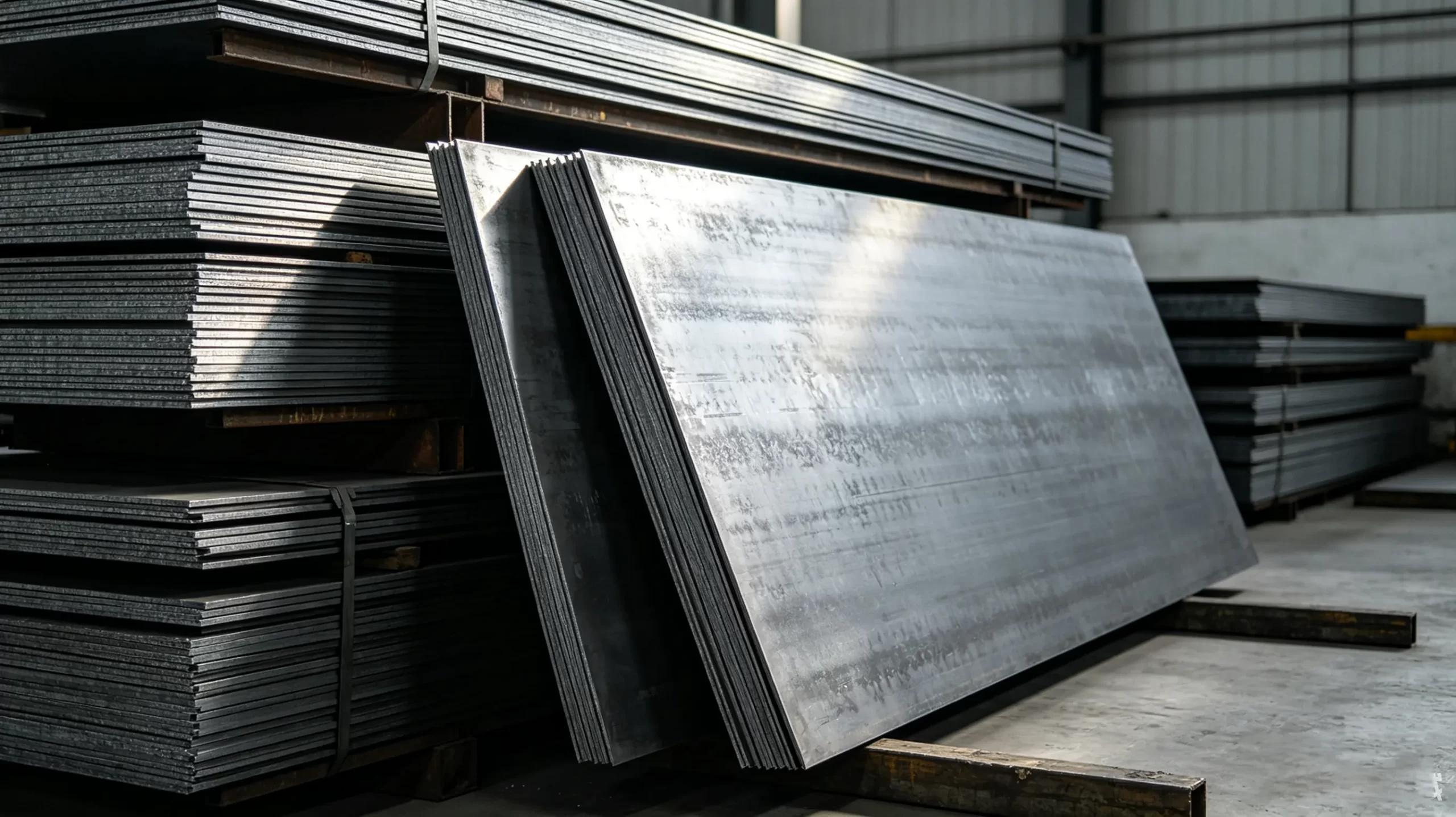
Buyers often ask whether a supplier can provide carbon steel sheet for laser cutting, but that question is too broad to protect production quality. Laser cutting performance depends less on the phrase laser grade and more on a few practical details that should be settled before the order is placed.
If the sheet is not flat enough, if the surface carries inconsistent scale, or if the thickness range is not aligned with the cutting program, the fabrication team will feel the problem immediately. That is why laser cutting buyers should specify for process stability, not only for tonnage price.
Thickness is not just a drawing value
In laser cutting, nominal thickness alone does not tell the whole story. What matters in production is how stable the actual thickness is across the sheet and from lot to lot. A part program built around one sheet condition can start losing edge quality or cutting speed when the delivered material shifts outside expected tolerance.
This is especially important for repeat production. If the job will run over multiple purchase batches, buyers should ask how the supplier controls thickness consistency and whether the material source is stable enough for ongoing programs.
Flatness affects both nesting and edge quality
Flatness is one of the first things operators notice. Sheet with wave, center buckle, or residual coil set can interfere with focus stability, part nesting, and automated loading. In practical terms, flatness problems reduce output long before anyone starts arguing about chemistry or standards.
For buyers, this means that the best laser-cutting sheet is often the one that reaches the table ready to run, not merely the one that meets a basic grade requirement on paper.
Surface condition changes how smoothly cutting starts
Mill scale, oil, rust staining, and inconsistent surface condition can all affect cutting behavior. This does not mean carbon steel sheet must look decorative. It means the surface should be predictable enough that the cutting line does not spend time compensating for avoidable variation.
Buyers should confirm whether the material is hot rolled or cold rolled, whether it is supplied oiled or dry, and what level of scale or cleaning condition is normal. Those answers directly influence cutting stability and secondary cleaning work.
Ask for the sheet condition that matches the downstream process
If the project needs tight parts, clean edges, or fast, repeatable output, it is better to specify the process requirement clearly than to ask for a generic steel sheet quote. Tell the supplier whether the material will be laser cut only, laser cut and bent, or laser cut and painted. Each route changes what matters most in the sheet supply.
A cheaper sheet that slows the cutting line is rarely the cheaper buying decision. Stable process yield matters more than a headline price difference.
A simple buying checklist
Before ordering carbon steel sheet for laser cutting, confirm thickness range, actual tolerance expectations, flatness, surface condition, and whether the application prefers hot rolled or cold rolled material. If repeat production is involved, ask for consistency by lot and not just one-time sample performance.
For related fabrication planning, review Laser vs Plasma vs Waterjet selection, browse our cold rolled carbon steel sheet supply options, and compare them with the broader Carbon Sheet & Plate category.