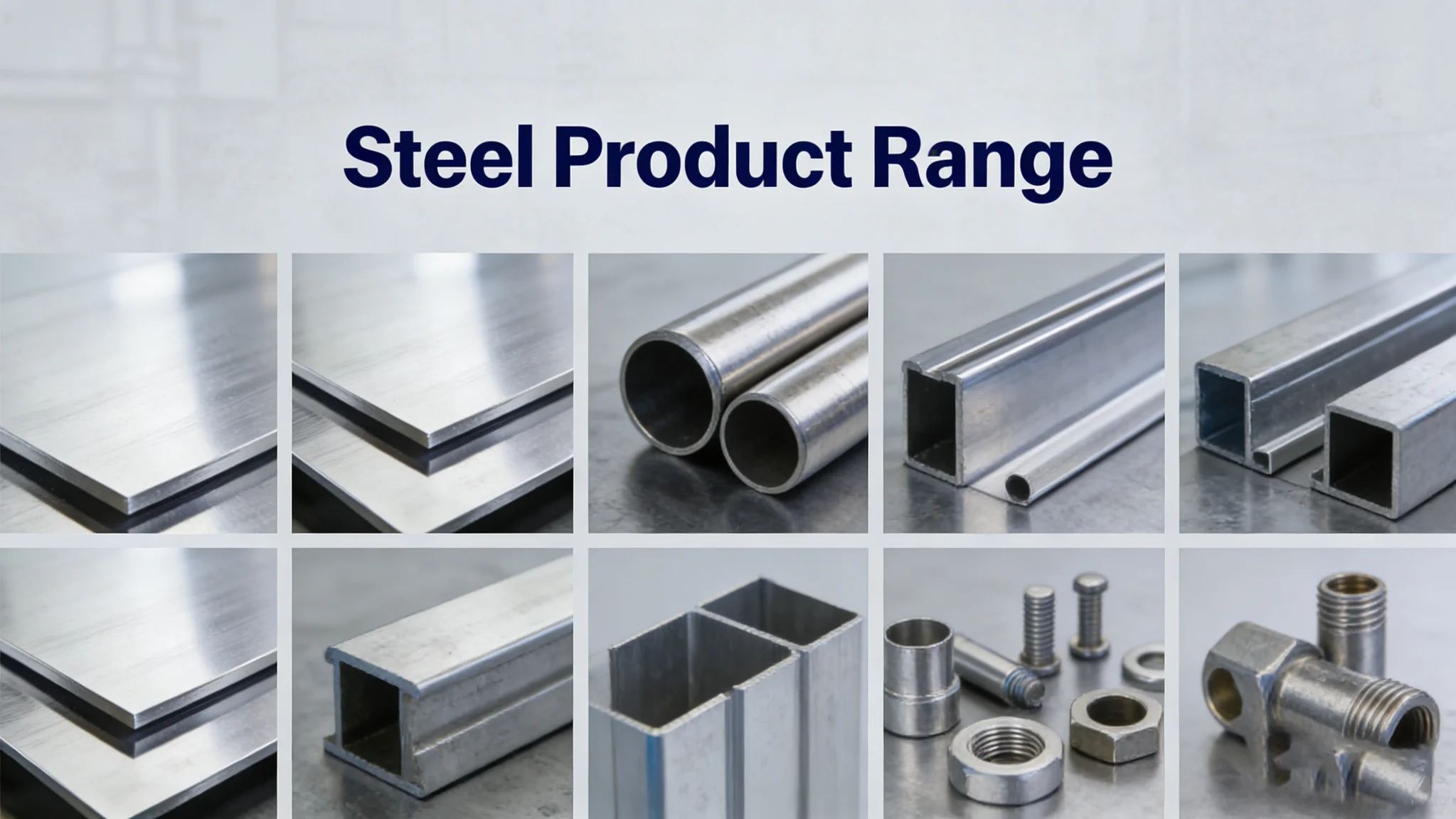
Importing steel from China works best when the buyer treats it as an execution process, not a price hunt. A low quote is only one part of the result. The real outcome depends on whether the supplier understood the specification, controlled production, packed the goods for the route, issued clean documents, and kept the shipment traceable from mill to delivery.
That is why strong buyers build the order in stages. They do not start with “send me your best price.” They start with a usable specification pack, then screen suppliers against that requirement, then control the order through inspection, shipping, and arrival.
Start the RFQ with a specification pack, not a vague inquiry
A workable RFQ identifies product form, grade, governing standard, dimensions, finish, quantity, packing expectation, destination market, and intended application. If you are comparing stainless steel products, carbon steel, and galvanized material, each family should be described clearly enough that the supplier cannot substitute a near match and call it equivalent. Good RFQs also state document requirements up front, especially if you need third-party inspection or specific certificate formats.
Choose suppliers by execution fit
The right supplier for one order may be the wrong supplier for the next. Buyers should ask who will actually produce the order, whether the supplier exports the same product type regularly, and how they handle traceability, packing, and claims. A trading company with tight process control can be a better partner than a mill that communicates poorly. The point is not to find the largest catalog. It is to find the supplier whose normal workflow matches your material and your market.
This is where articles like questions to ask a steel supplier become practical rather than theoretical. The answers will tell you whether the supplier is quoting from real capacity or from a spreadsheet.
Compare offers on landed risk, not FOB alone
When buyers compare offers, they should look at more than unit price. Lead time, packing scope, certificate promise, payment terms, partial shipment policy, and freight responsibility can change the real cost quickly. A cheaper FOB offer can become more expensive than a higher CIF offer once inland transport, inspection, packing upgrades, and port handling are added back in. The same logic applies across products: flat stock, pipe, and coil load very differently and do not carry the same freight risk.
Control production before the vessel window closes
Once the order is placed, buyers need a simple control rhythm: confirm the final spec sheet, confirm the production schedule, review photos or progress evidence, and plan the inspection before packing is finished. Waiting until the container is booked is too late. A practical first order should include more control points than a repeat order, because the buyer is still testing whether the supplier’s promises match the factory reality.
For many projects, the most valuable checkpoint is the pre-shipment inspection. It is far easier to reject or rework material at origin than after customs clearance at destination.
Documents and customs are part of sourcing, not afterthoughts
Every steel order should leave the factory with a document set that matches the physical cargo. Invoice, packing list, bill of lading, mill test certificate, and origin paperwork should be reviewed before the cargo gets too far down the road. The article on steel import documents is worth using as a line-by-line check, especially for first shipments into a new market. Customs issues are often created at the moment of document drafting, even though they do not appear until arrival.
Build the first shipment so you can learn from it
Importers do not need to solve every problem on the first order, but they do need to learn from it. After arrival, review the order against five practical questions: Did the material match the approved spec? Was the lead time realistic? Did the packing protect the goods? Were the documents clean enough for customs? Was communication good enough when something changed? That review tells you whether to scale up, adjust the process, or look for another supplier.
Importing steel from China becomes easier when the workflow is repeatable. Clear RFQs, disciplined comparison, inspection before shipment, and document control turn a risky purchase into a manageable supply channel.
Related sourcing pages
If you are planning an order now, these pages connect the sourcing workflow to specific product and logistics decisions:
- Stainless steel category for flat, pipe, and coil sourcing options.
- Carbon steel category for structural and industrial orders.
- Steel import documents checklist for the paperwork side of the order.
- Questions to ask a steel supplier when screening exporters.
- Steel shipping container guide for booking and loading decisions.