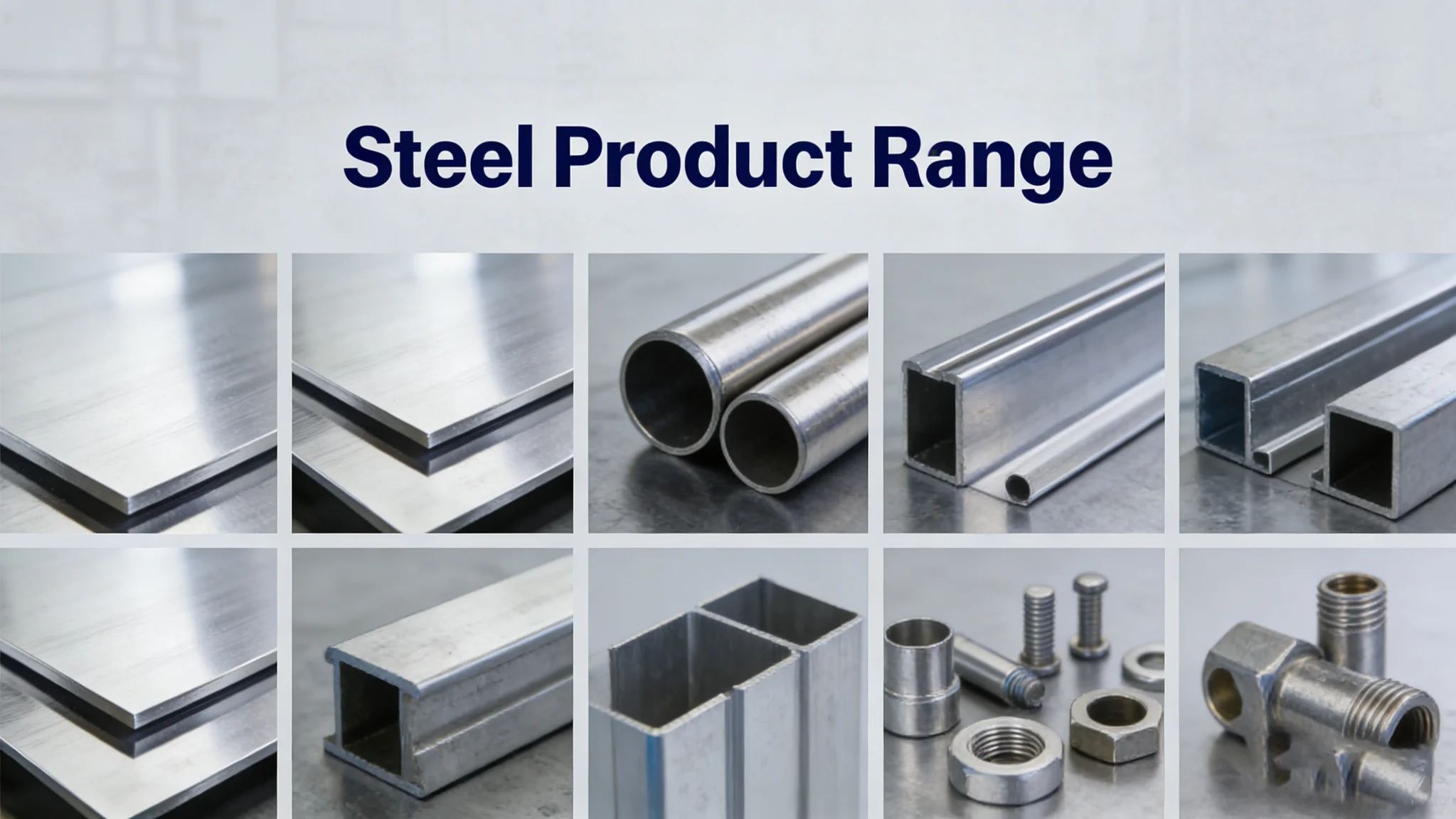
Steel container planning is not just a question of how many tons fit in a box. The real job is to balance weight, dimensions, packing protection, unloading method, and the route rules that apply after the container leaves the supplier’s yard. Buyers who plan only around the nominal container size usually discover the missing constraint too late.
For steel cargo, the most useful first question is simple: is this shipment limited by weight or by space? Once that is clear, the container choice becomes much easier.
Start by deciding whether the shipment is weight-limited or space-limited
Heavy flat products such as carbon steel plate usually hit payload limits before the container is physically full. Long but lighter material may run out of usable space first. Finished or protected stainless products can also become space-limited because separators, film, and wooden supports take up room. This is why a 20-foot container often works better for dense cargo, while longer or lighter loads may justify a 40-foot option.
Different product families waste space in different ways
Plate and sheet stack efficiently, but their weight builds fast. Buyers need to confirm stack height, dunnage thickness, and whether the loading plan still allows safe unloading at destination.
Pipe and tube create empty space around the bundle shape, especially when several diameters are mixed. Orders from the stainless pipe and tube category or standard carbon pipe lines should be planned around bundle geometry, not just theoretical tonnage.
Coil is dense and stable only when it is blocked and oriented correctly. The cargo may reach legal or practical weight limits quickly, which makes loading discipline more important than chasing a few extra kilograms.
Profiles and sections can be awkward because nested shapes save space, but long projections and uneven weight distribution can create handling problems. The profiles and sections category is a good reminder that geometry matters as much as tonnage.
Why 20GP often beats 40-foot equipment for heavy steel
Buyers sometimes assume a longer container must be better. For many steel orders, the opposite is true. A 20GP can be the better tool because it carries dense cargo more efficiently and stays closer to axle, road, and terminal limits used in real transport. A 40-foot container helps when product length or total cube matters, but it does not magically remove downstream weight restrictions.
Packing is part of the loading plan
Ocean transport adds movement, humidity, and repeated handling. Packing should therefore be planned together with loading, not added at the last minute. Stainless and finished surfaces may need paper, film, or separators. Coated products may need stronger edge protection. Any cargo moving through humid conditions should be reviewed for desiccant use, wrap condition, and drainage risk. A good loading plan protects the material without making it impossible to inspect or unload.
Confirm unloading before you confirm loading
A supplier can load a container in a way that maximizes payload but creates chaos at destination. Buyers should confirm whether the receiving side has forklift access, crane access, coil hooks, spreader bars, or enough floor space to unload long pieces safely. If not, the packing and loading sequence should be adjusted. The most efficient outbound load is not efficient if the receiver cannot handle it.
Information worth confirming before booking
- Actual product dimensions and theoretical weight.
- Bundle, skid, or coil arrangement.
- Maximum practical payload for the route, not just the catalog figure.
- Whether the destination needs easy-access unloading or strict sequencing.
- What level of moisture protection is required for the voyage.
Better steel container planning usually saves money twice: once in freight efficiency and again in fewer damage and unloading problems after arrival.
Plan the shipment with these pages
These related pages help turn a rough loading idea into a cleaner shipment plan:
- Calculating steel weight formulas for theoretical weight checks before booking.
- How to import steel from China for the wider logistics workflow.
- Pre-shipment steel inspection to combine loading approval with condition checks.
- Galvanized products category for coated cargo that needs extra packing attention.