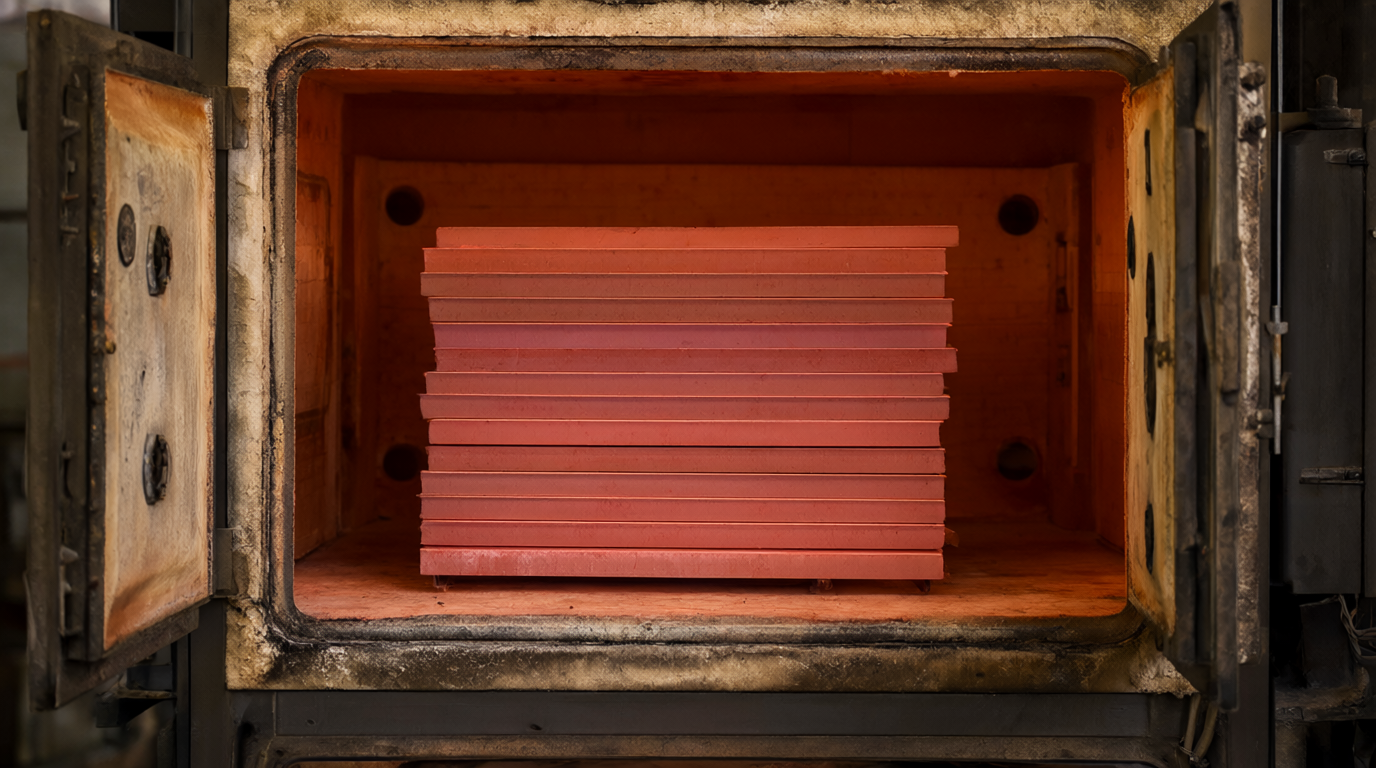
Annealed, Normalized, Quenched and Tempered, or TMCP: How Delivery Condition Changes What You Receive
Two orders for the same grade at the same thickness can arrive with completely different mechanical properties, machinability, and dimensional behaviour — because the delivery condition was different. Annealed, normalized, quenched and tempered, thermomechanically rolled, and as-rolled are not interchangeable labels. They are different thermal histories, and they are the reason a drawing that says “S355” is not a complete specification.
The gap is that delivery condition is often left to the mill’s discretion. That is usually fine for commodity structural work, and completely unacceptable when the part will be machined, formed, welded under restraint, or operated at low temperature.
This guide covers the five conditions you will meet on a real purchase order, what each one does to the steel, and how to write the condition into the specification so it cannot be substituted.
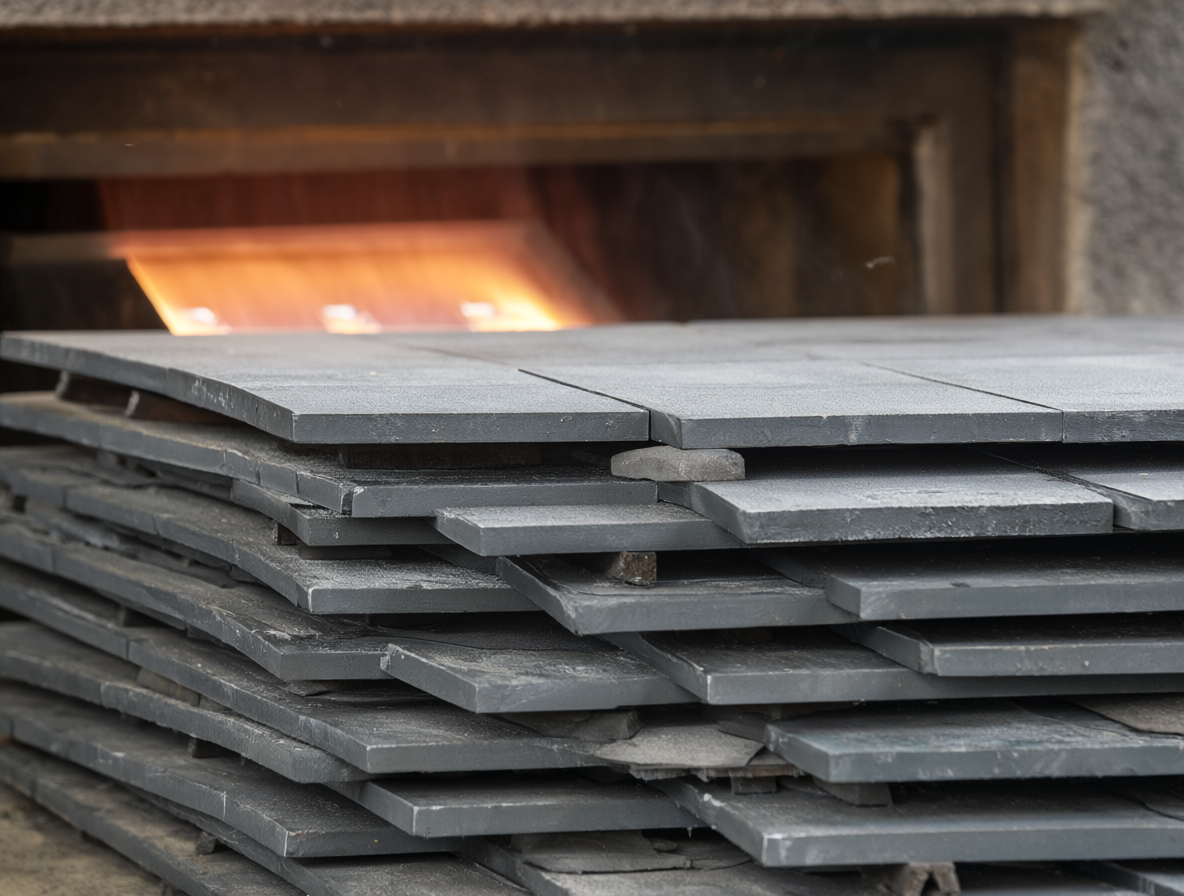
The Five Delivery Conditions
| Condition | Process | What it achieves | Typical products |
|---|---|---|---|
| As-rolled (AR) | Hot rolled, controlled cooling only | Lowest cost; properties depend on the rolling schedule | General structural plate, coil |
| Normalized (N) | Heated above the critical temperature, air cooled | Uniform fine grain, consistent properties, good toughness | Pressure vessel plate, structural sections, thick plate |
| Quenched and tempered (Q&T) | Austenitized, rapidly quenched, then tempered | High strength with retained toughness; strength from tempering temperature | High-strength plate (S690, A514), wear plate, bar |
| Thermomechanically controlled (TMCP) | Controlled rolling temperature and deformation, then accelerated cooling | Fine grain without a separate heat treatment; good toughness at lower alloy | Line pipe, high-strength structural plate |
| Annealed (A) | Heated and slowly cooled (furnace cooling) | Softest condition; maximum ductility, relief of internal stress | Cold-worked sheet, bar for machining, tube |
| Solution annealed | Heated high, rapidly cooled (stainless) | Dissolves carbides; restores corrosion resistance and ductility | Austenitic and duplex stainless |
Two of these are frequently confused and worth separating immediately. Normalizing is a full transformation treatment intended to refine and homogenise the structure — it is applied to carbon and low-alloy steel. Solution annealing is a stainless-steel treatment that dissolves chromium carbides to restore corrosion resistance; it involves much higher temperature and rapid cooling. A drawing that says “annealed” for a 316L part almost certainly means solution annealed, and the two produce very different results.
As-Rolled: The Default You Should Question
When no condition is specified, you normally receive as-rolled material. For general structural fabrication this is appropriate and cheapest — the rolling schedule is designed to meet the grade’s minimum properties, and there is no reason to pay for a separate heat treatment.
It becomes a problem in four situations:
- Thick sections. Heavy plate rolled as-rolled has less reduction and a coarser structure; toughness and through-thickness uniformity are worse than normalized plate of the same grade.
- Machining. As-rolled structure is banded and non-uniform, so machined surfaces can show inconsistent finish and dimensional drift after cutting.
- Restrained welding. Higher residual stress and less uniform structure increase cracking risk in heavily restrained joints.
- Low-temperature service. Charpy requirements at −20 °C and below are much more reliably met in normalized or TMCP material.
If your application falls into any of these, name the condition. “S355J2” alone does not tell the mill to normalize — it tells the mill to meet a composition and impact requirement, which can be achieved as-rolled or normalized.
Normalizing: Uniformity and Toughness
Normalizing heats the steel into the austenite range (roughly 880–950 °C for structural steels), holds it to allow homogenisation, then cools in air. The result is a uniform, fine-grained ferrite-pearlite structure with consistent properties across the thickness and along the length.
| Benefit | Why it matters |
|---|---|
| Grain refinement | Better toughness and lower ductile-brittle transition temperature |
| Structural uniformity | Consistent hardness and machinability across a large plate; less banding |
| Residual stress relief | Reduces distortion after machining or cutting |
| Property reliability | Impact and tensile values are more consistent heat to heat |
Normalizing appears in the grade designation for some standards. In EN 10025, the “N” in grades such as S355N and S355NL indicates normalized delivery; the “NL” grades extend impact testing to −50 °C. In ASTM, A516 pressure vessel plate is normally supplied normalized, and the specification requires it above certain thicknesses.
The cost and lead-time consequence is real. Normalizing requires a furnace pass, which for thick plate can be slow and is priced per tonne. It also introduces a risk: if the cooling rate is uneven, or the plate is not properly supported, distortion can occur and require straightening. Ask whether the mill normalizes in-house or subcontracts, because that affects both lead time and traceability.
Quenched and Tempered: Strength From the Temper
Q&T steel is austenitized, quenched rapidly (water or accelerated) to form martensite, then tempered at a controlled temperature to restore toughness. The final strength is set largely by the tempering temperature — lower tempering gives higher strength and lower toughness; higher tempering gives the reverse.
| Characteristic | Implication for buyers |
|---|---|
| High strength, thinner sections | Weight saving in structures and equipment |
| Yield ratio is high | Typically 0.85–0.95; little reserve between yield and fracture |
| Welding is more demanding | Requires qualified procedures, controlled heat input, often preheat |
| Heat is the enemy | Cutting, welding, or straightening above the tempering temperature softens the steel locally |
| Cannot be re-normalized | Re-heating destroys the Q&T properties; the plate cannot be restored without full re-treatment |
The last two points cause most field problems. A Q&T plate that is flame-cut and then ground aggressively can develop a softened heat-affected zone at the cut edge. A Q&T plate that is welded without controlling heat input can lose strength in the HAZ. Neither is a material defect — both are consequences of applying thermal processes to steel whose properties depend on its thermal history.
Some standards cap the maximum tempering temperature or specify that the steel shall not be heated above a certain level after delivery. If your fabrication involves significant heat, check this before ordering Q&T material.
TMCP: High Strength Without a Separate Heat Treatment
Thermomechanically controlled processing achieves fine grain and high strength through controlled rolling temperatures, controlled deformation, and accelerated cooling — without a subsequent normalizing or quenching step. It is now the dominant route for high-grade line pipe and much high-strength structural plate.
| Advantage | Detail |
|---|---|
| Lower alloy content | Fine grain does the work that alloying would otherwise do — better weldability at the same strength |
| Good toughness | Fine grain gives a low transition temperature |
| Lower carbon equivalent | Easier welding than a Q&T or heavily alloyed equivalent |
| Energy and cost | Avoids a second furnace pass |
The catch: TMCP properties are process-dependent and not reproducible by heat treatment. You cannot take TMCP plate, normalize it, and expect the same properties — normalizing will coarsen the structure and lose the benefit. This matters if a fabricator plans post-delivery heat treatment such as stress relief or hot forming. If stress relief is required, the temperature must be limited, and the mill should be told so it can confirm the plate tolerates it.
TMCP plate is also more sensitive to forming strain. Cold forming beyond a modest strain can reduce toughness, and some specifications require impact testing after strain ageing for formed components.
Annealing and Solution Annealing
Annealing is used where softness and ductility matter more than strength: cold-rolled sheet before deep drawing, bar for high-speed machining, cold-drawn tube that needs to be bent or flared.
| Type | Applied to | Purpose |
|---|---|---|
| Full anneal | Carbon and alloy steel | Softest condition, maximum ductility, relief of cold-work stress |
| Spheroidize anneal | High-carbon and bearing steel | Carbides become spheroids — best machinability and formability for bearing and tool steels |
| Stress relief anneal | Welded or machined parts | Reduces residual stress without changing structure; lower temperature than full anneal |
| Solution anneal | Austenitic and duplex stainless | Dissolves carbides and sigma phase; rapid quench prevents re-precipitation |
For stainless, solution annealing is not optional in some situations. Welded 304 or 316 in thick sections, or duplex stainless after welding, may have chromium carbide or sigma phase precipitation that reduces corrosion resistance and toughness. A solution anneal followed by rapid cooling restores the properties — but it is a high-temperature process that can cause distortion, and it must be followed by pickling and passivation because the surface oxidizes.
The duplex caution: duplex stainless must be cooled quickly enough through the 475 °C and sigma-forming ranges to avoid embrittlement. Slow cooling or an inadequate quench leaves sigma phase, and the material will fail impact testing and corrosion testing. Specify the quench method, not just the temperature.
How Condition Shows Up in the Grade Designation
| Designation | Condition implied |
|---|---|
| S355JR / S355J0 | As-rolled permitted; impact at +20 / 0 °C |
| S355J2 / S355K2 | As-rolled or normalized permitted; impact at −20 °C |
| S355N / S355NL | Normalized; NL extends impact to −50 °C |
| S355M / S355ML | TMCP; ML extends impact to −50 °C |
| S690Q / S690QL | Quenched and tempered; QL extends impact to −40 °C |
| ASTM A516 Gr.70 | Normally normalized; normalized required above certain thickness |
| ASTM A514 | Q&T alloy steel plate |
| API 5L X70 (PSL2) | TMCP or Q&T depending on grade and agreement |
| 304 / 316L (ASTM A240) | Solution annealed unless ordered otherwise |
The EN letter suffixes are the most useful shorthand in the industry once you know them: N = normalized, M = TMCP, Q = quenched and tempered. If a drawing specifies S355J2 and the application needs normalized material, the correct specification is S355N or S355NL, not “S355J2, normalized” — the grade designation already carries the condition, and using it avoids ambiguity.
Writing the Requirement
| Element | Weak | Enforceable |
|---|---|---|
| Condition | “S355” | “S355N per EN 10025-3, normalized delivery” |
| Standard | (unstated) | “EN 10025-3” or “ASTM A516/A516M” |
| Heat treatment detail | “heat treated” | “Normalized at 900–950 °C, air cooled; furnace certificates required” |
| Post-delivery limits | (unstated) | “Material shall not be heated above 600 °C after delivery” (for Q&T/TMCP) |
| Verification | (unstated) | “Heat treatment certificate with charge number, temperature, and time” |
The post-delivery limit line is essential for Q&T and TMCP steel. Without it, a fabricator may stress-relieve the assembly at a temperature that destroys the properties you paid for, and nothing in the specification will have prohibited it.
FAQ
Is normalized steel stronger than as-rolled? Not necessarily — strength is set mainly by composition. Normalizing improves uniformity, toughness, and consistency. A normalized S355 and an as-rolled S355 both meet the same strength minimum; the normalized one meets it more reliably and has better toughness.
Can I normalize Q&T plate to improve toughness? No. Normalizing a quenched and tempered plate destroys the Q&T structure and drops the strength well below the grade. If you need more toughness, order a tougher grade rather than re-treating.
What is the difference between normalized and solution annealed? Normalizing applies to carbon and low-alloy steel and produces a ferrite-pearlite structure. Solution annealing applies to stainless, uses much higher temperature, and requires rapid cooling to keep carbides in solution. They are not substitutes.
Does TMCP plate need heat treatment after delivery? Generally no — and it should not receive a full normalizing treatment, which would coarsen the grain and lose the TMCP benefit. Stress relief, if required, must be at a temperature the mill confirms is acceptable.
Why does my machined part distort after cutting? Usually residual stress in as-rolled or cold-worked material. Stress-relieved or annealed stock behaves better. Specify the condition if dimensional stability after machining matters.
Is “annealed” always the softest condition? Full anneal is the softest for carbon steel. Spheroidize annealing gives better machinability in high-carbon steel even though it is not always the lowest hardness. For stainless, solution annealing is the softest and most corrosion-resistant condition.
Can the mill substitute as-rolled for normalized? Only if the specification allows it. Some grades permit either route as long as properties are met — which is exactly why you must name the condition when it matters.
Why Source Condition-Specified Steel from Yihang Metal
We supply plate, coil, sheet, bar, pipe, tube, and sections in as-rolled, normalized, quenched and tempered, TMCP, and annealed conditions, with the delivery condition named on the order and evidenced on the certificate.
- Condition stated explicitly — normalized, Q&T, TMCP, or annealed, using the grade designation (N, M, Q suffixes) rather than a verbal instruction that can be reinterpreted.
- Heat treatment certificates — charge number, austenitizing temperature, holding time, and cooling method recorded, so the condition is documented rather than asserted.
- Post-delivery guidance — for Q&T and TMCP material we state the maximum temperature the steel tolerates, so stress relief and hot forming do not silently destroy the properties.
- Toughness-matched selection — normalized and TMCP grades chosen where low-temperature impact is required, rather than relying on as-rolled material to meet a requirement it may not hold.
- Stainless solution annealing — with the quench method specified for duplex grades, followed by pickling and passivation where the surface requires it.
Tell us the fabrication steps after delivery — machining, forming, welding, stress relief, or hot dip galvanizing — and we will confirm which delivery condition survives those steps and which one will not.
Request a quote or delivery condition review: contact@yihangmetal.com — include the grade, standard, thickness, quantity, fabrication steps, and service temperature, and we will confirm the condition, documentation, and any post-delivery temperature limits.