Expansion Anchor & Wedge Anchor Buying Guide: Steel vs Concrete, Zinc-Plated vs Hot-Dip — How to Specify Anchors by Diameter, Length, and Base Material
Expansion anchors and wedge anchors hold structural loads into concrete and masonry — machine bases, steel columns, handrails, and equipment. The anchor type, diameter, length, and material decide whether the joint carries 2 kN or 40 kN. Specify a short anchor in high-strength concrete and you get a pull-out failure; specify a zinc-plated anchor in a wet marine plant and you replace rusting hardware within two years.
This guide compares anchor types, sizing logic, coatings, and a complete RFQ checklist.
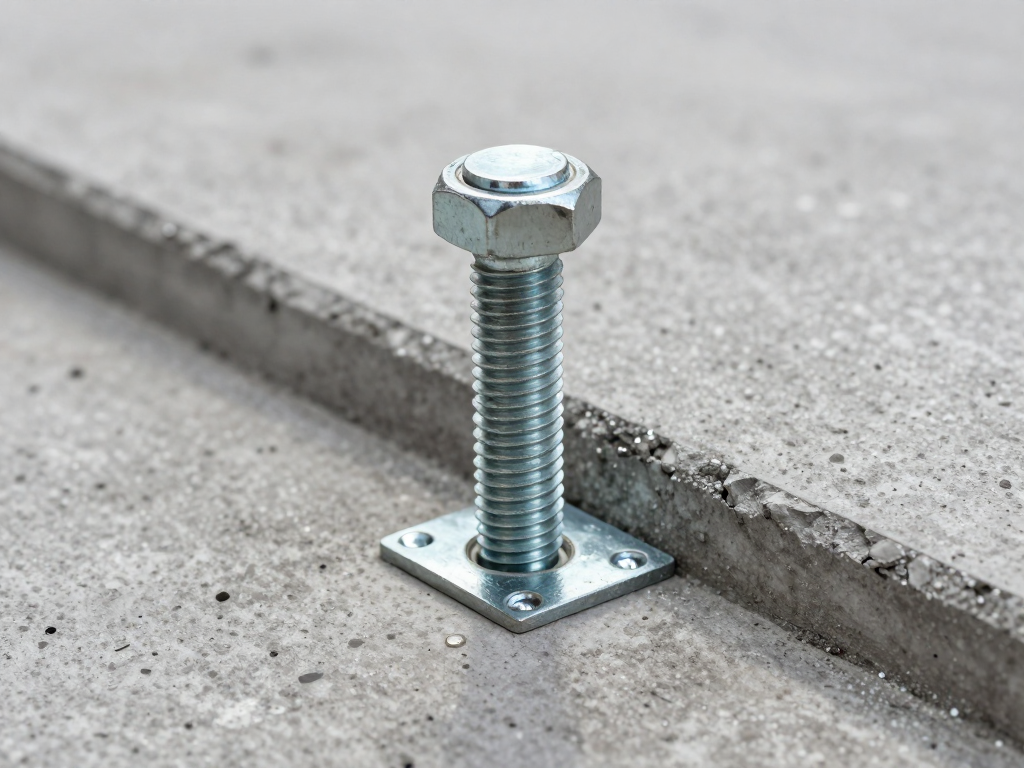
Anchor Type Guide
| Type | How it works | Best for |
|---|---|---|
| Wedge anchor (torque-controlled) | Expands as bolt is tightened | High-load steel-to-concrete, machinery |
| Drop-in anchor | Setting tool expands sleeve | Threaded rod hangers, overhead services |
| Hollow-wall / sleeve anchor | Expands behind the face | Precast panel, hollow-core, masonry |
| Chemical anchor (resin) | Adhesive fills the hole | Overhead, high-load, cracked concrete, rebar hits |
| Mechanical anchor (screwed) | Threaded self-tapping | Light-duty, quick fixing |
Sizing Logic: How to Pick Diameter and Length
| Parameter | Rule of thumb |
|---|---|
| Anchor diameter | Use 1/16″ smaller than the bolt; match bolt grade to anchor |
| Embedment length | Typically 4–10 anchor diameters in solid concrete |
| Edge distance | ≥ 1.5 anchor diameters from a free edge — or the concrete splits |
| Spacing | ≥ 10 anchor diameters between anchors |
Coating: Where the Anchors Live Decides It
| Coating | Corrosion life | Environment |
|---|---|---|
| Zinc-plated (blue/silver) | 1–2 years wet | Dry interior, indoor plant |
| Hot-dip galvanized | Decades | Outdoor, marine, coastal — the default |
| Stainless (316) | Decades | Chloride-heavy, chemical washdown |
Standards Buyers Quote
- ASTM F1554: anchor bolts (Grade 36 / Grade 55) for cast-in-place concrete.
- ICC-ES / ETA / CSA A500: evaluated wrench torque and allowable loads per anchor.
- EN 1992-4 (Eurocode 2 Part 4): design of concrete anchoring — the European sizing standard.
- Ask for allowable load tables — an anchor without certified load data per diameter is not a real specification.
Base Material Matters
- Solid concrete: wedge or drop-in anchor — the strongest and cheapest.
- Cracked concrete: chemical resin anchor or a cracked-concrete-rated mechanical anchor.
- Concrete over rebar: chemical anchor — avoids drilling into rebar.
- Masonry / block: sleeve or hollow-wall anchor, not a standard wedge.
Common Applications
- Machine bases, pumps, and heavy equipment to concrete floors.
- Steel columns, mezzanine frames, and base plates.
- Handrail, stair, and balustrade systems.
- Overhead services: cable trays, pipe hangers, ducts.
RFQ Checklist
- Anchor type: wedge / drop-in / sleeve / chemical
- Material: carbon steel or stainless; coating: zinc-plated / HDG / 316
- Diameter, length, bolt grade (A325 vs F1554), pack quantity
- Base material and required allowable load (if certified)
- Quantity, certs, destination / Incoterm
FAQ
Wedge anchor or chemical anchor? Wedge for fast, torque-controlled installs in solid concrete; chemical for overhead work, cracked concrete, or where rebar is in the way.
How long should the embedment be? Roughly 4–10 anchor diameters in solid concrete — confirm against the load table, not the drill depth alone.
Why did my anchor pull out? Too short embedment, edge distance too small, or cracked concrete without a rated anchor — check all three.
Why Source Expansion Anchors from Yihang Metal
Yihang Metal supplies wedge, drop-in, sleeve, and chemical anchors plus F1554 anchor bolts in carbon and stainless steel with zinc-plated, hot-dip galvanized, and 316 finishes, shipped with certified allowable-load data and EN 10204 3.1 certs on graded lots. Standard items typically ship in 25–35 days.
Ready to specify your anchors? Send us the anchor type, material, diameter, length, coating, and quantity, and we will confirm availability and lead time with a fixed-price quote and test certificate. Email [email protected] or use the quote form on this page — our team replies within one business day.