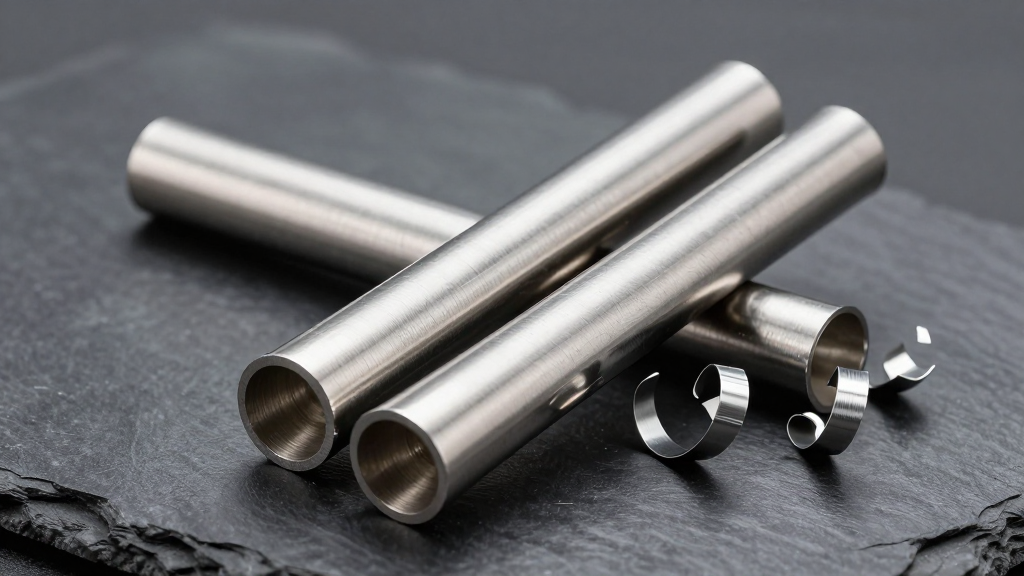
Why “Free-Machining” Stainless Exists — the Sulfur/Phosphorus Trade-Off (and the Corrosion Cost)
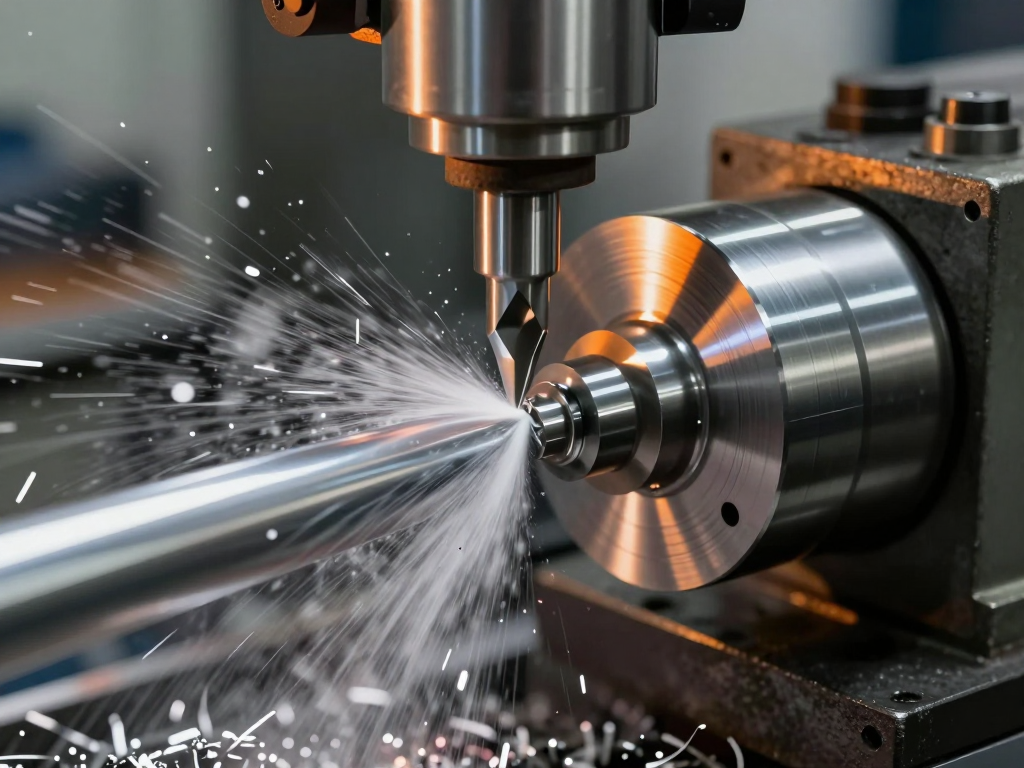
If you have ever watched a CNC lathe choke on stringy, galling chips while turning 304, you already understand why free machining stainless steel exists. Standard austenitic grades work-harden at the cutting edge, smear onto the tool tip, and throw long ribbon chips that wrap the chuck and stall the bar feeder. The fix metallurgists reached for nearly a century ago is brutally simple: add sulfur and phosphorus.
Sulfur — typically 0.15% minimum and often 0.20–0.35% in 303 and 416 — combines with manganese to form manganese sulfide (MnS) inclusions. These inclusions act as built-in chip breakers and as solid lubricants at the tool–chip interface. Phosphorus, capped at around 0.20% in some 303 variants, adds just enough brittleness to fracture the chip. The payoff is measurable: machinability ratings climb from roughly 40% of B1112 for 304 up to about 85% for 303, and as-turned surface finishes begin to look more like ground work than cut work.
The trade-off is just as measurable. Those same MnS stringers that break chips also serve as pitting-initiation sites and cut transverse ductility by 30–50%. Free-machining grades are less corrosion-resistant than their plain counterparts, they are not recommended for welding (sulfur promotes hot cracking), and the austenitic and ferritic versions cannot be heat-treated for higher strength. You accept faster cycle times, better finish, and longer tool life in exchange for lower corrosion resistance and limited joining options. The rest of this article is about helping you decide when that trade is worth it — and when you should walk away from a free-machining grade entirely and step up to 420 or 440C.
The Four Grades at a Glance: 303, 416, 430F, plus the 420 / 420J2 / 440C Family
Before going deep on each grade, here is the quick-reference table we send buyers who are narrowing a shortlist. Treat the values as typical — actual chemistry and properties vary by melt, by spec, and by heat-treat condition.
| Grade | Type | Cr (%) | C (%) | S (%) | Machinability* | Max Hardness | Corrosion | Typical Use |
|---|---|---|---|---|---|---|---|---|
| 303 | Austenitic | 17–19 | ≤0.15 | ≥0.15 | ~85% | ~240 HB (annealed) | Lower than 304 | Fittings, fasteners, shafts, nuts |
| 416 | Martensitic | 12–14 | ≤0.15 | ≥0.15 | ~85–100% | ~38–42 HRC (HT) | Lowest of the three | Valves, pump shafts, firearm parts |
| 430F | Ferritic | 16–18 | ≤0.12 | ≥0.15 | ~75–85% | ~183 HB (annealed) | Close to 430 | Gears, spools, low-cost fittings |
| 420 | Martensitic | 12–14 | ≥0.15 | ≤0.03 | ~45–55% | ~50–55 HRC (HT) | Moderate | Cutlery, surgical, blades |
| 420J2 | Martensitic | 12–14 | 0.16–0.25 | ≤0.03 | ~50–60% | ~48–53 HRC (HT) | Moderate | Knife liners, scissors, instruments |
| 440C | Martensitic | 16–18 | 0.95–1.20 | ≤0.03 | ~30–40% | ~58–60 HRC (HT) | Best of group | Bearings, knives, scalpels, valve balls |
*Machinability is expressed as a percentage of AISI B1112 free-machining carbon steel, per industry convention. “HT” = heat-treated. Values are typical and comparative, not guaranteed.
303 — the Default Choice for CNC-Turned Fittings, Fasteners, and Shafts
303 is the grade most people mean when they say “free-machining stainless.” It is essentially 18-8 (304) chemistry with sulfur and phosphorus added — nominally 17–19% chromium, 8–10% nickel, sulfur ≥0.15%, and phosphorus up to 0.20%. It stays austenitic and non-magnetic, so it machines cleanly without the work-hardening smear of 304, but it cannot be hardened by heat treatment.
Where 303 earns its place is on the CNC lathe and Swiss-type. Typical turned parts include hex nuts and socket-head cap screws, instrument fittings (hydraulic and pneumatic), pump and motor shafts, valve stems, gears, bushings, and any small-diameter component where you need to hit a tight tolerance and a good finish in volume. With coated carbide tooling you can run surface speeds in the 150–200 m/min range against 304’s 90–120 m/min — roughly a 50% productivity lift — and the chips come off as short segments instead of birds’ nests.
The limits to flag for your buyer: 303 is not a structural or pressure-retaining grade in the same sense as 304L, it pits more readily in chloride service, and it should not be welded. If the part needs welding, brazing, or marine exposure, 303 is the wrong choice. It is, however, the right choice for the vast majority of indoor, machined-only, corrosion-light components — which is why it is the default in nearly every free-machining bar stock program.
416 — Martensitic + Machinable for Valve Parts, Pump Shafts, and Firearms
416 is the free-machining version of 410 — a 12–14% chromium martensitic grade with sulfur added (≥0.15%). It gives you something 303 cannot: it can be heat-treated. After austenitizing around 980–1010 °C, oil quenching, and tempering in the 200–300 °C range, 416 reaches about 38–42 HRC. That is not knife-hard, but it is enough for wearing parts that 303 (stuck at ~240 HB annealed) simply cannot serve.
Typical applications sit exactly where “martensitic, machinable, moderate corrosion” overlaps: valve stems and seats, pump shafts and sleeves, gears, couplings, firearm components (bolts, extractors, small receivers), and machine parts that need to be cut from bar in volume and then hardened. Machinability is on par with or slightly better than 303 — many shops report 416 as the easiest stainless they turn — and surface finish after hardening and a light grind is excellent.
The corrosion caveat is the biggest one. Of the three free-machining grades, 416 is the least corrosion-resistant. It will rust visibly in damp indoor storage if not passivated and oiled, and it is not suitable for outdoor or marine service. It is also magnetic (which is sometimes a feature, not a bug). If your part needs hardness above ~42 HRC, you have outgrown 416 and you are looking at 420 or 440C.
430F — the Ferritic Free-Machining Option for Lower-Corrosion, Lower-Cost Parts
430F is the free-machining version of 430 — a 16–18% chromium ferritic grade with sulfur added. It contains essentially no nickel, which makes it meaningfully cheaper than 303 on a per-kilogram basis and somewhat better than 416 on corrosion. It is magnetic, it cannot be hardened by heat treatment (ferritic structure), and it machines at roughly 75–85% of B1112 — a step down from 303 and 416 but still far ahead of 304.
Use 430F when the part needs better corrosion resistance than 416, does not need the strength of a hardened martensitic grade, and nickel cost matters. Typical parts: gears, valve spools, nuts and bolts, fasteners for indoor or mildly corrosive service, small appliance and hardware components, and anything where you want a clean machined finish at low alloy cost. Surface finish is very good, and the lower work-hardening rate of ferritic grades keeps tool pressure predictable.
The constraints: 430F has lower ductility and toughness than austenitic grades, it is not recommended for welding, and impact toughness drops sharply at low temperatures. For a price-sensitive, machined-only, room-temperature part that still needs to resist rust better than 416, 430F is the sweet spot.
Machinability Ratings, Surface Finish, and Typical Speeds & Feeds vs 304
Free machining stainless steel vs 304: the cycle-time gap
The single most common question we get from CNC shops is “how much faster can I really run 303 versus 304?” The honest answer, with coated carbide insert tooling on a rigid lathe, is roughly 1.5× the surface speed at comparable feed, with dramatically better chip control and meaningfully longer tool life. Below are typical starting parameters — always validate on your own machine and with your own inserts.
| Grade | Type | Carbide speed (m/min) | HSS speed (m/min) | Feed (mm/rev) | Chip form |
|---|---|---|---|---|---|
| 304 | Austenitic | 90–120 | 25–35 | 0.10–0.25 | Long, stringy |
| 303 | Austenitic FM | 150–200 | 45–60 | 0.10–0.30 | Short segments |
| 416 | Martensitic FM | 150–210 | 45–65 | 0.10–0.30 | Short, brittle |
| 430F | Ferritic FM | 140–180 | 35–50 | 0.10–0.25 | Short segments |
| 420 | Martensitic | 60–90 | 18–25 | 0.08–0.20 | Stringy, galling |
| 440C | Martensitic | 30–60 | 12–20 | 0.05–0.15 | Stringy, abrasive |
Surface finish tells a similar story. As-turned 304 commonly finishes at Ra 1.6–3.2 µm; 303 and 416 routinely hit Ra 0.8 µm or better under the same setup, because the MnS inclusions lubricate the shearing zone and suppress built-up edge. That is why free-machining bar is often specified where a ground finish would otherwise be required — you can sometimes skip a secondary grinding operation entirely, which is where the real cost saving lives.
When to Step Up to 420 / 420J2 / 440C — Knives, Scalpels, Bearings
Free-machining grades stop making sense the moment your part needs to hold an edge, carry a Hertzian contact load, or survive as a hardened wear component. That is where the martensitic cutlery family — 420, 420J2, and 440C — takes over. None of these are free-machining (sulfur is held ≤0.03%), so you pay for the hardness in slower cycle times, but you gain heat-treat response and edge retention that 303, 416, and 430F simply cannot deliver.
420 (C ≥0.15%, 12–14% Cr) is the entry cutlery grade, hardening to about 50–55 HRC. It is the workhorse for kitchen knives, hunting knives, surgical and dental instruments, and scissors. 420J2 (C 0.16–0.25%) sits slightly lower at 48–53 HRC and is favored for knife liners, surgical scissors, and budget folders where toughness matters more than peak edge retention. 440C (C 0.95–1.20%, 16–18% Cr) is the top of this group, hardening to 58–60 HRC, and is specified for knife blades that must hold an edge, surgical scalpels, dental burrs, valve balls and seats, rolling-element bearings, and high-wear mold components.
The rule of thumb: if the part is a fitting, fastener, or shaft — stay in the free-machining grades. If the part cuts, pierces, rolls, or carries a contact line load — start in 420, and move to 440C when edge retention or hardness above ~55 HRC is non-negotiable.
Hardness, Heat-Treat Response, and Edge Retention Compared
Hardness is where the two families diverge sharply. The free-machining austenitic and ferritic grades (303, 430F) cannot be heat-treated at all — they arrive at whatever strength the cold-drawing process gave them. 416 can be hardened but tops out around 42 HRC. The cutlery grades reach a different range entirely.
| Grade | Condition | Austenitize (°C) | Quench | Temper (°C) | Hardness |
|---|---|---|---|---|---|
| 303 | Annealed | — | — | — | ~240 HB (annealed) |
| 416 | Annealed / HT | 980–1010 | Oil | 200–300 | 38–42 HRC |
| 430F | Annealed | — | — | — | ~183 HB (annealed) |
| 420 | Annealed / HT | 1020–1050 | Oil / Air | 150–300 | 50–55 HRC |
| 420J2 | Annealed / HT | 1020–1050 | Oil / Air | 150–300 | 48–53 HRC |
| 440C | Annealed / HT | 1010–1065 | Oil / Air | 150–200 / 400+ | 58–60 HRC |
Edge retention correlates with hardness and with carbide volume, which is why 440C — with its high carbon and the chromium carbides that form on quenching — outcuts 420 by a wide margin in controlled cut tests. The trade is that higher hardness means lower toughness and more brittleness; 440C chips more easily than 420J2 under lateral load. For a scalpel, that is acceptable. For a folding-knife lock mechanism that must survive a drop, 420J2 may be the better call.
Corrosion Resistance Ranked Honestly (None of These Are 316L)
Let us manage expectations directly. Every grade in this article trades some corrosion resistance for something else — machinability, hardness, or cost. None of them is a substitute for 316L in chloride or marine service, and telling a buyer “it is stainless” when they expect 316L behavior is how warranty claims start.
Ranked from most to least corrosion-resistant in this group, in typical atmospheric and mild-acid service: 440C (16–18% Cr, but high carbon ties up some chromium as carbide) ≈ 420 / 420J2 (12–14% Cr; lower carbon in 420J2 leaves more free chromium) > 430F (16–18% Cr, no nickel, sulfur pitting) ≈ 303 (17–19% Cr + 8–10% Ni, but sulfur pitting) > 416 (12–14% Cr + sulfur, the weakest here).
In practice: 303 and 430F will tarnish and pit in coastal outdoor storage without oil; 416 will rust indoors if not passivated; 420 and 440C hold up well for cutlery but will stain in saltwater. If your end-use is medical, food, marine, or outdoor structural, tell us at quote stage — we will usually steer you away from a free-machining grade and toward 304L, 316L, or a specialty grade instead.
Bar Stock Forms: Hex, Round, Square; ASTM A582 / A276; Centerless-Ground vs Cold-Drawn
Specifying the grade is only half the RFQ. The other half is form, tolerance, and condition — and getting these wrong is the most common reason a bar delivery sits in receiving instead of on the lathe.
- Forms: round bar (the default), hex bar (for nuts, fittings, and parts that index), and square bar (less common, mostly for forged or milled blanks). Hollow bar is available in some sizes if you are boring a through-hole anyway.
- Specs: ASTM A582 is the governing spec for free-machining stainless bar (covers 303, 416, 430F and their variants). ASTM A276 covers general stainless bar and is the fallback for 420 and 440C. AMS and EN/DIN equivalents are common in aerospace and European RFQs.
- Cold-drawn: the standard condition. Tolerance typically h9–h11 on diameter, as-drawn surface finish around Ra 1.6–3.2 µm. Lowest cost, fine for most turned parts.
- Centerless-ground: the precision condition. Tolerance to h7–h8 (±0.01 mm or better on smaller sizes), surface finish Ra 0.4–0.8 µm, straightness improved. Specify this when you need to go straight from bar to assembly, or to skip a rough-turn operation.
- Condition: free-machining grades ship annealed (303, 430F) or annealed/lightly-drawn (416). 420 and 440C ship annealed for machining, then you heat-treat the finished part.
RFQ Checklist: Machinability Report, Sulfide Stringers, End-Feed, Tolerance Class
To get an apples-to-apples quote and avoid surprises at the machine, include these in every RFQ for free-machining or cutlery-grade bar:
- Grade + spec + condition — e.g., “303 per ASTM A582, annealed and cold-drawn.” If you actually need 303Se (selenium-added for even better finish, slightly higher cost), say so.
- Machinability report — request the mill test report’s sulfur and phosphorus actuals, and ask for a machinability index if available. Sulfur at the floor (0.15%) machines noticeably differently from sulfur at 0.30%.
- Sulfide stringer / inclusion rating — for parts with transverse loading or fatigue, ask for inclusion control per ASTM E45. High stringer counts hurt transverse ductility.
- Tolerance class — h9, h8, h7, or a specific ±mm. State whether you need centerless-ground or cold-drawn.
- End-feed preparation — for bar-feed lathes, specify chamfered and pointed lead ends so the bar pushes cleanly through the feed tube; specify cut-to-length and deburr if you are buying saw-cut blanks.
- Straightness — typically 1 mm/m for cold-drawn, 0.5 mm/m for centerless-ground; tighten if you run long Swiss guide bushings.
- Surface finish requirement — as-drawn, ground, or pickled; state the Ra target.
- Heat-treat condition (for 416 / 420 / 440C) — annealed for machining, or pre-hardened; if pre-hardened, state the target HRC range and acceptable scatter.
- Certificates — EN 10204 3.1 MTC is standard; 3.2 if a third-party or Lloyd’s/DNV witness is required.
How Yihang Metal Supplies Free-Machining and Cutlery-Grade Stainless Bar
At Yihang Metal we stock and source the full range above — 303, 416, 430F on the free-machining side, and 420, 420J2, 440C on the cutlery and instrument side — in round, hex, and square forms, cold-drawn or centerless-ground, to ASTM A582 and A276 (with AMS and DIN equivalents on request). Standard diameters run from 3 mm to 120 mm, with hex across-flats from 3 mm to 60 mm. We supply full EN 10204 3.1 MTCs with chemistry and sulfur/phosphorus actuals, and we can arrange 3.2 third-party inspection for critical or certified applications.
Because we work with both the free-machining and the cutlery-grade families, we will not push you into 303 when your part really needs 420, or into 416 when 430F is the better fit. Send us a drawing or a cut list, tell us the end use, and we will come back with a grade recommendation, a tolerance and condition proposal, and a delivered price — usually within one working day.
Get a Quote on Free-Machining and Cutlery-Grade Stainless Bar
If you are specifying free machining stainless steel for a CNC-turned fitting, a hardened valve part, or a knife blade, talk to us first. Yihang Metal stocks 303, 416, 430F, 420, 420J2, and 440C bar in round, hex, and square forms, cold-drawn or centerless-ground, with full mill certificates and tight tolerance control.
Send your drawing, grade, spec, tolerance, and quantity to our team, and we will return a recommendation and a delivered quote — typically within 24 hours. Request a quote today, and let us help you pick the grade that balances machinability, hardness, and corrosion resistance the way your part actually demands.