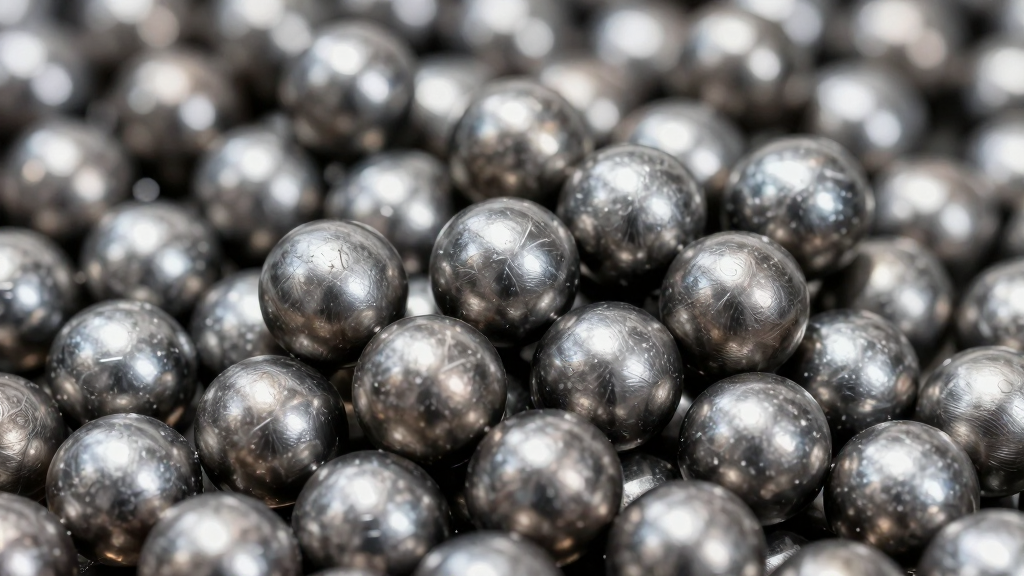
Grinding Media Balls Buying Guide: Forged vs Cast, High-Chrome vs Low-Chrome — How to Specify Balls for Ball Mills
Grinding media balls are the single largest consumable cost in a mineral processing plant — every ton of ore ground costs a few hundred grams of steel. The choice of forged vs cast, and the chrome content of the cast option, decides wear rate, breakage risk, and mill throughput. Buy cheap low-chrome cast balls for a hard-ore primary mill and they break, jam the grate, and cost you a day of downtime; buy high-chrome where low-chrome would do and you pay twice for wear you will never consume.
This guide compares forged vs cast, the chrome grades, sizing rules, and a complete RFQ checklist.
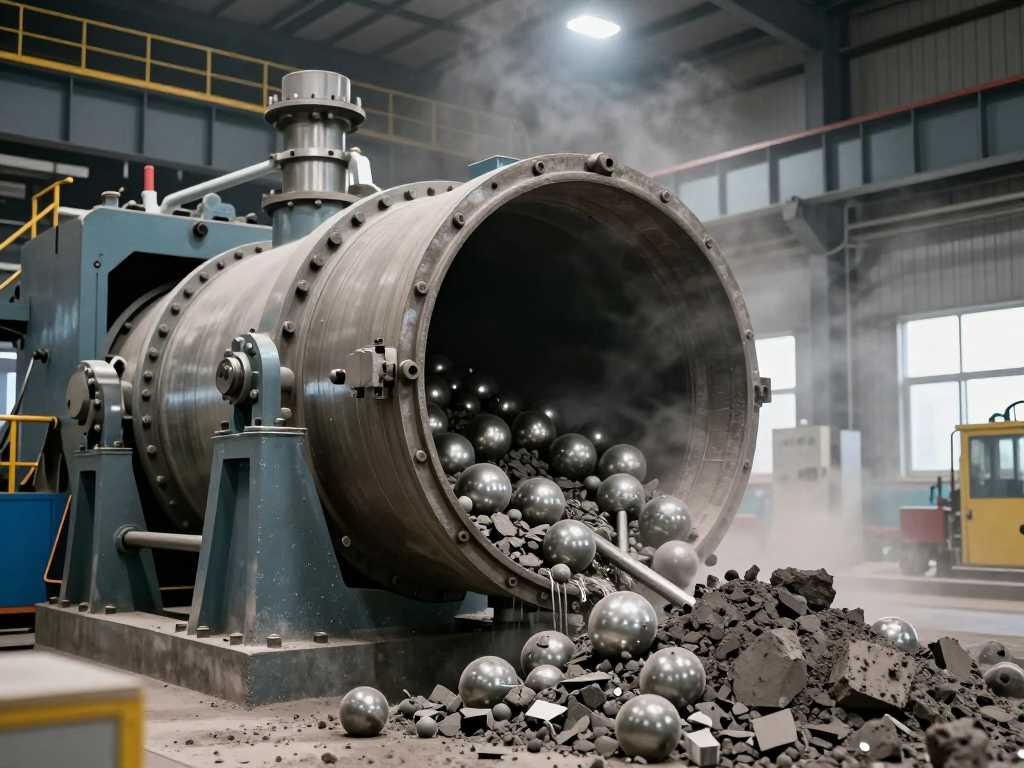
Forged vs Cast Grinding Balls
| Aspect | Forged | Cast (high-chrome) |
|---|---|---|
| Hardness | HRC 55–65, surface-to-core gradient | HRC 58–65, uniform through section |
| Impact toughness | Excellent — resists breakage | Lower; can crack in large mills |
| Wear resistance | Good | Excellent in fine grinding |
| Cost per ton | Lower | Higher |
| Best for | Primary/coarse grinding, SAG and large ball mills, hard ore | Secondary/fine grinding, cement, regrind circuits |
Cast Ball Grades by Chrome Content
| Grade | Cr content | Wear vs low-chrome | Use |
|---|---|---|---|
| Low-chrome (Cr 1–3%) | 1–3% | 1x baseline | Cheap grinding, soft ore, low-duty mills |
| Medium-chrome (Cr 5–10%) | 5–10% | ~1.5–2x | General cement and mineral grinding |
| High-chrome (Cr ≥ 17–26%) | 17%+ | ~3–5x | Cement finish mills, fine grinding, lowest cost per ton |
Ball Sizing Logic
- Feed size rule: the largest ball diameter (mm) should be roughly 20–25 times the 80% passing size (cm) of the feed — a starting point, verified by mill power draw.
- Ball charge: typically 30–45% of mill volume — higher charge draws more power but risks attrition.
- Ball size distribution: use a mixed charge (e.g., 80 + 60 + 40 mm) rather than a single size to balance impact and attrition.
- Top-up policy: add balls daily or weekly to keep the charge and power draw stable — a collapsing charge loses throughput.
Quality Tests That Must Appear on the Cert
- Hardness: HRC on surface (and core for forged) — a minimum is not enough; ask for the measured value.
- Impact toughness: drop-ball test results — the breakage rate that empties your mill is set by this number.
- Chemistry: C, Cr, Mn, Si, Mo — the alloy that produces the hardness.
- Wear test: marked-ball or lab wear-rate data, so your cost per ton is predictable.
Breakage: The Hidden Cost
- Balls break from poor heat treatment (brittle core), oversize feed, or a worn mill liner that lets balls drop too far.
- A 1% breakage rate in a ball mill can block the discharge grate and stop production within a shift.
- Specify a breakage guarantee (typically under 1–1.5%) with a claim procedure on the PO.
Common Applications
- Copper, gold, and iron ore concentrators (forged, large diameters).
- Cement raw and finish mills (high-chrome cast).
- Power plant and FGD limestone grinding.
- Regrind and fine-grinding circuits.
RFQ Checklist
- Type: forged or cast (chrome grade if cast)
- Diameter mm (list the size mix) and total tonnage
- Hardness HRC and impact toughness minima
- Breakage guarantee and claim procedure
- Packing (steel drums / bulk bags), test certs, destination / Incoterm
FAQ
Forged or cast for a primary mill? Forged — breakage resistance matters more than wear rate when balls are large and impacts are severe.
What chrome is worth the price? High-chrome (17%+) where grinding is fine and you measure cost per ton ground; low-chrome only for soft ore and low-duty mills.
Why are my balls wearing too fast? Usually lower chrome content than the grade promised, or a mill operating above design speed — verify chemistry from the cert against the sample.
Why Source Grinding Media from Yihang Metal
Yihang Metal supplies forged and cast grinding media from 12 to 150 mm in low-, medium-, and high-chrome grades, with HRC, impact toughness, and chemistry per lot, wear-rate test data, and a breakage guarantee, packed in steel drums or bulk bags for container shipment. Standard sizes typically ship in 25–35 days.
Ready to specify your grinding media? Send us the ball type, diameter mix, tonnage, hardness requirement, and mill application, and we will confirm availability and lead time with a fixed-price quote and test certificates. Email [email protected] or use the quote form on this page — our team replies within one business day.