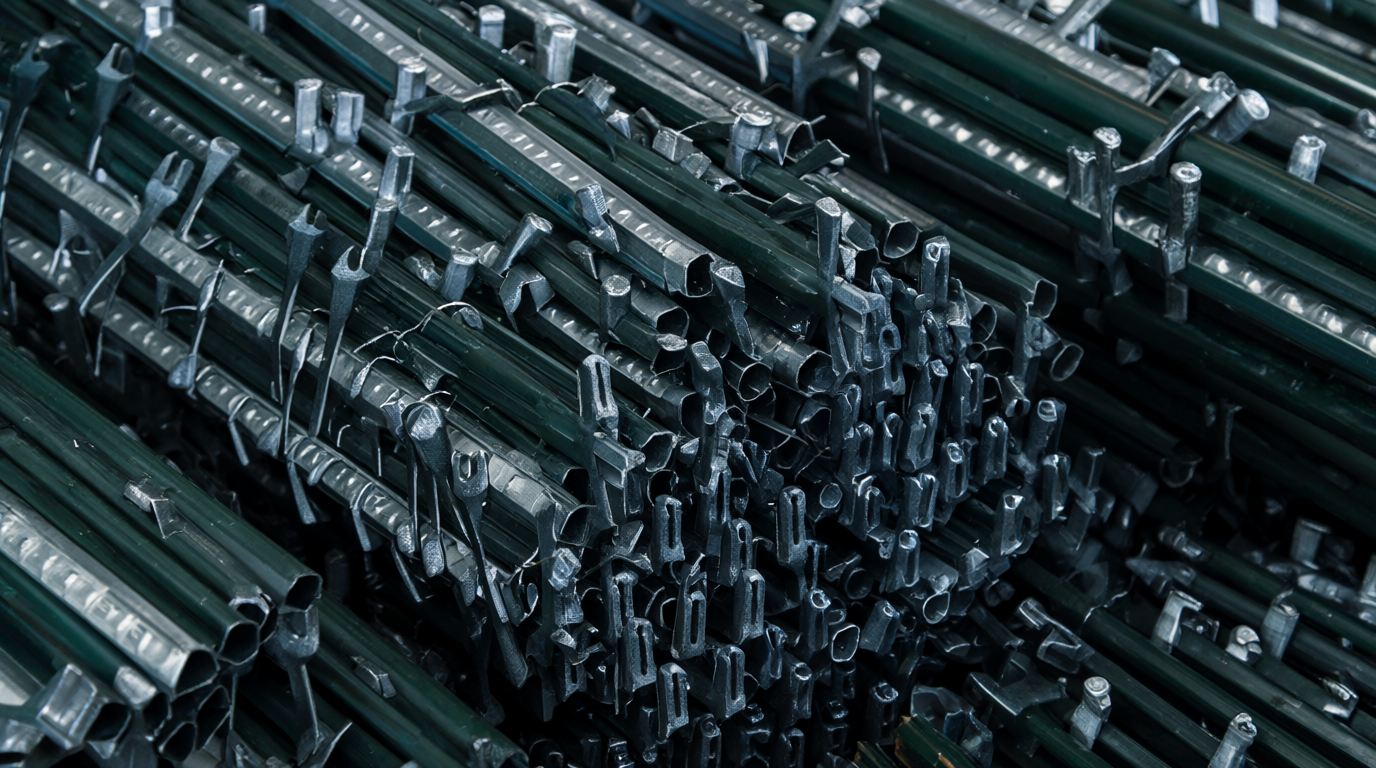
Steel Fence Post Buying Guide: Y Post vs T Post vs Studded Post — How to Specify Posts for Wire Fencing
Steel fence posts carry the wire, hold the tension, and take the abuse of livestock and weather — yet they are usually the last item specified. Post weight, stud pattern, coating, and length decide whether a fence line stays taut for 15 years or sags by the second season. A post that is 0.3 kg/m lighter than spec bends at the first lean of cattle, and the whole run goes slack.
This guide compares the post types, weights and coatings, install practice, and a complete RFQ checklist.
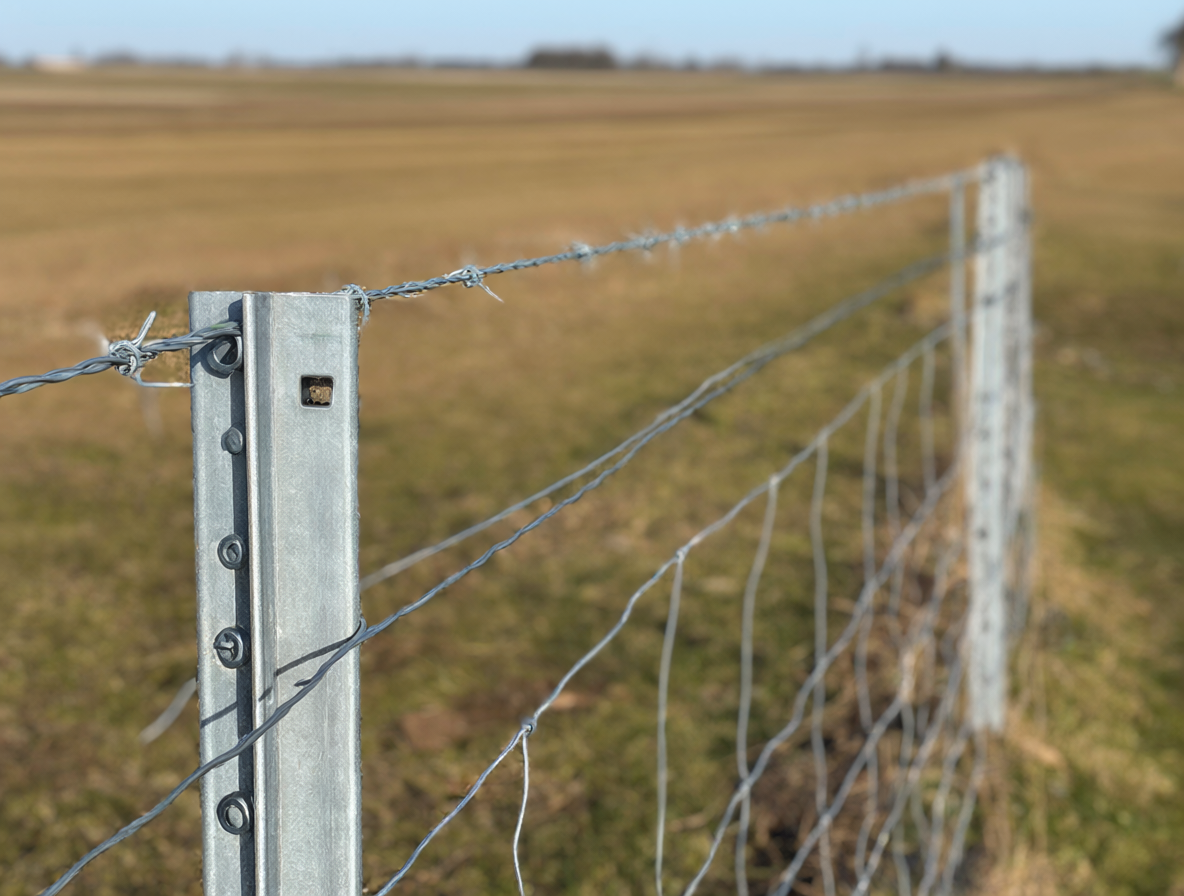
Y Post vs T Post vs Studded Post
| Type | Profile | Character | Best for |
|---|---|---|---|
| Y post (star picket) | Three-pointed Y section | Strong in soft ground, resists twisting | Livestock fencing, Australia/NZ standard |
| T post | Flat T with punched studs | Classic wire fence post, easy wire tie-off | Farm fencing, US/Canada standard |
| Studded post | Y or T with riveted studs | Stops wire slipping down the post | High-traffic and livestock pressure areas |
| U / channel post | Rolled U section | Heavier, row-crop and vine support | Vineyards, orchards, permanent fencing |
Weight and Length Guide
| Weight class | Typical mass | Use |
|---|---|---|
| Light | 0.85–1.04 kg/m | Temporary fencing, garden, light wire |
| Medium | 1.20–1.33 kg/m | General livestock fencing — the export default |
| Heavy | 1.55–2.04 kg/m | Cattle, boundary, high-tension wire fencing |
Length: 1.5 m, 1.8 m, 2.1 m, 2.4 m are the standard export sizes. A 1.8 m post typically sets 0.45–0.6 m in the ground, giving a 1.2–1.35 m fence height.
Coating Guide
- Class 1 galvanized (Z60–Z120): rural and dry climates; 8–12 years typical.
- Class 2 / heavy galvanized (Z180–Z275): coastal, high-rainfall, and long-life fence contracts.
- Painted (black, green): appearance fencing for estates and parks — under the paint is usually Class 1 zinc.
- Confirm coating weight on the cert — “galvanized” without g/m² is the most common post specification gap.
Install Practice That Decides Performance
- Drive, don’t dig: posts are driven with a post driver — a driving cap protects the top and coating.
- Spacing: 3–4 m for livestock, 2–3 m for high-tension and boundary lines.
- Strainers and stays: corners and long runs need braced strainer posts — a line of pickets alone will lean.
- Wire at stud height: studs stop wire sliding down; tie off each strand at every post on high-tension lines.
- End assemblies: use heavier posts or timber strainers at ends and every 100–150 m on long runs.
Standards Buyers Quote
- ASTM A702: steel fence posts — the US T-post standard, including stud spacing.
- AS/NZS 4671 & AS 2423: Australian star picket and wire fence references.
- EN 10223 / EN 10346: European fencing wire and coated steel references for zinc coating weights.
- Ask for mass per meter and coating weight together — they are the two numbers the fence’s life depends on.
Common Applications
- Livestock and boundary fencing (cattle, sheep, horses).
- High-tension wire fences and game fencing.
- Vineyard and orchard trellising.
- Temporary and event fencing, construction demarcation.
RFQ Checklist
- Type: Y post / T post / studded / U channel
- Weight per meter (kg/m) and length
- Coating: Class 1, Class 2, Z275, painted + color
- Stud spacing and spade/anchor plate type
- Quantity, packing (bundles per pallet), certs, destination / Incoterm
FAQ
Y post or T post? Y posts resist twisting in soft ground (Australian standard); T posts are the wire-friendly classic (US standard). Match what the local fencing trade uses.
What weight for cattle? 1.33 kg/m medium posts minimum; go to 1.55 kg/m+ for bulls, boundary lines, and high-tension fencing.
Why do my posts rust at the studs first? Stud punching damages the zinc at edges — specify heavier coating (Z275) on studded posts for coastal or high-rainfall sites.
Why Source Fence Posts from Yihang Metal
Yihang Metal supplies steel fence posts in Y, T, studded, and U-channel profiles, in 1.5–2.4 m lengths and light, medium, and heavy weights, with Class 1, Class 2, Z275 galvanized, and painted finishes, plus barbed wire and wire mesh for complete fence packages. Container loads typically ship in 20–30 days.
Ready to specify your fence posts? Send us the post type, weight per meter, length, coating, and quantity, and we will confirm mill availability and lead time with a fixed-price quote and coating certificate. Email [email protected] or use the quote form on this page — our team replies within one business day.