Steel Strapping & Packing Strip Buying Guide: How to Specify Galvanized, Black, and Paint-Coated Strapping for Steel Coils, Bundles, and Export Packaging
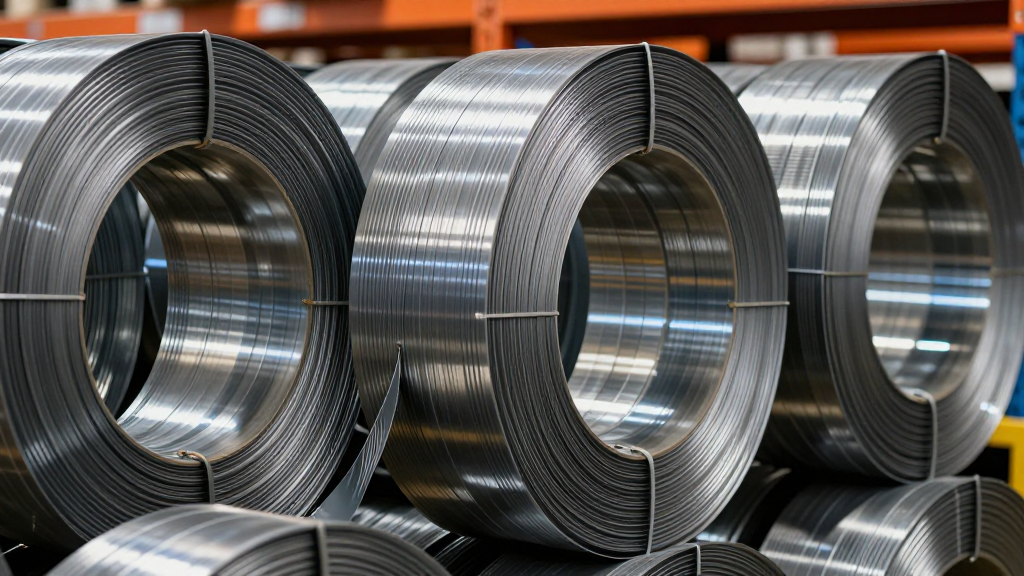
If you ship steel coils, bundled sections, pipe, timber, or palletized cargo, the one product holding your load together is easy to overlook: steel strapping (also called packing strip or steel banding). It is a narrow cold-rolled steel strip wound into a coil and applied around a load to keep it rigid from the factory floor to the port and finally to the customer’s warehouse. Specify the wrong width, tensile class, or surface treatment and the strap can snap under dynamic load, corrode during a long sea voyage, or fail the joint and let an entire bundle shift inside a container.
This guide walks buyers through the four manufacturing types, the specifications that actually matter, joint and tooling choices, and a ready-to-send RFQ checklist so your next order arrives correct the first time.
What Is Steel Strapping (Packing Strip)?
Steel strapping is produced by cold rolling low-carbon or high-carbon steel down to a thin strip, then slitting it to a narrow width (commonly 13–32 mm) and recoiling it. Depending on the grade and treatment, the same strip can be Rockwell-hard and springy, or soft and easy to bite with a manual sealer. It is the highest-strength banding material available — far stronger than PET or PP plastic strapping — which is why it remains the default for heavy, sharp-edged, or high-value loads such as steel products themselves.
Manufacturing Types Compared: Galvanized, Black Annealed, Paint-Coated, Stainless
Not all strapping is the same steel. The surface treatment decides corrosion resistance, flexibility, and price.
| Type | Surface | Tensile Range | Corrosion Resistance | Relative Cost | Best For |
|---|---|---|---|---|---|
| Galvanized (GI) | Zinc-coated (electro or hot-dip) | Regular & high-tensile | Good (outdoor, sea freight) | Medium | Export steel coils, outdoor storage, pipe bundles |
| Black Annealed | Black oxide, softened | Regular (soft) | Poor (indoor only) | Low | Indoor bundling, light-to-medium bundles, recycling |
| Paint / Wax Coated | Colored paint or wax film | Regular & high-tensile | Fair (basic) | Medium | Retail display, branded loads, mild indoor/outdoor |
| Stainless (304/316) | Bright, corrosion-proof | Regular & high-tensile | Excellent | High | Food, pharma, chemical, coastal plants |
For most steel exporters, galvanized regular or high-tensile strapping is the safe default: the zinc layer survives weeks of marine humidity, and the high-tensile version lets you use a narrower strap for the same hold.
Key Specifications Buyers Must Confirm
When you request a quote, these five numbers define the product:
- Width: 13, 16, 19, 25, 32 mm are standard. Steel coils typically use 25–32 mm; smaller bundles use 16–19 mm.
- Thickness: 0.4, 0.5, 0.6, 0.7, 0.8, 1.0 mm. Thicker = stronger but stiffer and harder to apply on small radii.
- Tensile strength: Regular 400–600 MPa; High-tensile (HS) 700–1100 MPa.
- Elongation at break: Regular ~10–20%; HS ~5–12%. Lower elongation means it snaps rather than stretches — good for rigid loads.
- Coil weight / length: 25 kg, 50 kg, or jumbo coils. State the winding (ribbon-wound vs oscillated) if your tool requires it.
Also confirm edge treatment — deburred (rounded) edges protect operators’ hands and the seal; and packaging (carton, pallet, or suspended coil) for safe handling.
Tensile Strength Classes: Regular vs High-Tensile
The single biggest cost/performance lever is the tensile class. Regular strapping is cheaper and more ductile; high-tensile (sometimes called “super” or “HS”) carries roughly double the load at the same width, so you can downsize width and save material. Choose high-tensile when:
- The load is heavy and rigid (steel coils, plate packs).
- You want to reduce strap width to cut cost without losing hold.
- The joint is made by friction welding (HS grades weld cleanly).
Stay with regular strapping for soft, compressible, or irregular loads where you need the strap to yield slightly and stay tight.
Joint / Seal Methods
A strap is only as strong as its joint. The three common joints:
| Joint | How | Joint Efficiency | Tooling |
|---|---|---|---|
| Metal seal + crimp | Clip crimped over overlapped ends | 70–85% | Manual / pneumatic sealer + tensioner |
| Friction weld | Vibration welds the two ends | 80–95% | Battery/electric welder |
| Notch / snap | Teeth bite the strap together | 65–80% | Manual notcher |
For export steel, friction welding gives the cleanest, highest-strength joint and avoids loose seals rattling loose in transit.
Strapping Tools: Manual, Pneumatic, Electric
| Tool | Power | Throughput | Best For |
|---|---|---|---|
| Manual tensioner + sealer | Hand | Low | Occasional, field, low volume |
| Pneumatic combo | Compressed air | Medium-High | Mill packing lines |
| Electric/battery weld | Battery | High | Modern export lines, HS strap |
Confirm with your supplier whether the strap you order is compatible with your existing tools — width and thickness must match the tool’s rated range.
Common Applications by Industry
- Steel mills: securing hot/cold rolled coils, plate packs, slit coils.
- Tube & pipe: hexagonal or square bundles of ERW/seamless pipe.
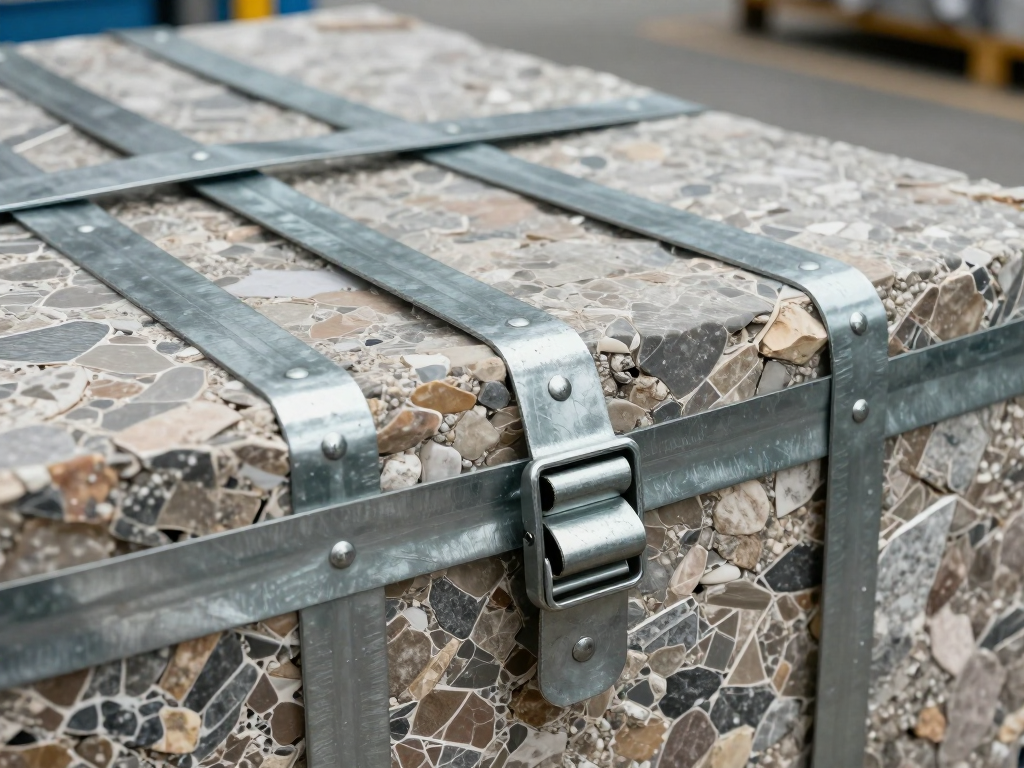
- Timber, stone, brick: rigid outdoor loads needing weather resistance.
- Containers & pallets: unitizing mixed cargo for sea freight.
- Export packaging: where zinc coating defends against marine humidity.
How to Choose the Right Strapping — A Short Path
- Weigh and measure the load; estimate the restraint force needed.
- Pick the tensile class (regular vs HS) from the force.
- Choose width/thickness from the supplier’s load table.
- Select surface treatment by environment (galvanized for export).
- Match the joint and tool you already run.
RFQ Checklist: Specifications to Send Your Supplier
Send this list to get an accurate, comparable quote:
- Type: galvanized / black annealed / paint / stainless
- Width × thickness (mm)
- Tensile class: regular or high-tensile, with MPa if known
- Coil weight and winding style
- Edge treatment (deburred?)
- Quantity (rolls or kg) and monthly volume
- Joint method and tool compatibility
- Packaging and export marking requirements
- Destination port and Incoterm (FOB / CIF / CFR)
Export Packaging & Rust Prevention
For sea freight, galvanized strapping is the start, not the finish. Pair it with VCI paper, interleaving oil paper, edge protectors, and container desiccant so the whole pack — not just the strap — arrives rust-free. Specify “export seaworthy packing” in your PO and ask for photos of the packed coils before container loading.
Why Source Steel Strapping from Yihang Metal
At Yihang Metal we supply galvanized and black annealed steel strapping in regular and high-tensile grades, slit to your exact width and thickness, with deburred edges and export carton or pallet packing. We routinely match EN, ASTM, and JIS references, provide mill test certificates, and ship in 25 kg / 50 kg / jumbo coils to suit your packing line. Lead time for standard galvanized widths is typically 15–25 days for full container loads.
Ready to specify your steel strapping? Send us your load type, strap width × thickness, tensile class, and destination — we will size the strip, confirm the surface treatment, and return a fixed-price quote with a deflection calculation and mill test certificate. Email [email protected] or use the quote form on this page, and our engineering team responds within one business day.