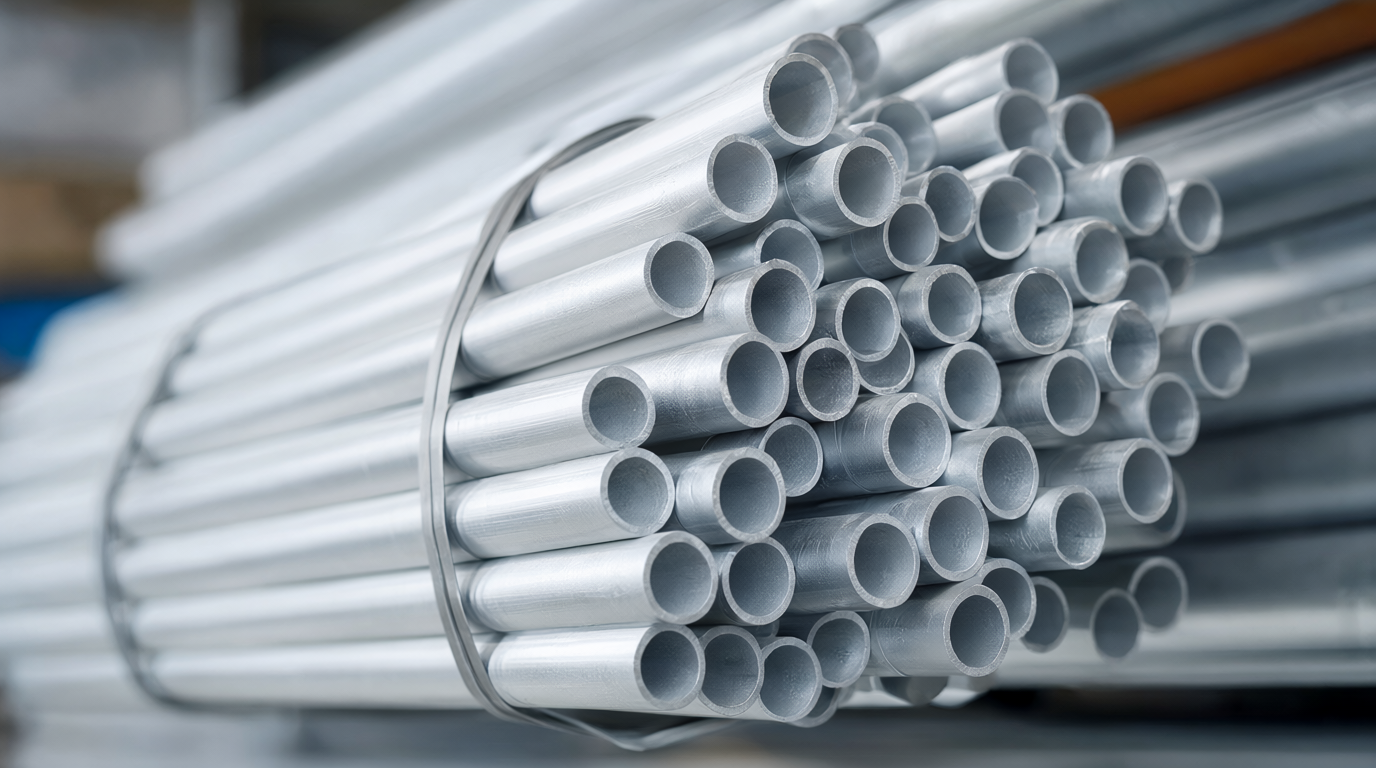
Aluminum Pipe & Tube Buying Guide: 6061 vs 6063 vs 3003 — How to Specify Aluminum Tube by Alloy, Temper, and Seam Type
Aluminum pipe and tube is specified for weight, corrosion resistance, and thermal conductivity — but the alloy and the seam type decide whether the tube bends, welds, or holds pressure. 6061-T6 gives strength for structural frames; 6063 extrudes into clean architectural shapes that anodize beautifully; 3003 is cheap and formable for low-pressure lines. Buy 6061 where a bend is needed and it cracks at the radius; buy 6063 for a pressure line and the wall is too soft.
This guide compares the alloys, tempers, seamless vs welded tube, sizing, and a complete RFQ checklist.
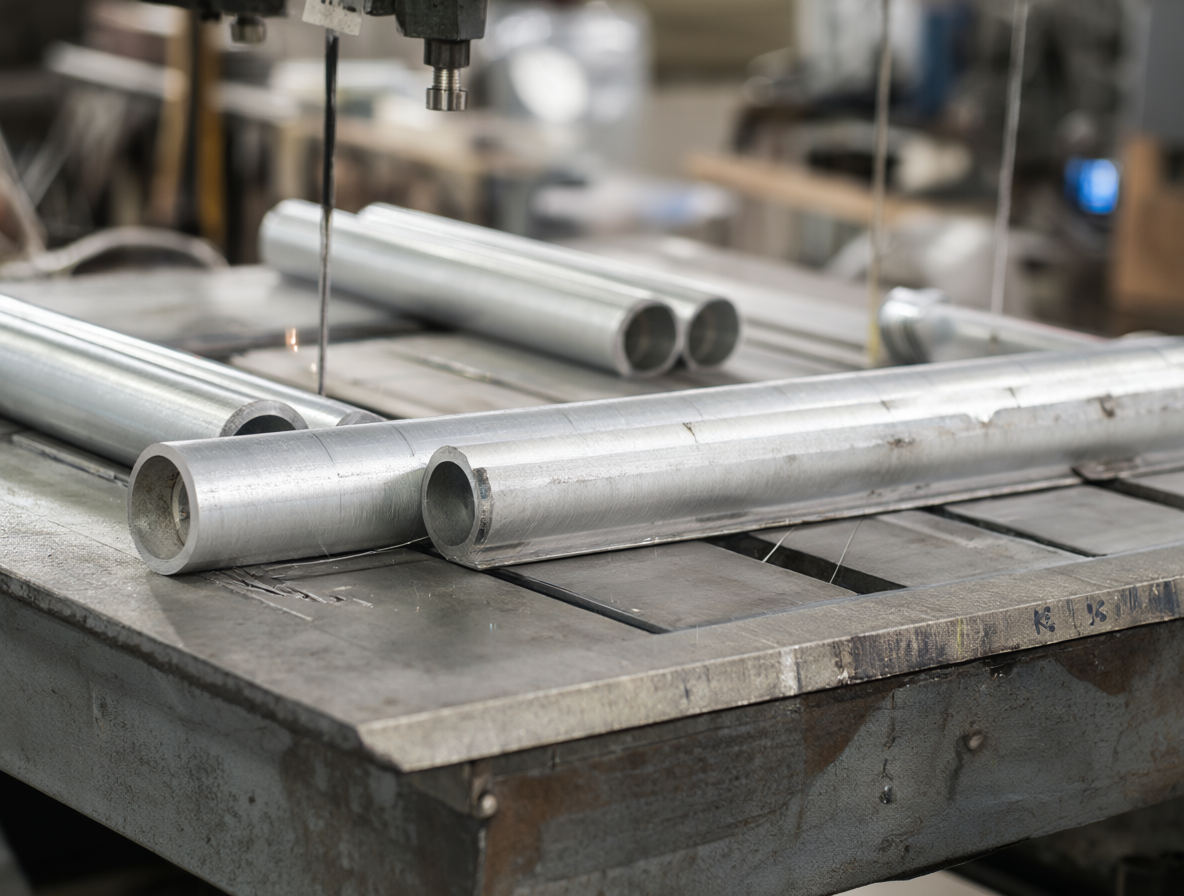
6061 vs 6063 vs 3003 Tube
| Alloy | Strength (typ. UTS) | Character | Best for |
|---|---|---|---|
| 6061-T6 | ~310 MPa | Strong, weldable, good machining | Structural frames, railings, machined tube parts |
| 6063-T5/T6 | ~185 / 205 MPa | Best extrusion finish, anodizes cleanly | Architectural, furniture, window and display frames |
| 3003 | ~130 MPa | Formable, cheap, good corrosion | Low-pressure lines, heat-exchanger and ducting work |
| 5052 / 5083 | ~230 / 290 MPa | Best marine corrosion resistance | Marine, fuel tanks, chemical exposure |
Temper Guide
| Temper | Condition | Use |
|---|---|---|
| T6 | Solution treated + aged | 6061 tube at full strength — machined and structural |
| T5 | Extruded + aged | 6063 architectural and profile tube |
| T4 / O | Naturally aged / annealed | Bending and forming — bend before aging |
Seamless vs Welded Aluminum Tube
| Aspect | Seamless (extruded) | Welded |
|---|---|---|
| Pressure integrity | Highest — no seam | High when the weld bead is controlled |
| Wall range | Thicker walls, larger OD | Thin wall, tight tolerance (drawn) |
| Surface | Extrusion die lines | Smooth, good for anodizing |
| Cost | Higher | Lower |
| Use | Hydraulic, high-pressure, machined parts | Frames, furniture, heat exchangers, ducting |
Standards Buyers Quote
- ASTM B221: extruded aluminum tube and pipe — quote temper and dimensions on the PO.
- ASTM B241 / B234: seamless and drawn tube for pressure and heat-exchanger service.
- ASTM B209 / B210: sheet/plate and drawn tube — confirm which form applies.
- EN 755 / EN 573: European extruded tube references with alloy-temper designations.
- EN 10204 3.1: include chemistry and mechanical properties per lot.
Sizing and Tolerance
- OD and wall: confirm OD x wall in mm, not nominal pipe size (aluminum tube is sold by actual dimensions).
- Tolerance: extruded tube is looser (±0.5 mm common); drawn tube holds tighter (±0.1–0.2 mm) for machining spigots.
- Length: standard 6 m mill lengths, cut-to-size on request.
- Surface: mill finish, anodized, or powder-coated — anodizing grade matters most on 6063.
Common Applications
- Structural frames, trusses, and railings (6061-T6).
- Windows, curtain walls, and architectural profiles (6063-T5).
- Heat exchangers, condensers, and ducting (3003 / 6063).
- Marine and offshore tube (5052 / 5083).
RFQ Checklist
- Alloy and temper: 6061-T6 / 6063-T5 / 3003 / 5052
- Form: seamless extruded or welded/drawn; standard B221/B241
- OD x wall x length; tolerance class if machining
- Surface: mill / anodized / powder-coated
- Quantity, EN 10204 3.1 certs, destination / Incoterm
FAQ
6061 or 6063 for tube? 6061-T6 for strength and structural work; 6063-T5 where surface finish and anodizing matter more than strength.
Can I bend 6061-T6 tube? Only with a large bend radius or after annealing — T6 cracks at tight radii; specify T4 for forming and age afterwards.
Why did my anodized tube look blotchy? Usually 6061 with heavy die lines, or mixed alloys in one batch. Use 6063 for visible anodized work and keep the alloy consistent.
Why Source Aluminum Tube from Yihang Metal
Yihang Metal supplies aluminum pipe and tube in 6061, 6063, 6060, 3003, 5052, and 5083 to ASTM B221/B241 and EN 755, in T5, T6, and T4 tempers, seamless or welded, with mill, anodized, and powder-coated finishes and EN 10204 3.1 certificates. Standard sizes typically ship in 25–35 days.
Ready to specify your aluminum tube? Send us the alloy, temper, seam type, OD x wall x length, and quantity, and we will confirm mill availability and lead time with a fixed-price quote and test certificate. Email [email protected] or use the quote form on this page — our team replies within one business day.