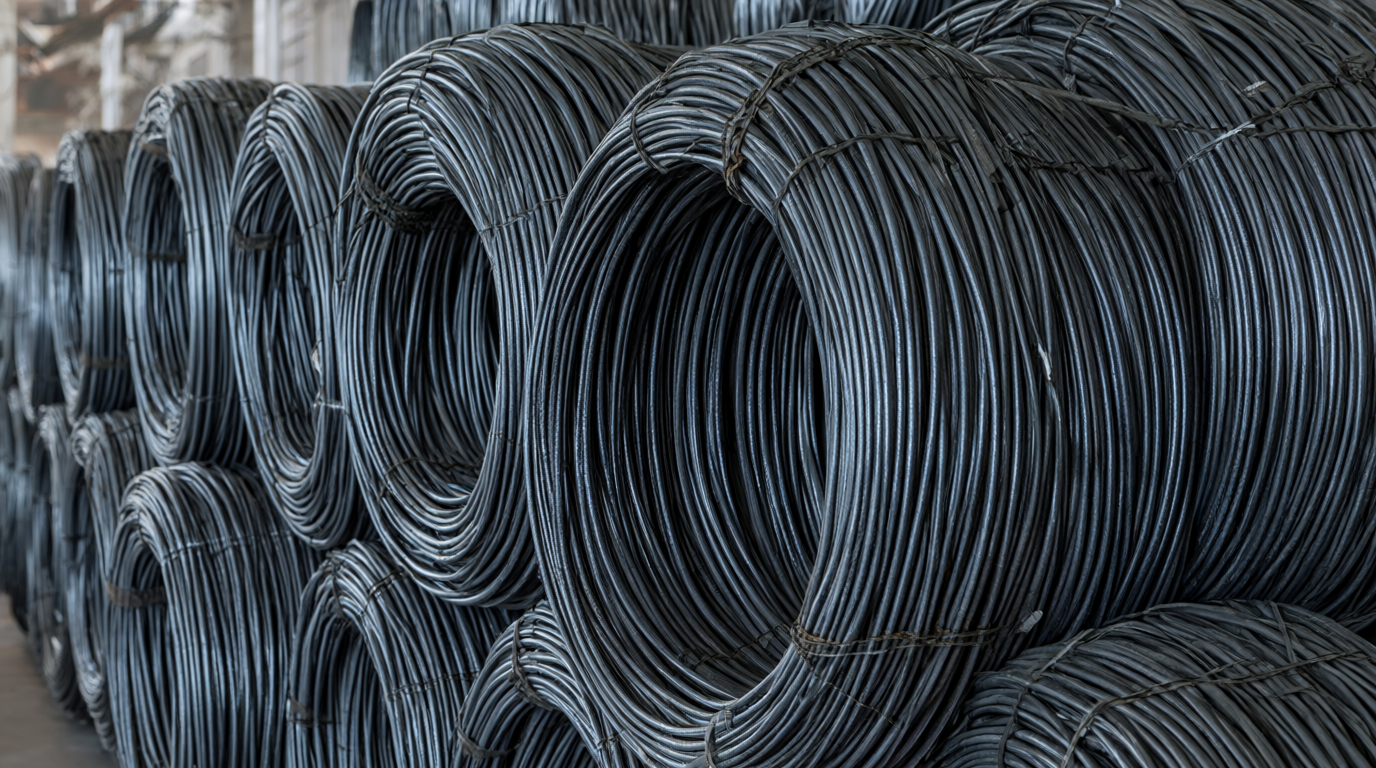
Steel Wire Rod Buying Guide: SAE1006 vs SAE1008 vs SAE1018 — How to Specify Low-Carbon Wire Rod for Drawing, Mesh, and Fasteners
Steel wire rod is the feedstock for almost every wire product: nails, fencing mesh, welding wire, springs, PC strand, and cold-heading fasteners all begin as a coiled rod. The grade decides drawability, the coil weight decides drawing efficiency, and the surface condition decides how many breaks your wire mill eats per ton. Order SAE1008 for a nail-grade draw and it runs clean; order it for a high-carbon spring wire and it snaps at the first die.
This guide compares the low-carbon grades, coil sizes, surface requirements, and a complete RFQ checklist.
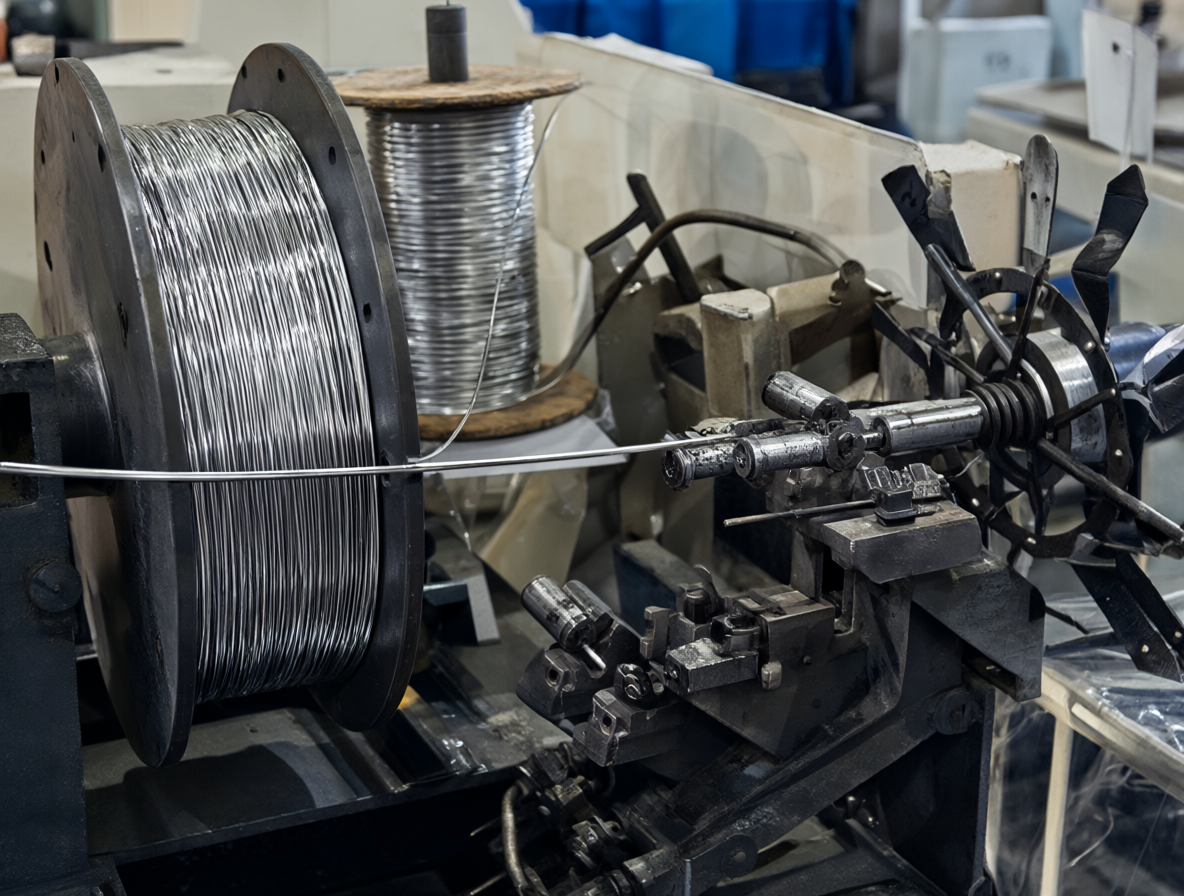
Grade Comparison: SAE1006 vs 1008 vs 1018
| Grade | Carbon | Character | Typical product |
|---|---|---|---|
| SAE1006 / Q195 | ~0.06% | Softest, best drawability | Fine wire, welding wire, mesh, binding wire |
| SAE1008 / Q235 low-C | ~0.08% | The workhorse drawing grade | Nails, barbed wire, fencing, galvanized wire |
| SAE1018 / 1018 | ~0.18% | Stronger, case-hardenable | Cold-heading fasteners, chains, welding wire |
| SAE1022 / 1045 | 0.22–0.45% | Higher strength / hardenability | Spring wire, PC strand, high-tensile applications |
Coil Size and Weight
| Coil type | Weight | Advantage |
|---|---|---|
| Standard coil | 1.8–2.5 t | Common export packing; crane-friendly |
| Big coil | 3–5 t | Longer drawing runs, fewer changes |
| Small coil | 0.3–1.5 t | For small drawing machines and job shops |
Surface and Coating Requirements
- Scale-free (pickled / descaling): ask for mechanical descaling or pickling for automatic drawing lines — residual scale destroys dies.
- Borax / phosphate coated: drawing lubricant carrier for high-speed multi-die machines.
- Galvanized rod: for products that need coating before drawing (chain-link, barbed wire).
- Surface defects to specify against: cracks, laps, seams, and slivers — require ultrasonic or eddy-current inspection on critical lots.
Standards Buyers Quote
- ASTM A510: general requirements for carbon steel wire rods.
- SAE J403 / J1265: chemical composition ranges for SAE-grade rods.
- GB/T 4354 / Q195-Q235: Chinese low-carbon rod grades — the most common export origin grades.
- EN 10016: European rod for drawing — grades C4D, C7D, C9D by carbon level.
Common Applications
- Nails, staples, and wire products (1006/1008).
- Welded mesh, chain-link, and barbed wire (1008).
- Welding wire (ER70S-6 base rod, 1006–1018).
- Cold-heading screws and rivets (1018/1018 modified).
RFQ Checklist
- Grade: SAE1006 / 1008 / 1018 + chemistry range
- Diameter: 5.5 mm, 6.5 mm, 8–16 mm
- Coil weight and inner diameter (for drawing machine compatibility)
- Surface: scale-free / pickled / coated; inspection required
- Quantity, mill certs (EN 10204 3.1), destination / Incoterm
FAQ
1006 or 1008 for wire mesh? 1008 is the workhorse for mesh and nails; 1006 where maximum softness and fine drawing are needed.
Why do I get breaks in drawing? Usually scale left on the rod, a grade harder than specified, or a seam defect — check surface condition first.
What coil weight should I order? Match your machine: big coils for continuous high-speed lines, 1.8–2.5 t for general export and mixed orders.
Why Source Wire Rod from Yihang Metal
Yihang Metal supplies low-carbon steel wire rod in SAE1006, SAE1008, SAE1018, and Q195–Q235 grades at 5.5–16 mm, in 1.8–2.5 t standard coils, with pickled/descaling and coated options, mill certificates, and export packing for container and breakbulk shipment. Standard orders typically ship in 25–35 days.
Ready to specify your wire rod? Send us the grade, diameter, coil weight, surface requirement, and quantity, and we will confirm mill availability and lead time with a fixed-price quote and mill certificate. Email [email protected] or use the quote form on this page — our team replies within one business day.