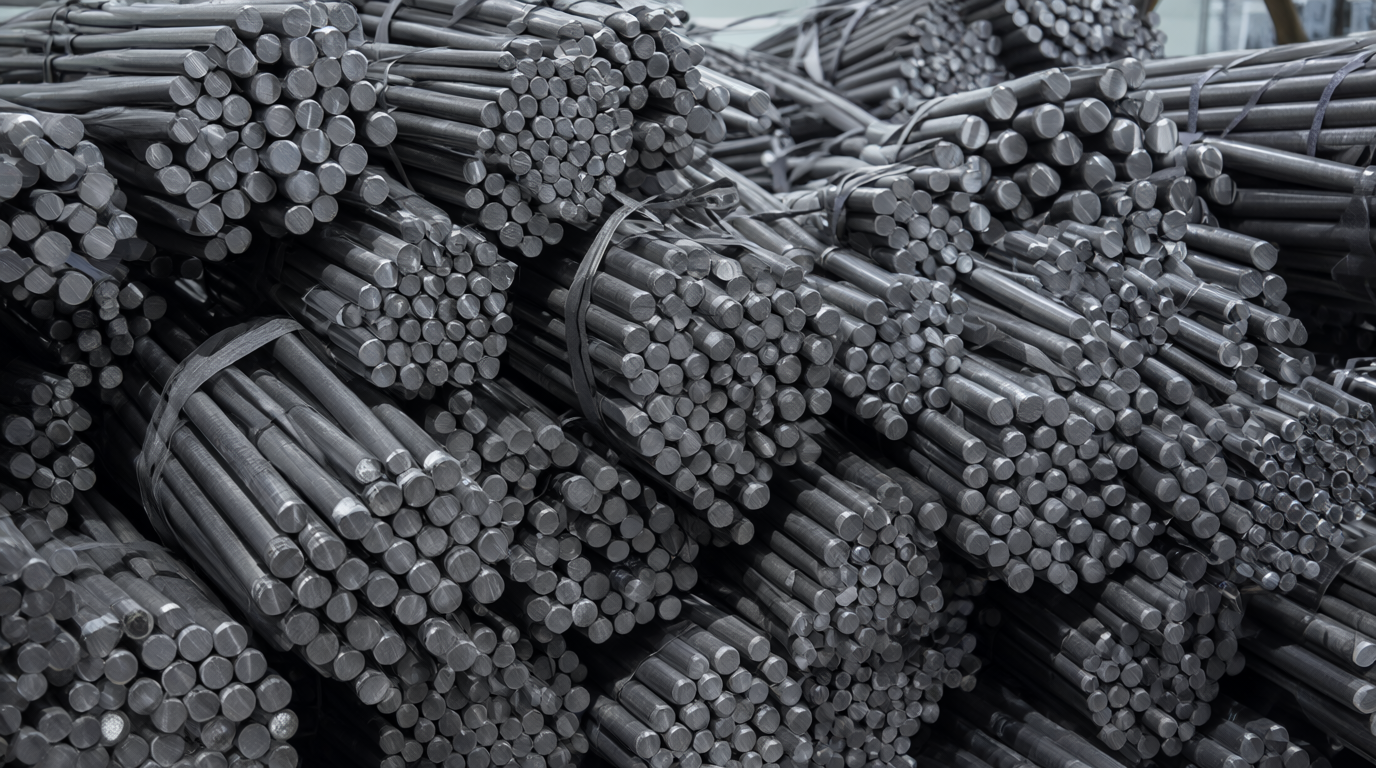
Bearing Steel Buying Guide: GCr15 vs 100Cr6 vs 52100 vs SUJ2 — How to Specify Through-Hardening and Case-Hardening Bearing Steels by Cleanliness and Grade
Bearing steel is the clearest example in metallurgy of the same chemistry being a different product at different quality levels. GCr15, 100Cr6, 52100, and SUJ2 are all nominally the same 1.0% carbon, 1.5% chromium through-hardening steel — the differences are in steel cleanliness, carbide distribution, and dimensional tolerance, and those differences decide whether a bearing reaches 500 hours or 5,000.
This guide covers the through-hardening family, when to step across to case-hardening grades for carburised bearings, how cleanliness is measured and specified, and how to write an order that a bearing-grade mill will actually accept.
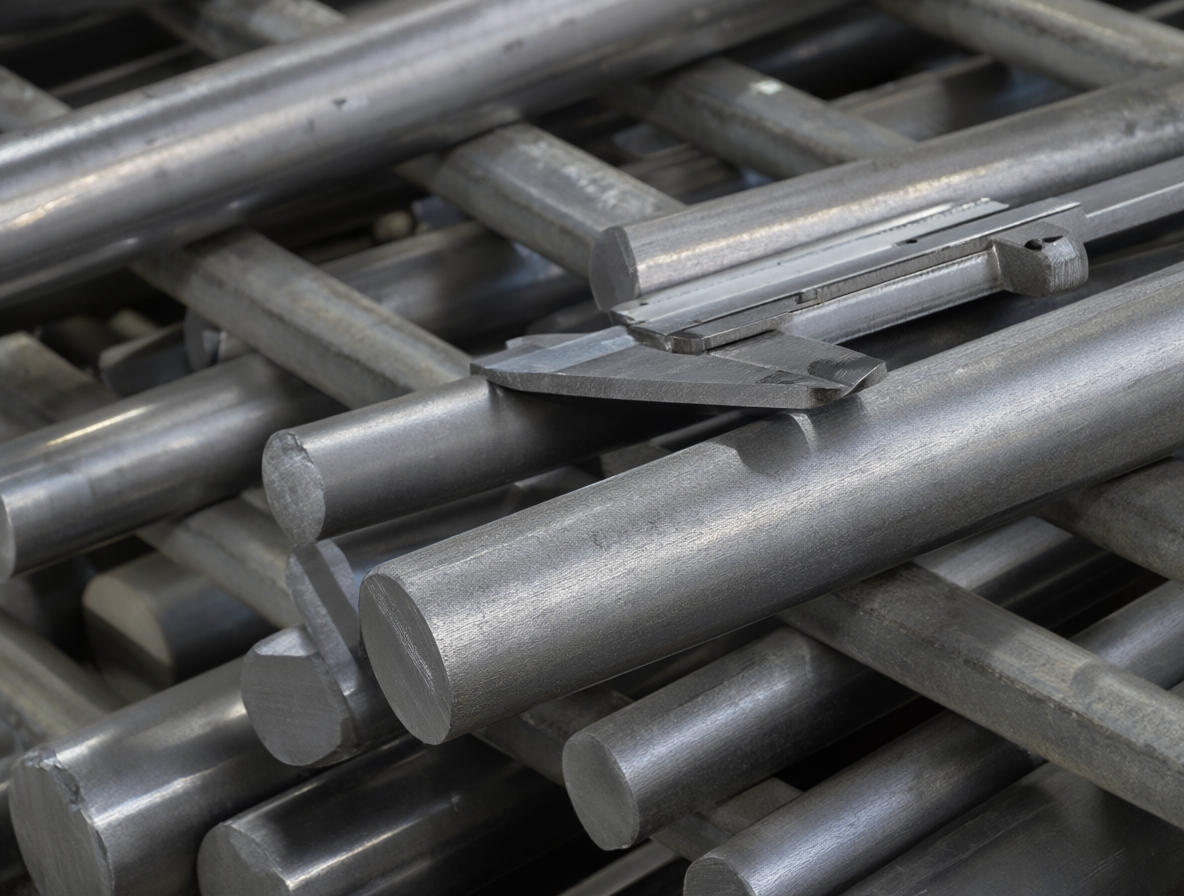
The Through-Hardening Family: One Chemistry, Many Names
| Designation | Standard | Typical composition | Region |
|---|---|---|---|
| GCr15 | GB/T 18254 | 1.0C-1.5Cr | China |
| 100Cr6 | EN ISO 683-17 / DIN 1.3505 | 1.0C-1.5Cr | Europe |
| 52100 | ASTM A295 | 1.0C-1.5Cr | North America |
| SUJ2 | JIS G4805 | 1.0C-1.5Cr | Japan / Asia |
| ShKh15 | GOST 801 | 1.0C-1.5Cr | Russia / CIS |
These are all equivalent in nominal chemistry and all achieve roughly 60–64 HRC after quenching and tempering. They are not equivalent in what the standard guarantees, and that is the entire point of buying bearing grade.
What Actually Separates Bearing Grade from Ordinary 52100
The chemistry is trivial to hit. What is difficult, and what you are paying for, is this:
| Factor | Why it decides bearing life | How it is specified |
|---|---|---|
| Oxygen content | Oxide inclusions initiate fatigue cracks — the dominant failure mode | Total oxygen in ppm; premium bearing grades target ≤ 10–15 ppm |
| Inclusion rating | Size, type, and distribution of non-metallic inclusions | ASTM E45 (A/B/C/D ratings), DIN 50602 (K values), ISO 4967 |
| Carbide segregation | Banded or network carbides cause cracking and poor grinding response | Carbide band rating, carbide network rating per GB/T 18254 or SEP 1520 |
| Decarburisation | Soft surface layer fails to harden, causing premature wear | Maximum decarburised depth; typically ≤ 1% of diameter |
| Central porosity / segregation | Internal defects in large sections | Ultrasonic testing, macro-etch per ASTM E381 |
| Dimensional tolerance and straightness | Bearing rings are machined to microns; bar stock variation consumes the tolerance budget | Tolerance class, straightness, ovality |
This is why “52100 chemistry” from a general bar mill and 52100 to ASTM A295 are different products at different prices. If your RFQ says only “52100” and the quote seems too cheap, it is the cleanliness that has been left out.
Cleanliness Standards You Should Quote By
- ASTM A295 — the North American bearing steel specification. Covers chemistry, hardness, microstructure, and cleanliness for 52100.
- ASTM E45 — inclusion rating method (Method A for wrought products). Ratings are reported as thin/heavy series for inclusion types A (sulphide), B (alumina), C (silicate), D (globular oxide).
- DIN 50602 — German inclusion rating, reported as K values, widely used in European bearing procurement.
- ISO 4967 — international inclusion rating, aligned with E45 in approach.
- GB/T 18254 — Chinese bearing steel standard, covering GCr15 and its cleanliness, carbide, and decarburisation requirements. If you buy GCr15 from China, this is the document your certificate should reference.
- SEP 1520 — German microstructural method for carbide and non-metallic inclusion assessment in bearing steels, common in European automotive supply chains.
When comparing suppliers, compare the oxygen content in ppm and the inclusion rating values, not the chemistry table. Two GCr15 certificates can both read “1.0C-1.5Cr” while one is 8 ppm oxygen and 15 ppm the other.
Through-Hardening vs Case-Hardening: When to Switch
Through-hardening grades (GCr15 family) harden all the way through and are the default for standard bearings. Case-hardening grades are carburised: a hard surface with a tough, unhardened core.
| Through-hardening (GCr15 / 100Cr6 / 52100 / SUJ2) | Case-hardening (20CrMnTi, 8620, 16MnCr5, 20CrMo) | |
|---|---|---|
| Hardness profile | Uniform 60–64 HRC through the section | 58–62 HRC case, tough core |
| Toughness | Lower — fully martensitic | Higher — tough core absorbs shock |
| Best for | Standard radial and thrust bearings, thin sections, high rigidity | Shock-loaded bearings, thick sections, tapered and spherical roller bearings, mining and mill duty |
| Distortion | Quench distortion in thick sections | Less distortion in large sections |
| Cost | Lower | Higher — carburising is an extra process |
The rule: through-hardening is right for most bearings and is the default. Move to case-hardening when the bearing sees impact loading, when the section is thick enough that through-hardening would leave excessive retained austenite or cracking risk, or when the application is mill, crusher, or mining duty.
Grade Levels Within the Same Standard
Bearing steel is commonly sold in quality tiers, and the tier is not always written on the certificate. Ask explicitly:
- Standard bearing quality — meets the base standard; suitable for general bearing manufacture.
- Premium / high-cleanliness — oxygen ≤ 10–15 ppm, tighter inclusion limits, controlled carbide banding. For long-life and high-speed bearings.
- Bearing wire rod vs bar — wire rod for small rings and balls (drawn or cold-rolled), bar for rings and rollers. Wire rod has its own cleanliness and surface requirements, and the decarburisation limit is tighter because the section is small.
If the end use is a safety-critical or long-life bearing, specify the cleanliness tier numerically in the PO. “Bearing quality” alone is not a specification.
Forms, Sizes, and Delivery Condition
| Form | Typical size range | Delivery condition |
|---|---|---|
| Round bar | Ø 16–250 mm | Annealed (soft annealed, ~190–210 HB) for machining; or spheroidise annealed |
| Wire rod | Ø 5.5–20 mm, coil | Annealed, pickled, or spheroidise annealed for cold drawing |
| Tube / hollow bar | For large rings | Annealed |
| Plate | For large-diameter rings | Annealed |
Almost all bearing steel is supplied soft annealed — a spheroidised carbide structure at around 190–210 HB that machines well and responds predictably to the customer’s hardening cycle. If you receive material at a different hardness, the machining and the hardening response both change.
Heat Treatment Considerations for Buyers
Even a perfect coil fails if the hardening cycle is wrong. The questions worth asking your mill or your heat treater:
- Austenitising temperature — typically 830–860 °C for GCr15 family. Too high dissolves carbides and leaves retained austenite; too low leaves undissolved carbides and low hardness.
- Quench medium — oil for most sections; salt or polymer for specialised cases. Water quenching is not appropriate for these grades.
- Tempering — typically 150–180 °C for 2 hours, giving 60–64 HRC. Higher tempering trades hardness for toughness and dimensional stability.
- Retained austenite — should be limited (typically < 10%); excessive retained austenite causes dimensional change in service.
- Dimensional stability — for precision bearings, a stabilising treatment (sub-zero or elevated temper) is specified.
RFQ Checklist
- Grade and standard: GCr15 to GB/T 18254, 100Cr6 to EN ISO 683-17, 52100 to ASTM A295, or SUJ2 to JIS G4805
- Cleanliness requirement stated numerically: oxygen ppm, ASTM E45 or DIN 50602 inclusion limits, carbide band/network rating
- Form and size: round bar Ø × length, or wire rod coil diameter and weight
- Delivery condition: soft annealed, spheroidise annealed, pickled, or as-rolled
- Decarburisation limit and surface condition (peeled, ground, or black)
- Tolerance class, straightness, and ovality
- End use described: bearing type, section thickness, load character (shock or steady)
- Test requirements: 3.1 certificate, oxygen content, inclusion rating, hardness survey, macro-etch, ultrasonic test for large sections
- Quantity, packing, destination port, Incoterm
FAQ
Are GCr15, 100Cr6, 52100, and SUJ2 interchangeable? Chemically yes, in practice no. They are governed by different standards with different cleanliness and inspection requirements. For bearing manufacture, specify the standard, not just the chemistry.
Why is one 52100 quote half the price of another? Almost always cleanliness and inspection level. The cheap quote is likely general-purpose 52100 chemistry without the oxygen and inclusion controls that make it bearing grade.
Do I need case-hardening steel? Only for shock-loaded or thick-section bearings. Through-hardening is correct for the majority of applications and is cheaper.
What hardness should the bar arrive at? Soft annealed, around 190–210 HB, for machining before hardening. If it arrives harder, the machining cost rises and the hardening response may differ from your qualified cycle.
How do I verify cleanliness on receipt? You generally cannot, without a metallography lab. That is why the certificate and the mill’s reputation carry the weight — specify the numerical limits in the PO so a claim is possible.
Why Source Bearing Steel from Yihang Metal
Yihang Metal supplies GCr15, 100Cr6, 52100, and SUJ2 bearing steel in round bar from Ø16 to 250 mm and wire rod from Ø5.5 to 20 mm, in soft-annealed and spheroidise-annealed condition, with cleanliness controlled to total oxygen ≤ 15 ppm and inclusion ratings reported to ASTM E45 or DIN 50602. Case-hardening grades 20CrMnTi, 8620, and 16MnCr5 are available for carburised bearing applications. Every heat ships with an EN 10204 3.1 certificate stating chemistry, hardness, oxygen content, and inclusion rating, with macro-etch and ultrasonic testing for large sections on request. Standard production runs typically ship in 30–40 days.
Ready to specify your bearing steel? Send us the grade and standard, the cleanliness requirement, form and size, delivery condition, and the bearing type and load character, and we will confirm mill availability and lead time with a fixed-price quote and test certificates. Email contact@yihangmetal.com or use the quote form on this page — our team replies within one business day.