Cold Rolled Steel Sheet Temper Grades Explained: Full Hard vs Half Hard vs Annealed — How to Specify DC01–DC07, SPCC–SPCE, and EDDS by Formability
Cold rolled steel sheet is the same base material across a huge price range, and the thing that separates the cheap end from the expensive end is almost never the steel chemistry — it is the temper and the drawing quality. Buyers routinely specify “cold rolled 1.0 mm SPCC” for a part that needs to stretch over a 40 mm tool, then blame the mill when it splits. The coil was correct for the specification; the specification was wrong for the part.
This guide explains what temper grades actually mean, how the European DC01–DC07 series, the Japanese SPCC–SPCE series, and the ASTM A1008 quality designations line up, when to step up to EDDS/IF steel, and how to write the order so the sheet you receive can actually be formed.
What “Temper” Actually Means
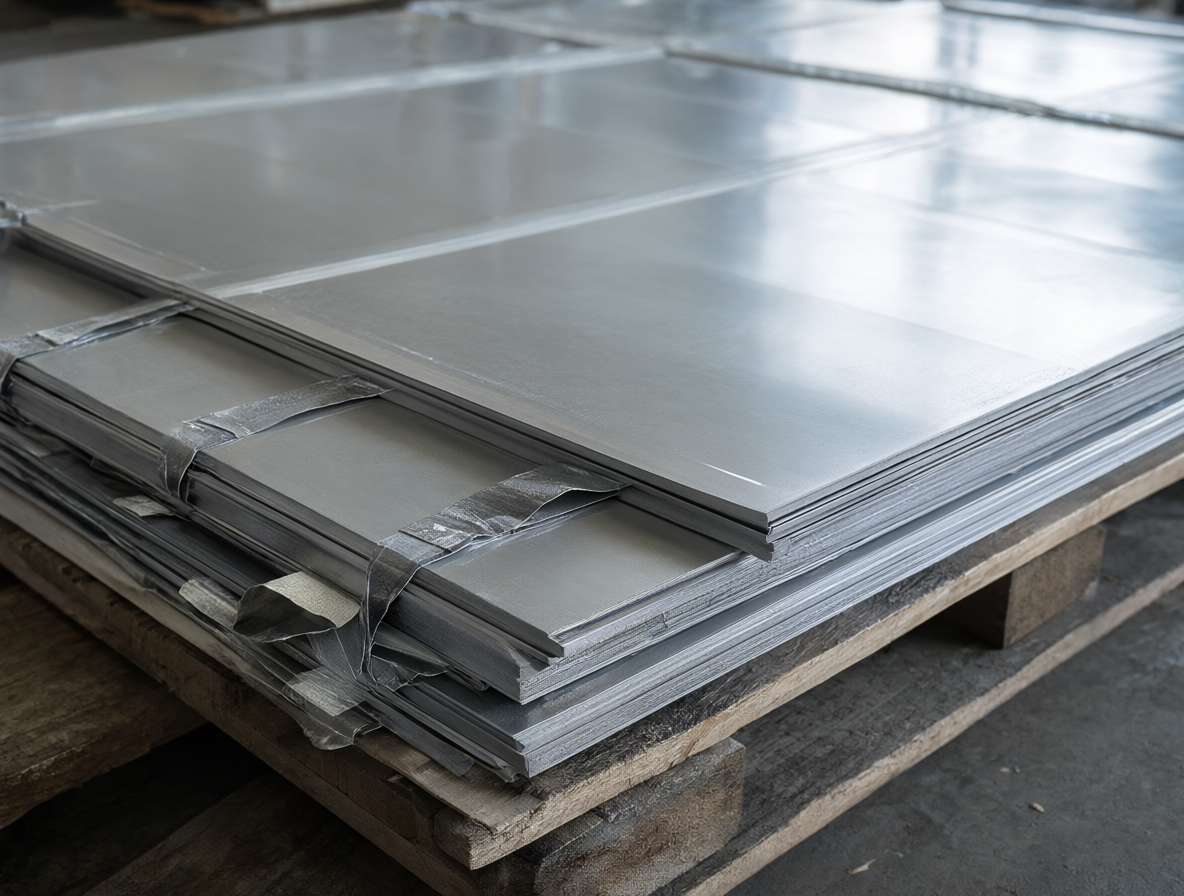
Cold rolling hardens steel. After cold reduction the coil is annealed to soften it, and then — in most cases — given a final light rolling pass, the temper pass, of roughly 0.5–2% reduction. That small pass does three things:
- It flattens the coil and removes the yield-point elongation that would otherwise show as Lüder’s lines (stretcher strains) when the part is formed.
- It sets the final strength level — more temper pass, higher yield strength, less ductility.
- It sets the surface finish and the flatness the customer receives.
So “temper” is really two decisions in one: how much final reduction, and whether the coil was annealed before it. That is why “full hard” and “annealed” are on the same axis even though one is a rolling condition and the other is a heat treatment.
Temper Grade Comparison
| Temper / condition | Approx. temper reduction | Character | Typical use |
|---|---|---|---|
| Full hard (FH) | No anneal; heavily cold reduced | Highest strength, lowest ductility; will not deep draw | Roll-formed profiles, purlins, packaging strapping, panels formed with large radii only |
| Half hard / quarter hard | Intermediate reduction after anneal | Middle strength, limited forming | Parts needing stiffness with a single gentle bend |
| Annealed (no temper pass) | 0% after anneal | Softest, but prone to stretcher strains and poor flatness | Rare; only where the customer does their own final rolling |
| Annealed + skin passed (standard CR) | ~0.5–1.5% | Flat, no stretcher strains, good general formability | The default commercial cold rolled sheet |
| Drawing quality (DQ) / deep drawing (DDQ) | Low temper, low carbon, controlled grain | High elongation, high r-value | Sinks, panels, automotive and appliance stampings |
| EDDS / IF steel | Ultra-low carbon, interstitial-free, sometimes with a trace of Ti/Nb | Highest r-value and elongation; almost no yield-point phenomenon | Severe deep draws, complex automotive panels, parts with tight radii |
DC01–DC07 vs SPCC–SPCE vs ASTM A1008
These three systems describe the same ladder of formability, and this is where most specification errors happen.
| Formability level | EN 10130 (DC series) | JIS G3141 (SPC series) | ASTM A1008 |
|---|---|---|---|
| Commercial quality | DC01 | SPCC | CS (commercial steel) |
| Drawing quality | DC03 | SPCD | DS (drawing steel) |
| Deep drawing quality | DC04 | SPCE | DDS (deep drawing steel) |
| Extra deep drawing | DC05 | SPCF | EDDS |
| Super deep drawing (IF) | DC06 / DC07 | — | EDDS (IF-stabilised) |
The trap: DC01 and SPCC are both “commercial quality,” but they are not identical documents, and neither is a guarantee of formability for your specific part. A supplier quoting “SPCC equivalent to DC01” is making a grade-equivalence claim that a certificate cannot prove — what proves it is the mechanical properties and the r-value at the thickness you are buying.
Also note that the DC and SPC series specify properties by grade and by thickness band. A DC04 at 0.5 mm and a DC04 at 2.0 mm do not have the same guaranteed elongation. Always check the property table for your actual thickness, not the headline grade.
The Properties That Actually Predict Forming Success
| Property | What it tells you | Where it matters |
|---|---|---|
| Yield strength (Rp0.2) | Resistance to initial deformation | Springback, press tonnage, shape retention |
| Tensile strength (Rm) | Ultimate load capacity | Structural panels, roll-formed sections |
| Elongation (A80) | How far the steel stretches before it breaks | Any draw or stretch form; the first number to check |
| r-value (plastic strain ratio) | How well the sheet resists thinning in the thickness direction | Deep drawing — high r-value means the blank draws instead of thinning |
| n-value (strain hardening exponent) | How the steel distributes strain | Stretch forming and complex panels; higher n delays localised necking |
| Yield-point elongation | The Lüder’s band risk | Visible surface parts — stretcher strains appear as flame-like marks |
| Grain size | Formability and surface appearance | Too coarse gives orange-peel; too fine raises strength and lowers ductility |
For a deep-drawn part, ask for r-value and n-value, not just elongation. A sheet can have 35% elongation and still split in a deep draw if its r-value is low, because elongation measures a tensile test, not a draw.
HRPO: Hot Rolled, Pickled and Oiled
Not every “cold rolled” requirement needs cold rolling. HRPO — hot rolled, pickled, and oiled — is a distinct product that buyers often overlook, and it sits between hot rolled black and cold rolled in both cost and quality:
- Pickling removes the mill scale that makes hot rolled black unsuitable for painting, coating, or forming.
- Oiling protects the pickled surface from rust in transit and storage. The oil film type and weight matter — a heavy oil interferes with painting and welding, a light oil may not survive a long sea voyage.
- Thickness range is typically 1.5 mm and up; below roughly 1.2–1.5 mm, cold rolling becomes the practical route.
- Tolerances are looser than cold rolled, and flatness is worse — plan for that if the part is visible or requires tight fit-up.
HRPO is the right answer for parts that need a clean, weldable, paintable surface at a thickness above ~2 mm, where cold rolled would be an unnecessary cost. It is the wrong answer for a thin visible panel or a tight-tolerance stamping.
Thickness Tolerance, Flatness, and Edge Condition
- Thickness tolerance is a percentage of nominal and varies by width and thickness band. A “1.0 mm” sheet can legitimately be 0.96 mm. If your part is tolerance-critical, specify the tolerance class and confirm it on the certificate.
- Flatness is measured as wave height over a defined length. Better flatness costs more; poor flatness shows up as feeding problems on automated presses.
- Camber (edge curvature along the coil) matters for automatic lines more than for manual ones.
- Edge condition: mill edge versus slit edge. Slit edge has a burr and a work-hardened zone; mill edge is smoother but limits the usable width.
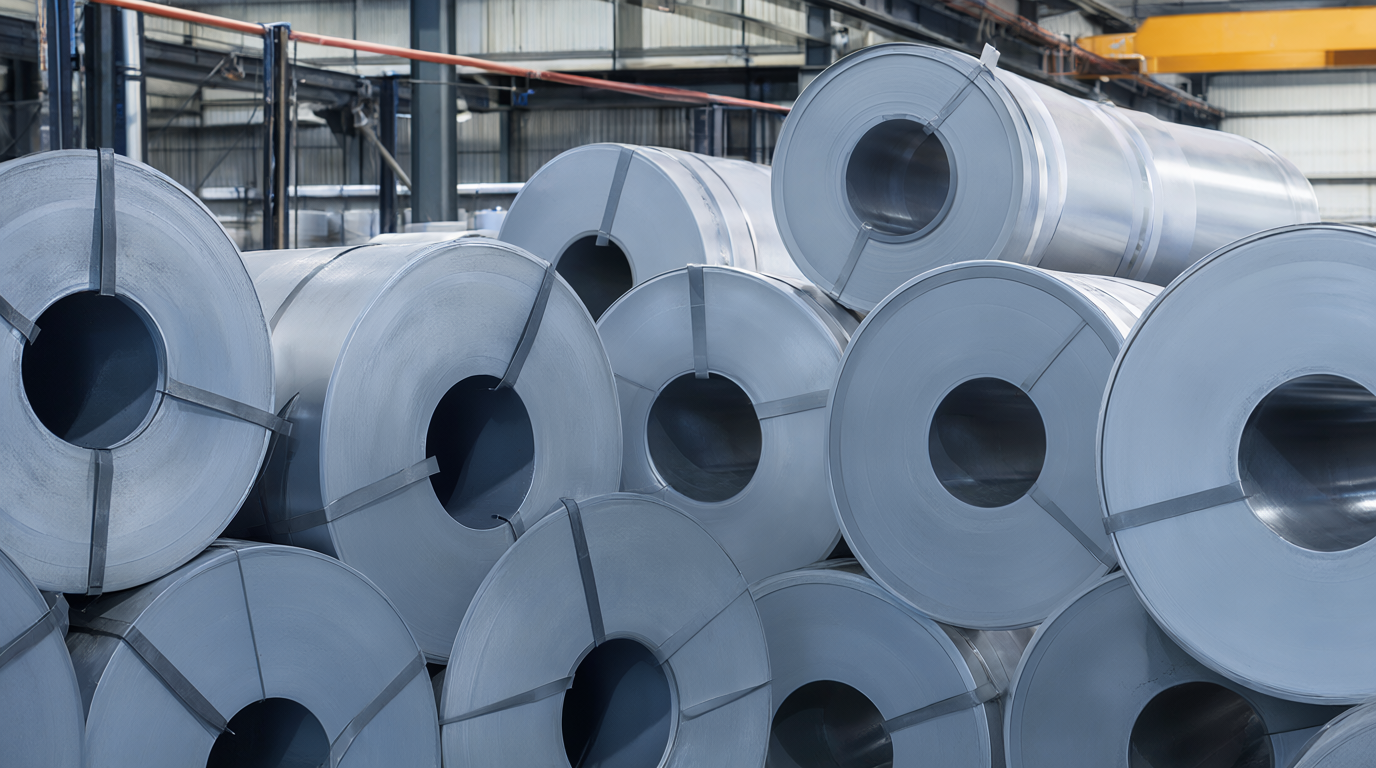
- Coil parameters: inner diameter (508 mm or 610 mm), coil weight, and eye-to-sky or eye-to-horizontal orientation. A coil that does not fit your decoiler is a very expensive mistake.
Surface Finish and Coating Compatibility
- Standard cold rolled (skin passed) is the normal supply condition and takes paint, powder coat, and galvanizing well after degreasing.
- Full hard surfaces are harder and less absorbent; pretreatment before painting needs to be right.
- Oiled surfaces must be degreased before any coating. Specify the oil type if the part goes straight to a paint line.
- If the sheet will be hot-dip galvanized after fabrication, tell the mill — the steel chemistry (particularly silicon and phosphorus) affects the zinc coating appearance, and a “galvanizing quality” designation exists for a reason.
RFQ Checklist
- Grade and standard stated together: DC04 to EN 10130, SPCE to JIS G3141, or EDDS to ASTM A1008
- Temper / delivery condition: full hard, half hard, annealed and skin passed, or as specified
- Dimensions: thickness × width, thickness tolerance class, coil ID, coil weight, and whether slit to width
- Edge condition: mill edge or slit edge
- Surface: oiled or dry, oil type if oiled, and finish requirement
- Mechanical properties required and the thickness band they apply to — elongation, r-value, n-value where forming is critical
- Application described in the RFQ: what the part is, the draw depth or bend radius, and whether it is visible
- Certificates: EN 10204 3.1 with mechanical properties and chemistry per heat
- Quantity in tonnes, packing (eye-to-sky, wooden pallet, edge protector), destination port, Incoterm
FAQ
Can I use SPCC where the drawing calls for DC04? No. They are different formability levels. SPCC will form a simple bend; DC04 is specified where the part has to draw. If you must substitute, test the actual part before committing to the tonnage.
What is the difference between DC04 and DC05? Both are deep drawing grades; DC05 has higher guaranteed elongation and r-value and is intended for more severe draws. The step from DC04 to DC05 is smaller than the step from DC03 to DC04.
Do I need EDDS? Only for severe draws with tight radii or complex geometry. EDDS (IF steel) has the highest r-value and elongation, and the lowest yield strength — it is also more prone to denting in service and costs more. Do not over-specify it for a part that DC04 handles.
Why does my part show flame-like marks after forming? Yield-point elongation — stretcher strains. The coil was insufficiently temper-passed, or it was annealed without a skin pass. Specify skin-passed material, and consider a slight increase in temper reduction.
Is HRPO cheaper than cold rolled? Yes, at the same thickness, because it skips the cold reduction and annealing route. It is only cheaper if the looser tolerance and flatness are acceptable for your part.
Why Source Cold Rolled Sheet from Yihang Metal
Yihang Metal supplies cold rolled sheet and coil to EN 10130 (DC01–DC07), JIS G3141 (SPCC–SPCF), and ASTM A1008 (CS, DS, DDS, EDDS), in full hard, half hard, and annealed and skin-passed tempers, from 0.3 to 3.0 mm, slit to width with mill or slit edge, oiled or dry, on 508 mm or 610 mm cores. Hot rolled pickled and oiled (HRPO) is available from 1.5 mm upward. Every coil ships with an EN 10204 3.1 certificate stating chemistry and mechanical properties for the actual thickness band, with r-value and n-value on request. Standard production runs typically ship in 25–35 days.
Ready to specify your cold rolled sheet? Send us the grade and standard, temper, thickness and width, edge and surface condition, the part you are forming and how deep the draw is, and the quantity, and we will confirm mill availability and lead time with a fixed-price quote and test certificates. Email contact@yihangmetal.com or use the quote form on this page — our team replies within one business day.