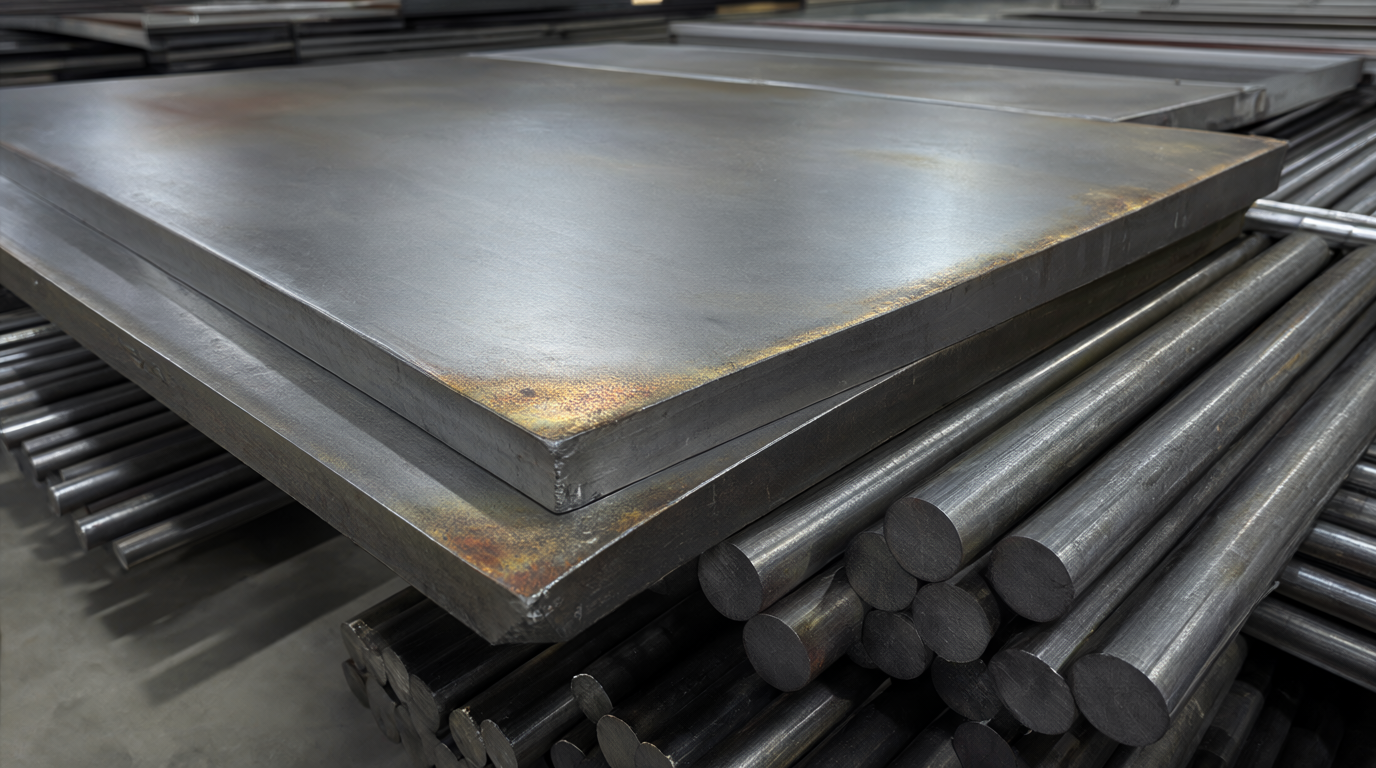
Heat-Resistant Stainless Steel Grade Selection: 309S vs 310S vs 253MA vs 321 vs 347H — How to Specify Sheet, Plate, Bar, and Tube for High-Temperature Service
Heat-resistant stainless steel is specified for one reason: the part has to keep its shape and its oxide scale at a temperature where ordinary 304 or 316 would sag, spall, or creep. The selection problem is that five grades are routinely quoted for the same furnace, kiln, or exhaust application, and they are not interchangeable — the difference is not strength at room temperature, which looks almost identical on a certificate, but scale resistance, creep strength, and phase stability at temperature.
This guide compares the grades buyers actually get quoted, in the forms Yihang supplies — sheet, plate, bar, and tube — and gives a selection path from service temperature through to the RFQ line items that prevent a rejected heat.
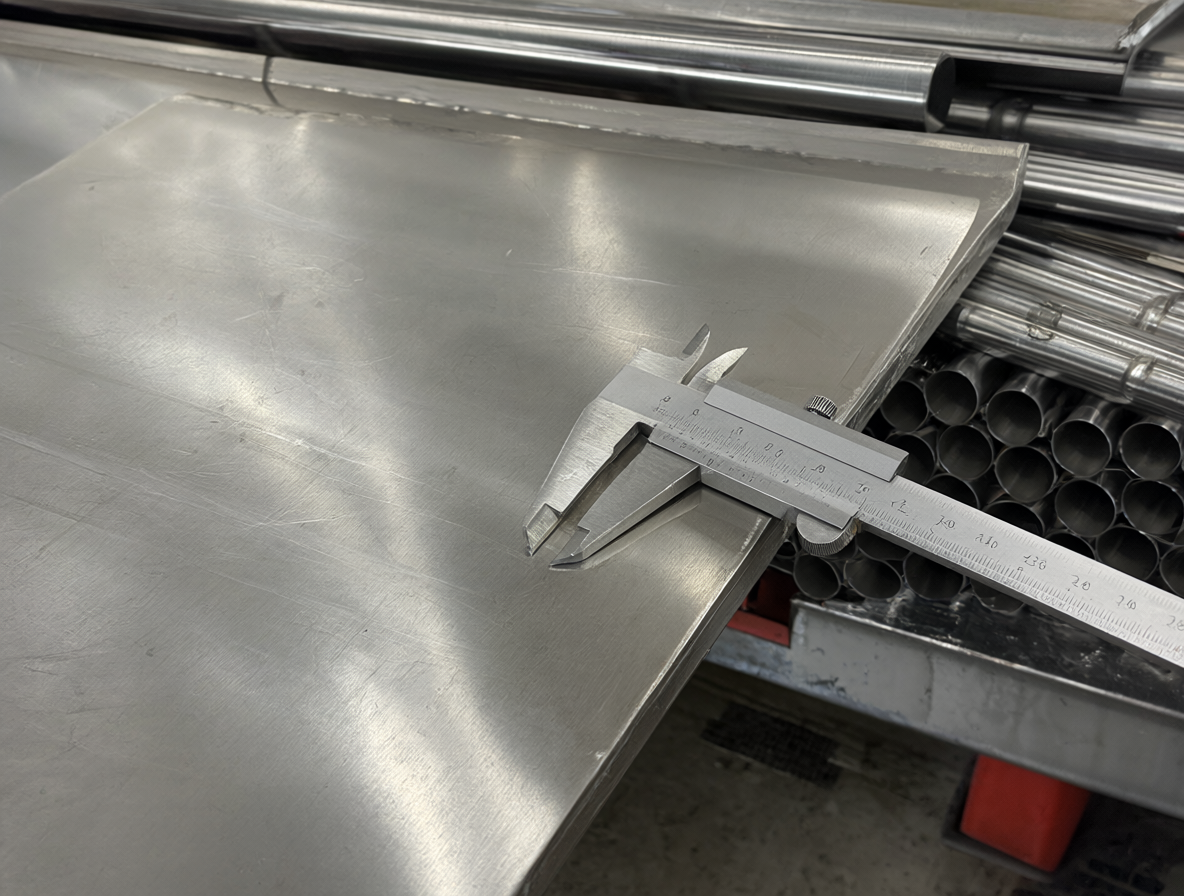
The Five Grades Buyers Actually Get Quoted
| Grade | UNS / EN | Approx. max continuous service | What it is for |
|---|---|---|---|
| 309S | S30908 / 1.4833 | ~980 °C | Furnace parts, heat exchangers, transition sections where 304/316 runs out of oxidation resistance |
| 310S | S31008 / 1.4845 | ~1050 °C | The workhorse for furnace internals, radiant tubes, kiln furniture, annealing hoods |
| 253MA | S30815 / 1.4835 | ~1100 °C | Creep-resistant alternative to 310S; rare-earth and nitrogen alloyed, higher elevated-temperature strength |
| 321 | S32100 / 1.4541 | ~800–870 °C | Titanium-stabilised; the default where 304 would sensitise in the 450–850 °C range |
| 347H | S34709 / 1.4912 | ~870–900 °C | Niobium-stabilised, higher carbon; better creep strength than 321 for cyclic high-temperature service |
The service temperatures above are indicative continuous limits in clean oxidising atmospheres. They fall sharply in sulphidising, carburising, or reducing atmospheres, and they are not design allowables — creep data at the actual stress and temperature is what governs.
Selection Path: Temperature First, Then Atmosphere, Then Stress
Step 1 — What is the metal temperature, not the furnace temperature?
The most common specification error is quoting the furnace setpoint. A furnace running at 1100 °C may have a load at 850 °C and a support at 1000 °C. Specify per component, not per furnace.
- Below ~800 °C with no sensitisation risk: 304/316 is adequate and cheaper.
- 800–900 °C with weldments that cannot be solution-annealed: 321 or 347H.
- 900–1050 °C: 309S, then 310S as the temperature rises or the atmosphere gets more aggressive.
- Above 1050 °C, or where creep deflection drives the design: 253MA or a nickel-based alloy.
Step 2 — What does the atmosphere do to the scale?
| Atmosphere | Effect | Consequence for grade choice |
|---|---|---|
| Oxidising (air, flue gas with excess O₂) | Forms a protective Cr₂O₃ scale | Standard grade table applies; higher Cr and Si improve scale adhesion |
| Carburising (CO, CH₄, endogas) | Carbon diffuses in, chromium carbides form, scale breaks down | Higher Ni grades resist better; 310S and 253MA preferred over 309S; 321/347 are poor choices |
| Sulphidising (fuel oil, H₂S) | Sulphur attacks the scale and forms low-melting sulphides | Higher Ni required; 310S marginal, nickel alloys usually needed |
| Reducing / vacuum | No protective oxide forms | Oxidation limit is irrelevant; creep strength and metal dusting govern |
| Cyclic heating and cooling | Scale spalls on thermal shock | Si-bearing grades (253MA) and 310S resist spalling better than 309S |
Step 3 — Is the failure mode creep or oxidation?
These are different problems with different answers, and confusing them is the second most common specification error:
- Oxidation failure looks like metal loss, scale, and thinning. Fix it with more chromium and silicon, or a higher grade — 309S → 310S → 253MA.
- Creep failure looks like sagging, bowing, and permanent elongation, with a healthy-looking surface. Fix it with more nickel, nitrogen, or a stabilised grade — 321 → 347H → 253MA.
A component that sags has not been “burnt” — it has been over-stressed at temperature. Buying a thicker 309S plate is usually more expensive and less effective than moving to 253MA at the original thickness.
Stabilisation: Why 321 and 347H Exist
When austenitic stainless is held or slowly cooled through roughly 450–850 °C, chromium carbides precipitate at the grain boundaries and the adjacent metal loses its corrosion resistance. That is sensitisation, and in high-temperature service it matters twice: first because the part operates in that window, and second because welds and heat-affected zones sit there during fabrication.
- 321 adds titanium, which combines with carbon preferentially. It is the standard answer for 800–870 °C service and for parts that cannot be annealed after welding.
- 347H adds niobium instead, with a higher carbon content (0.04–0.10%). The higher carbon raises creep strength, which is why 347H — not 321 — is specified for cyclic high-temperature piping and furnace tube supports.
- 347 without the H suffix has lower carbon and lower creep strength. If the specification says 347H, do not accept plain 347 as an equivalent.
Note that stabilisation protects against sensitisation. It does not make 321 or 347 oxidation-resistant above ~900 °C — that is a chromium-and-silicon problem, and it is why 321 is the wrong choice for a 1000 °C furnace muffle no matter how good its weldability is.
310S vs 253MA: The Choice That Saves the Most Money
These two compete directly in the 950–1100 °C band, and the decision is usually made on the wrong basis.
| 310S (1.4845) | 253MA (1.4835) | |
|---|---|---|
| Composition character | 25% Cr, 20% Ni, high Ni for phase stability | 21% Cr, 11% Ni, plus N and rare earths (Ce) |
| Oxidation resistance | Excellent; the reference grade | Comparable or better in cyclic service — the rare earths improve scale adhesion |
| Creep strength | Moderate | Substantially higher at 900–1100 °C |
| Nickel content | High — exposed to nickel price volatility | Lower — less nickel price exposure |
| Availability | Widely stocked in sheet, plate, bar, tube | Narrower mill base; check availability early on large tonnages |
| Where it wins | General furnace internals, simple shapes, wide availability | Components that sag, cyclic duty, weight reduction through thinner sections |
If the component is failing by sagging and it is currently 310S, 253MA is usually the correct upgrade — it addresses creep, and its lower nickel content partly offsets the higher unit price. If the component is failing by metal loss, neither grade is the answer; the atmosphere is the problem.
Forms Supplied and What Changes With Each
| Form | Typical specification | Buyer notes |
|---|---|---|
| Sheet / plate | ASTM A240, EN 10028-7, ASTM A480 for tolerances | Thickness tolerance and flatness matter more than usual — hot-service plates distort in service |
| Bar | ASTM A276, A479 | Straightness and surface condition; 310S bar is often supplied peeled or ground |
| Seamless tube | ASTM A213, A312 | For furnace tubes and radiant sections; check grain size and eddy-current test |
| Welded tube | ASTM A249, A269 | Weld bead and heat-affected zone behaviour in service — stabilised grades help |
| Coil / strip | ASTM A240, EN 10088-2 | For formed parts; confirm finish (2B, No.1) and edge condition |
Documentation and Testing to Lock Into the PO
- EN 10204 3.1 certificate with heat number traceable to the piece — non-negotiable for heat-resistant service.
- Grade verification for 310S and 253MA: these are frequently substituted. Positive material identification (PMI) on receipt is cheap insurance; a 309S delivered as 310S will fail at temperature, not on the day it arrives.
- Grain size for creep service — coarse grain is generally better for creep, fine grain for fatigue. Agree which one the design assumes.
- Intergranular corrosion test (ASTM A262 Practice E, or EN ISO 3651-2) for stabilised grades where sensitisation matters.
- Mechanical properties at room temperature plus, where the design depends on it, elevated-temperature creep or stress-rupture data — ask for the mill’s data for the specific heat, not a generic grade sheet.
- Surface inspection: scale, pits, roll marks, and edge cracks. Heat-resistant grades are often supplied in the as-rolled condition, and a surface defect that would be cosmetic in 304 can be a crack initiation site at 1000 °C.
RFQ Checklist
- Grade, with UNS and EN equivalent stated (309S / S30908 / 1.4833, and so on)
- Form and standard: sheet or plate to A240 / EN 10028-7, bar to A276 / A479, tube to A213 / A312
- Dimensions: thickness × width × length, or OD × wall × length; thickness tolerance class
- Surface finish and condition: 2B, No.1, pickled, descaled, peeled, ground
- Service conditions stated in the RFQ: metal temperature, atmosphere, cyclic or continuous, and whether creep governs
- Delivery condition and heat treatment if any (solution annealed, pickled and passivated)
- Test requirements: 3.1 certificate, PMI, grain size, intergranular corrosion test, eddy current or hydrostatic test for tube
- Quantity, packing (heat-resistant plate is heavy — confirm lifting points and bundle limits), destination port, Incoterm
FAQ
Can I substitute 309S for 310S? Only below roughly 950 °C. Above that, 309S oxidises and creeps faster. The two look identical on a certificate and are not interchangeable in service.
Is 321 a heat-resistant grade? It is a stabilised grade for the 450–850 °C sensitisation window, not a high-temperature oxidation grade. Above ~900 °C it is the wrong answer regardless of how well it welds.
Why is my 310S component sagging if the surface looks perfect? That is creep, not oxidation. The surface is intact because the chromium is doing its job; the section has simply been over-stressed at temperature. Move to 253MA or increase section, and check the actual metal temperature — it is usually higher than the design assumed.
347 or 347H? 347H. The higher carbon is what delivers the creep strength the grade is specified for; plain 347 is not an equivalent substitution.
Why Source Heat-Resistant Stainless from Yihang Metal
Yihang Metal supplies 309S, 310S, 253MA, 321, and 347H in sheet, plate, bar, coil, and seamless or welded tube to ASTM A240, A276, A479, A213, and A312, with EN 10028-7 and EN 10088-2 equivalents, in 2B, No.1, pickled, peeled, and ground conditions. Every heat ships with an EN 10204 3.1 certificate traceable to the piece, PMI verification on request, and grain size and intergranular corrosion testing where the application requires it. Standard production runs typically ship in 25–35 days.
Ready to specify your heat-resistant grade? Send us the grade, form and standard, dimensions, surface condition, service temperature and atmosphere, and the test requirements, and we will confirm mill availability and lead time with a fixed-price quote and test certificates. Email contact@yihangmetal.com or use the quote form on this page — our team replies within one business day.