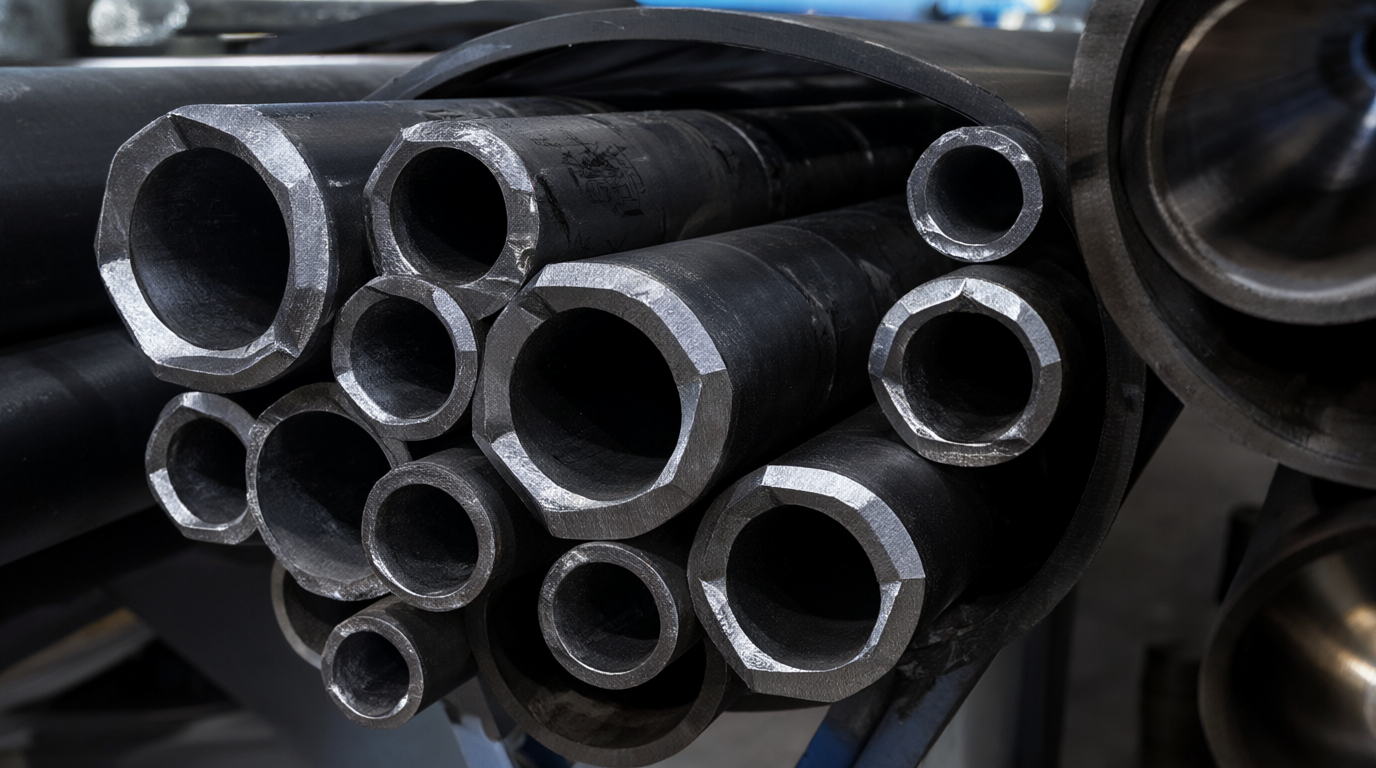
Pipe End Finish: Bevel vs Threaded vs Grooved — How to Specify End Preparation Before Ordering
Pipe end finish is the last line of a specification and the first thing that stops a shipment at the site gate. A pipe that is dimensionally perfect and metallurgically correct is still unusable if the ends cannot be joined the way the installer intends — and once the ends are cut, there is no economical way to change them.
The problem is that “pipe” covers four fundamentally different end preparations, each tied to a different joining method, a different standard, and a different inspection step. Buyers routinely leave the end finish unstated, receive plain-end pipe, and then discover their welder needed a bevel — or their fitter needed threads.
This guide covers the four end types, what each standard actually requires, and how to write an end-finish clause that matches the installation method.
The Four End Types
| End type | Joining method | Governing standard | Typical use |
|---|---|---|---|
| Plain end (PE) | Butt weld on site, or grooving | Product standard only | Site-fabricated welds, spool pieces |
| Beveled end (BE) | Butt weld | ASME B16.25, API 5L | Line pipe, pressure piping, structural tube |
| Threaded end (TE) | Screwed coupling | ASME B1.20.1 (NPT), API 5B, ISO 7-1 (BSP) | Small-bore water, gas, air lines |
| Grooved end | Mechanical coupling | AWWA C606, VdS/UL for fire | Fire protection, HVAC, quick assembly |
Two of these need no end preparation at all — plain end is simply the as-cut or as-rolled end. The other two require machining, and machining is where the cost and the risk sit.
Plain End: The Default You Should Not Assume
If a purchase order says nothing about ends, you will normally receive plain-end pipe. That is the default in most product standards, and it is not a defect — it is simply an unfinished end.
Plain end is the right choice when:
- The pipe will be cut and fitted on site anyway, so a factory bevel would be removed.
- The pipe will be grooved on site with a portable roll groover.
- The pipe is for structural or piling use where ends are welded with a site-prepared bevel.
The trap: plain end is also what you get when the mill does not know what you need. If your fabricator’s welding procedure assumes a machined bevel and the pipe arrives square-cut, every joint becomes a site-grinding operation — slow, inconsistent, and a common source of weld defects. If you need a bevel, say so explicitly.
Beveled End: Angle, Root Face, and Land
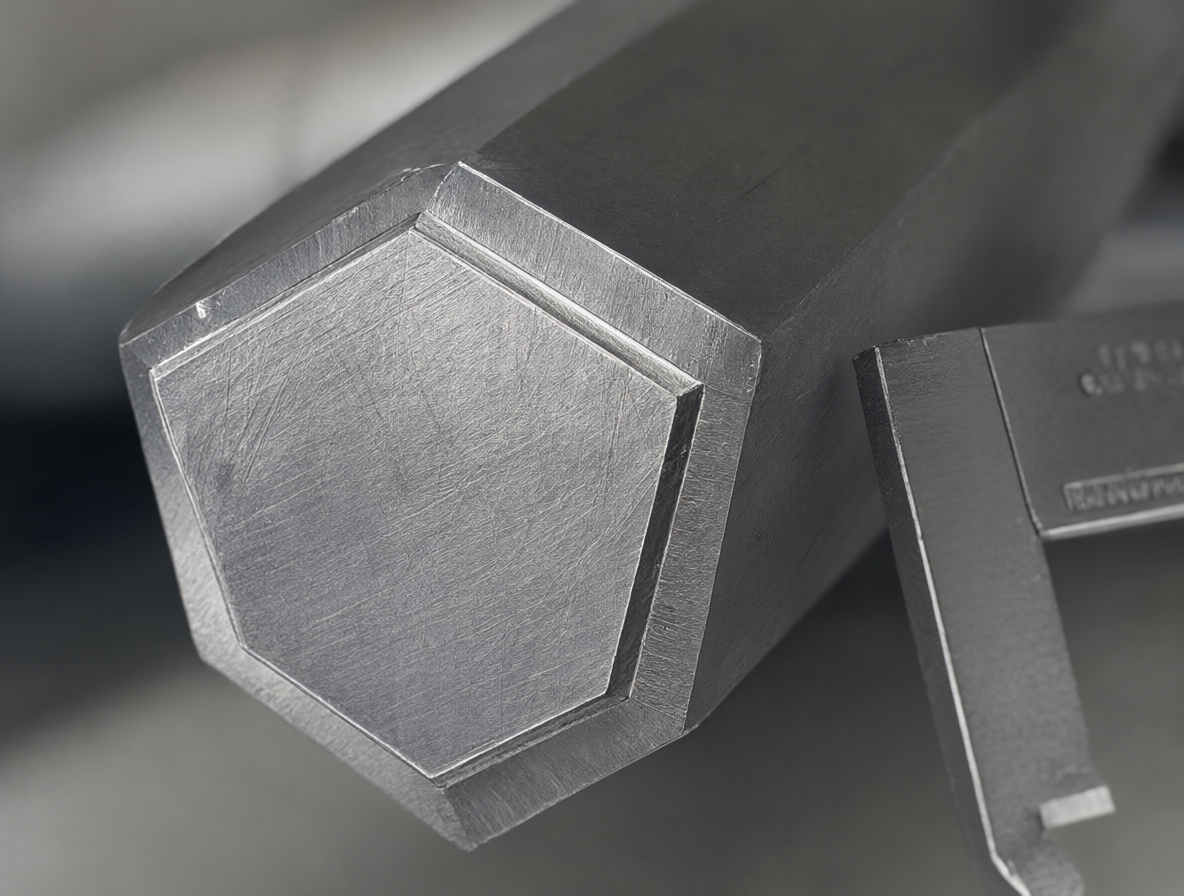
A bevel is a chamfer machined or ground on the pipe end to create the groove for a butt weld. Three dimensions matter, and they are specified separately:
| Dimension | What it is | Typical value |
|---|---|---|
| Bevel angle | Total included angle of the chamfer | 30° +5°/−0° (ASME B16.25), giving a 60° included groove |
| Root face (land) | Unbevelled flat at the bore, perpendicular to the axis | 1.6 mm ±0.8 mm for wall < 20 mm; larger for heavy wall |
| Wall thickness tolerance at end | Permitted variation of the beveled face | Per ASME B16.25, typically −0 / +1.6 mm |
ASME B16.25 is the reference for bevel geometry on butt-welding ends. It defines the standard 30° bevel, the root face, and the permissible tolerances, and it is the specification to cite when you want a bevel that matches a standard fitting.
API 5L takes a different approach: for PSL2 pipe it requires the ends to be beveled unless otherwise agreed, with the bevel angle and root face defined in the standard, and it permits plain ends by agreement. If you are ordering line pipe and want bevels, confirm it — the default under some order options is plain end.
Two practical points buyers get wrong:
- Bevel angle is the included angle in the finished groove, not the chamfer on each pipe. A “30° bevel” on each of two pipes produces a 60° included groove. Suppliers sometimes quote one and mean the other. State the included angle you need and let the mill translate it.
- Root face is not optional. A bevel with no root face has a knife edge at the bore, which burns through during welding. A root face that is too tall prevents penetration. Specify both the angle and the land, or cite ASME B16.25 and let it govern both.
Threaded End: Which Thread Standard
Threaded ends are used on small-bore pipe — typically NPS 2 and below — for water, gas, air, and steam lines where welding is impractical or where the system must be dismantled.
The critical point: “threaded” is not a specification. There are two incompatible thread families in common use, and they do not interchange.
| Thread family | Standard | Angle | Where used |
|---|---|---|---|
| NPT — American National Taper Pipe Thread | ASME B1.20.1 | 60° | North America, API line pipe, much of Asia-Pacific oil and gas |
| BSPT — British Standard Pipe Taper | ISO 7-1 (formerly BS 21) | 55° | Europe, Middle East, Commonwealth markets |
| BSPP — British Standard Pipe Parallel | ISO 228-1 | 55° parallel | Europe; seals on a face or washer, not on the thread |
NPT and BSPT look similar and will sometimes start to engage, which is exactly what makes the mistake expensive: a joint that threads halfway and then leaks under pressure. The thread angles differ (60° vs 55°), the pitch differs at the same nominal size, and the two will never seal correctly together.
For line pipe, API 5B defines thread dimensions, gauging, and inspection for API round thread and buttress thread casing and tubing. If the pipe is for oilfield service, cite API 5B rather than ASME B1.20.1 — they are different thread forms for different products.
What to state for threaded ends:
- Thread standard and type — for example “NPT per ASME B1.20.1” or “BSPT per ISO 7-1”.
- Which ends — both ends threaded (T&E, threaded and coupled), or one end threaded and one plain (T&P).
- Couplings — whether couplings are supplied, and to what standard (API 5B for line pipe, ASTM A865 for threaded couplings).
- Protection — thread protectors are mandatory in practice; unstated, threads arrive damaged and the joint will not seal.
Grooved End: The Fire-Protection Default
Grooved ends carry a rolled or cut circumferential groove near the end, which a mechanical coupling with a gasket clamps into. The joint is fast to assemble, needs no welding, and allows for slight movement — which is why it dominates fire protection and is increasingly used in HVAC and process water.
AWWA C606 defines grooving dimensions for steel pipe. For fire protection, the coupling and groove must also satisfy the listing authority (UL, FM, VdS), and the groove dimensions are tied to the coupling manufacturer’s specification rather than to a single universal standard.
Two consequences:
- The groove is usually rolled on site or by a fabricator, not by the pipe mill. Most pipe is supplied plain-end and grooved downstream. If you need factory grooving, specify it and state the coupling standard.
- Wall thickness matters. Roll grooving has a minimum wall thickness for a given size — thin-wall pipe can deform or the groove can be too shallow to retain the coupling. Confirm the wall is groovable before committing to a grooved system.
How End Finish Affects Price and Lead Time
End preparation is a secondary operation, and it is priced and scheduled separately from the pipe itself.
| End finish | Cost impact | Lead time impact |
|---|---|---|
| Plain end | Baseline | None |
| Beveled end | Low — a machining pass per end | Small; may add a few days |
| Threaded end | Moderate — threading, gauging, couplings, protectors | Moderate; gauging and coupling supply add time |
| Grooved end | Moderate — rolling or machining plus gauge check | Moderate; usually done at a fabricator |
For large tonnages, end preparation can be the difference between shipping from stock and waiting for a machining slot. If the schedule is tight, ask early whether the mill can supply the end finish you need, or whether a domestic fabricator should do it after import. The second option is often faster and not much more expensive.
Inspection: What to Check at Goods-In
End finish is one of the few properties you can verify completely at receiving, so it is worth a defined check.
| End type | Check | Tool |
|---|---|---|
| Beveled | Angle, root face height, absence of laminations or cracks in the beveled face | Bevel gauge, steel rule, visual / PT on critical service |
| Threaded | Thread engagement, pitch diameter, taper, thread damage | Thread plug gauge (API 5B or B1.20.1 as applicable) |
| Grooved | Groove diameter, groove width, position from end, wall deformation | Groove gauge from the coupling manufacturer |
| Plain | Squareness of cut, burr removal | Square, visual |
Bevel inspection deserves special attention on thick-wall pipe. A bevel exposes the through-thickness section, and that is exactly where laminations and inclusions sit. A beveled face that shows laminations is a reject — welding over it will produce a joint with a built-in planar defect. Ask for the beveled ends to be visually inspected and, on critical service, dye-penetrant tested.
Threads are the other high-risk item. Gauging is fast and definitive: a thread that does not accept the gauge is wrong, regardless of what the certificate says. If threads matter to your installation, require gauge inspection and a report.
Writing the Clause
| Element | Weak | Enforceable |
|---|---|---|
| End type | “finished ends” | “Beveled both ends (BE/BE)” |
| Geometry | “standard bevel” | “30° +5/−0° bevel, 1.6 mm ±0.8 mm root face, per ASME B16.25” |
| Thread spec | “threaded” | “NPT per ASME B1.20.1, both ends, with couplings and protectors” |
| Groove spec | “grooved” | “Roll grooved per AWWA C606, dimensions to suit [coupling make]” |
| Inspection | (unstated) | “Threads gauged 100%; bevel faces visually inspected, PT on request” |
The last line is what turns an end finish from a hope into a deliverable. Without an inspection requirement, a bevel that is 45° instead of 30° will ship, and you will discover it when the welder cannot close the root gap.
FAQ
If I do not specify ends, what do I get? Plain end, in most cases. Some line pipe standards default to beveled for certain specification levels, so confirm rather than assume. Plain end is the safer assumption when planning.
Can a plain end be beveled after delivery? Yes, with a portable beveling machine or grinder. It is common and inexpensive for moderate quantities, but the quality is less consistent than a factory machined bevel and the root face is harder to control. For critical welds, buy the bevel.
Will NPT and BSPT interchange? No. They have different thread angles (60° vs 55°) and different pitch at the same nominal size. A joint may partially engage and then leak. Always state the standard.
Does beveling reduce the pipe length? No — beveling removes material from the wall, not from the length. The overall length is measured end to end and is unaffected, which is why beveled pipe still meets the nominal length tolerance.
Can grooved pipe be used for fire protection? Yes, and it is the dominant method — but the coupling and groove must be listed for fire service (UL/FM), and the wall thickness must be groovable. Confirm both before ordering.
Is a beveled end weaker than a plain end? No. The bevel is removed by the weld; the finished joint is as strong as the weld procedure makes it. The bevel exists to allow a proper root gap and full penetration.
Why Source End-Prepared Pipe from Yihang Metal
We supply carbon, stainless, galvanized, alloy, and aluminium pipe and tube with the end finish stated in writing and matched to your joining method.
- Beveled to a named standard — ASME B16.25 or API 5L geometry with the angle, root face, and tolerance stated on the order, so the bevel matches your fittings and your welding procedure.
- Threaded to the right family — NPT per ASME B1.20.1, BSPT per ISO 7-1, or API 5B for oilfield service, with couplings and thread protectors supplied as specified.
- Grooved to coupling specification — roll or cut grooving to AWWA C606 dimensions sized for your coupling make, with wall thickness confirmed groovable first.
- End inspection reported — thread gauging and bevel face inspection results included with the documents, so ends are verified before the pipe leaves, not after it arrives.
- Plain end when that is what you need — and we will say so if beveling on site is the cheaper route for your quantity and schedule.
Tell us the joining method, the pipe size and wall, and the standard you are working to, and we will confirm the end preparation, the inspection step, and whether it ships from stock or needs a machining slot.
Request a quote or end-finish review: contact@yihangmetal.com — include the pipe specification, size, wall thickness, quantity, joining method, and required end standard, and we will confirm availability and documentation.