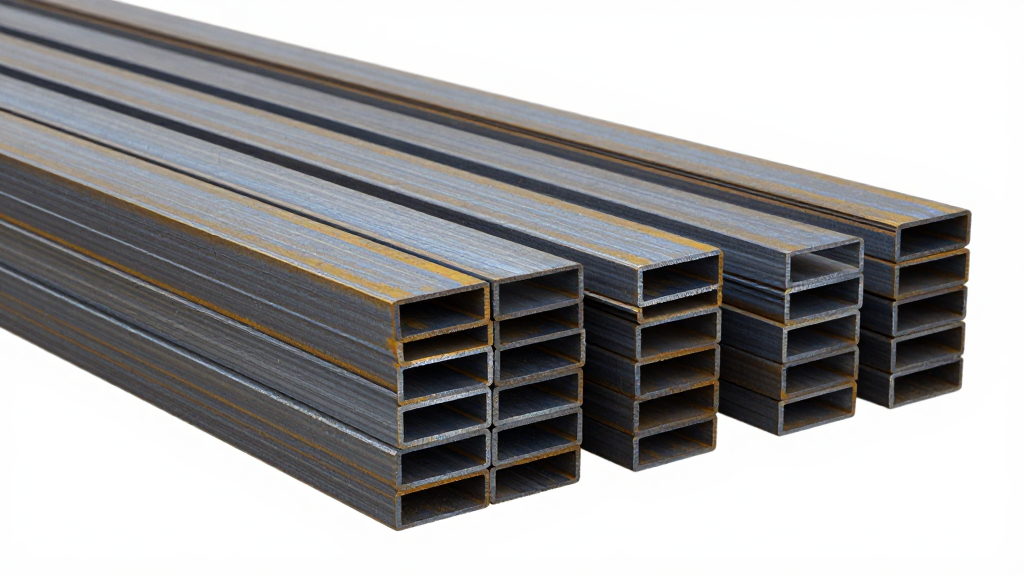
If you are sourcing steel flat bar from China and the quotation comes back ambiguous – “A36 flat, 50×6, mill edge, black finish” with no tolerance, no standard, and no certificate – the reason it matters is that a flat bar is not a single product. It is a family of products split four ways: hot-rolled vs cold-drawn (process, tolerance, and price), mill edge vs sheared edge vs cut-from-plate (edge condition, straightness, and how the bar fits downstream), grade (A36 / Q235 for structural, 1045 / 4140 for mechanical and hardenable use), and surface (black / pickled / cold-drawn / ground). Specify only “flat bar 50×6” and the supplier is free to ship the cheapest combination – which is often the wrong one for your application.
This guide walks procurement managers through the four-way decision: hot-rolled vs cold-drawn flat bar, mill edge vs sheared vs cut-from-plate, the grade matrix (A36, Q235, 1045, 4140 and when each is the right call), the flat bar tolerance picture across ASTM A276/A484, EN 10058, and GB/T 702, surface finish options, common stock sizes vs made-to-order, machining and galvanizing considerations, and an RFQ checklist that returns a clean, comparable quotation. We supply steel flat bar from Yihang Metal to fabricators, machinery builders, and steel distributors worldwide, so the recommendations below come from real RFQs – and from the specification gaps that cause the most rejections at receipt inspection.
What Steel Flat Bars Are and Where They’re Used
A steel flat bar is a long product with a rectangular cross-section – defined by width x thickness, supplied in straight lengths (typically 6 m, with 3 m and random lengths also common). It is one of the most versatile carbon and alloy steel formats because the rectangular section is easy to cut, drill, weld, bend, and machine into a huge range of components. Flat bars sit between plate (wide, sheared or cut from coil) and structurals (I-beams, angles, channels): they carry bending load in one direction, are easy to fixture, and are the default “stock shape” for machine shops and fabricators.
Typical end uses for steel flat bar include:
- Structural and fabrication – base plates, gussets, brackets, stiffeners, lintels, and connectors welded into structural steelwork. A36 and Q235 dominate here.
- Machinery and machine parts – guide rails, wear strips, spacers, machine frames, and fixtures. 1045 and 4140 take over where hardness, wear resistance, or through-hardening is required.
- Automotive and trailer – leaf spring leaves (spring-steel flat), trailer chassis cross-members, axle mounts, and bracketry.
- Tooling and dies – die blocks, holder blocks, and tooling plates in 4140 or pre-hardened grades (P20-equivalent). 4140 flat bar is the workhorse alloy flat for tooling.
- Hardware and components – hinges, clamps, clips, chain links, conveyor parts, agricultural implement parts, and hand tools.
- Marine and offshore – brackets, railing stanchions, and ladder components, often galvanized after fabrication.
The cross-section versatility is why flat bar appears on so many BOMs – and why getting the process, edge, grade, and surface right in the RFQ is worth the effort. A 50×6 mm flat bar from one supplier and another labeled the same can be three different products in tolerance, edge, and surface.
Hot-Rolled vs Cold-Drawn Flat Bar: The Critical Distinction
The first and most consequential split in flat bar is the manufacturing process. Hot-rolled flat bar is rolled from heated billet through a series of rolls at temperatures above the steel’s recrystallization point; the bar forms under heat, the surface carries a dark oxide scale, and tolerances are relatively loose. Cold-drawn flat bar starts from a hot-rolled blank that is pickled (scale removed), then drawn through a die at room temperature; the cold drawing produces a bright, smooth surface, tighter dimensional tolerances, and a degree of work hardening that raises strength and hardness.
The two are not interchangeable. They differ in tolerance, surface, mechanical properties, cost, and downstream behavior:
| Property | Hot-Rolled Flat Bar | Cold-Drawn Flat Bar |
|---|---|---|
| Process | Rolled from heated billet | Hot-rolled blank, pickled, cold-drawn through die |
| Surface | Black oxide scale (or pickled) | Bright, smooth, scale-free |
| Width tolerance (typ., 50 mm) | ±0.6 to ±0.8 mm | ±0.10 to ±0.20 mm (h11) |
| Thickness tolerance (typ., 6 mm) | ±0.3 mm | ±0.05 to ±0.10 mm (h11/h9) |
| Straightness (typ.) | ~2 mm/m | ~0.5 to 1 mm/m |
| Yield strength (A36/Q235) | As-rolled (~235-250 MPa min) | Higher (work-hardened, +15-30%) |
| Surface hardness | As-rolled | Raised by cold work |
| Machinability | Good (softer, but scale must be removed) | Better (clean surface, close size, but slightly harder) |
| Relative cost | Baseline (lowest) | +15% to +40% over hot-rolled |
| Best fit | Structural, brackets, general fabrication, welding | Shafts, guides, precision machine parts, close-fit components |
The practical rule: specify hot-rolled flat bar for structural and welded fabrication where dimensional precision is secondary and surface scale is acceptable or will be removed in fabrication; specify cold-drawn flat bar for machined parts, precision guides, and any component where the cross-section must mate to a tolerance or the surface will be visible. Buying cold-drawn for a bracket that will be welded and painted is wasted money; buying hot-rolled black for a precision guide that must slide in a channel will cost you machining time to clean up the size.
Cost tip: cold-drawn flat bar can save downstream machining cost because the size is close to nominal and the surface is clean. For parts where you would otherwise have to face-mill a hot-rolled bar to size and surface, cold-drawn often wins on total cost – even though the material line on the quote is higher. Run the total-cost comparison, not just the $/kg line.
Mill Edge vs Sheared Edge vs Cut-from-Plate: Edge Condition Matters
The second axis – and one that catches buyers off guard because it is rarely on a one-line RFQ – is edge condition. The edge of a flat bar is not just cosmetic; it sets the straightness, the cross-section consistency, the presence of work-hardened or heat-affected material at the edge, and how the bar behaves in bending, welding, and machining. There are three edge conditions you will be quoted against:
Mill Edge (Rolled Edge)
A mill edge flat bar is produced directly by the rolling mill – the width is set by the roll pass, and the edges carry the natural rounded, slightly irregular profile left by hot rolling. Mill edge is the cheapest edge condition because no secondary shearing or cutting is needed, and it is the standard edge on most commodity hot-rolled flat bar. The edges are rounded (not square), may show minor ripple or camber along the length, and the width tolerance is the mill’s rolling tolerance (looser than a sheared edge). Mill edge is correct for structural brackets, general fabrication, and any use where the edge profile does not need to be square or precision-controlled.
Sheared Edge
A sheared edge flat bar has been cut to width from a wider plate or strip on a guillotine shear. The edges are square (not rounded), straighter than a mill edge, and the width tolerance is tighter – typically ±0.5 mm or better, depending on the shearing line. The trade-off is that shearing leaves a slight burr on the bottom edge, a work-hardened zone at the cut (a few tenths of a millimetre deep), and a very slight edge camber on long lengths. Sheared edge is the standard choice when the edge must be square for fit-up, when the part will be welded along the edge, or when a cleaner visual appearance is needed – and it is the typical edge on flat bar cut from plate for non-standard sizes.
Cut-from-Plate (Flame or Plasma Cut)
For sizes outside the rolling range (very wide, very thick, or non-standard width-thickness combinations), flat “bar” is produced by cutting strips from a plate using flame (oxy-fuel) or plasma cutting. This is the most flexible route – any width x thickness the plate supports – but it carries the cut-edge characteristics: a slightly textured cut surface, a thin heat-affected zone (HAZ) on flame-cut edges, and a wider width tolerance (typically ±1 to ±2 mm). Flame-cut flat is correct for one-offs, non-standard sizes, and heavy structural parts where the HAZ will be machined off or is not a concern. It is the wrong choice for precision machined parts without edge machining.
| Edge Condition | Edge Profile | Width Tolerance | Straightness | Typical Use |
|---|---|---|---|---|
| Mill edge | Rounded, natural | ±0.6 to ±1.5 mm | ~2 mm/m | Commodity structural, brackets, general fab |
| Sheared edge | Square, slight burr | ±0.3 to ±0.5 mm | ~1 mm/m | Square-edge fit-up, welded components, non-stock sizes |
| Cut-from-plate (flame/plasma) | Textured cut, HAZ on flame | ±1 to ±2 mm | ~1-2 mm/m | Non-standard sizes, heavy sections, one-offs |
Specifying edge condition on the RFQ prevents the most common edge-related dispute: the buyer expected square sheared edges for fit-up, the supplier shipped mill-edge rolled bar (cheaper, rounded), and the parts do not seat properly in the assembly. Write the edge condition into the spec – “mill edge” or “sheared edge” or “cut from plate, edges machined” – and the quotation becomes comparable across suppliers.
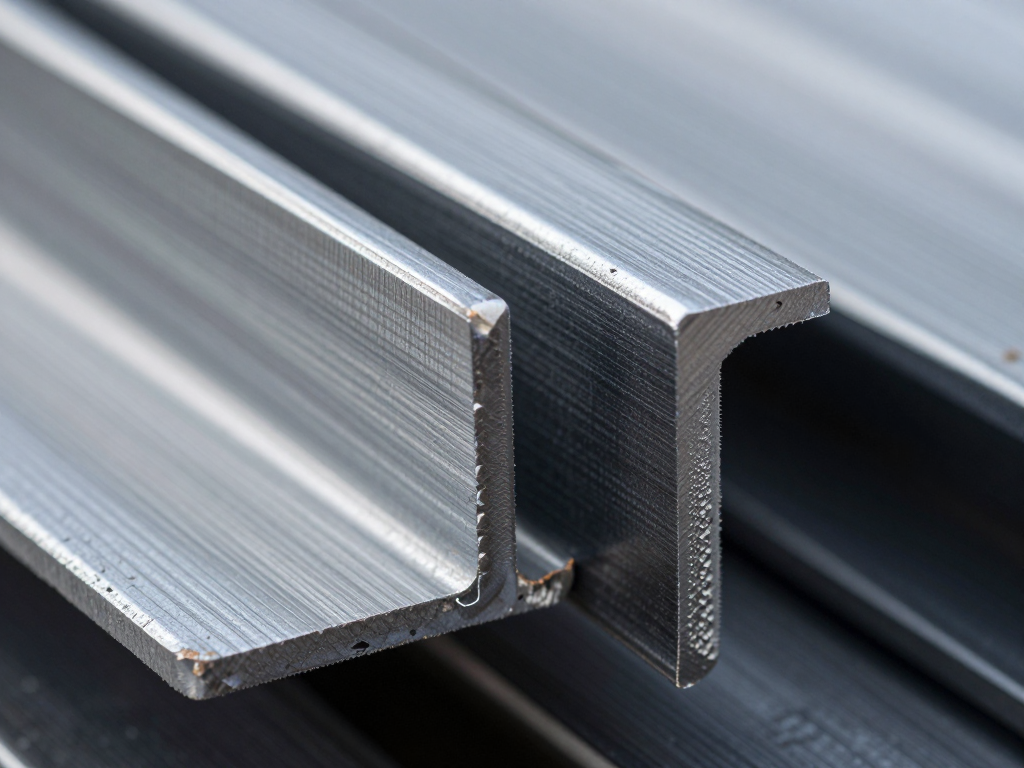
Grades Compared: A36, Q235, 1045, 4140 (and When to Use Each)
Grade is the third decision axis, and it follows the application. ASTM A36 flat and Q235 are the structural carbon grades – low carbon, weldable, cheap, and the default for fabrication. 1045 is a medium-carbon grade for machined parts that need higher strength and hardness than structural steel. 4140 is a chromium-molybdenum alloy steel that through-hardens and is the standard alloy flat for tooling, shafts, and high-stress mechanical parts. The four are not substitutes; choosing the wrong grade either overspends or under-delivers.
| Grade | Standard | Type | ~C (%) | Min Yield (MPa) | Tensile (MPa) | Best Fit |
|---|---|---|---|---|---|---|
| A36 | ASTM A36 / A6 | Structural carbon | ~0.25 max | 250 | 400-550 | Structural steelwork, brackets, plates, welded fabrication |
| Q235 | GB/T 700 | Structural carbon | ~0.22 max | 235 (≤16mm) | 375-500 | General structural, China-default equivalent of A36 |
| 1045 | SAE/AISI, GB 45 | Medium-carbon | ~0.45 | ~370 (hot-rolled) | ~565 min | Shafts, gears, bolts, machined parts needing strength |
| 4140 | SAE/AISI, GB 42CrMo | Cr-Mo alloy | ~0.40 | ~655 (annealed) | ~930 (annealed); higher Q&T | Tooling, axles, shafts, gears, high-stress parts |
When to Specify A36 vs Q235
A36 and Q235 are functionally close – both are low-carbon structural steels with similar yield (~235-250 MPa) and both weld readily without preheat for typical thicknesses. A36 is the ASTM grade specified for North-American-designed structures and is required where drawings, AWS D1.1 weld procedures, or project specs call it out by name. Q235 is the GB grade, the Chinese structural default, and is typically lower cost and more readily available from Chinese mills. If your customer’s drawing says A36, ship A36 (or an equivalent with a documented cross-reference – our standards guide covers the equivalence). If the drawing is silent and you are buying for general fabrication, Q235 is the cost-default and the easier grade to source in volume from China.
When to Step Up to 1045
1045 (close to GB 45) is a medium-carbon steel that takes to machining, induction hardening, and flame hardening – and is meaningfully stronger and harder than A36/Q235 in the as-supplied condition. Use 1045 when the part is a machined component (shaft, pin, gear, spindle, bolt) that needs higher strength or a hardened surface, and where weldability is not the primary concern (1045 has reduced weldability vs A36 and benefits from preheat when welded). 1045 is the entry-level “mechanical” grade – the cheapest step above structural carbon for parts that see real load.
When to Step Up to 4140
4140 flat bar (close to GB 42CrMo) is the standard chromium-molybdenum alloy flat for tooling and high-stress mechanical parts. The chromium adds hardenability (it through-hardens in sections that 1045 will not), the molybdenum adds temper resistance and high-temperature strength, and the grade responds cleanly to quench-and-temper. Specify 4140 for: tooling and die blocks (often supplied pre-hardened to ~28-34 HRC), gears, pinions, and splined shafts that see high contact and bending stress, axle shafts and high-load transmission components, bolt and fastener stock for high-strength bolting, and structural pins and clevises in heavy equipment. 4140 costs more than 1045, which costs more than A36 – and using A36 where 4140 is required is a failure waiting to happen, while using 4140 where A36 would do is pure overspend.
Grade-selection rule of thumb: structural/welded fabrication = A36 or Q235; machined part needing strength above structural = 1045; tooling, gear, axle, or high-stress part needing through-hardening = 4140. The grade follows the application, not the price list.
Dimensional Tolerances: Width, Thickness, Length, Straightness
Flat bar tolerance is where most cross-supplier quotation variance hides. Two quotes that look identical on the line items can ship to materially different tolerances depending on the standard the supplier is working to. The three standards you will encounter are EN 10058 (European hot-rolled flat bars for general purposes), ASTM A276 / A484 (stainless and general bar, with A484 the general tolerance spec), and GB/T 702 (Chinese hot-rolled section and bar dimensions). Each has its own width, thickness, length, and straightness tables – and they are not identical.
Below are representative hot-rolled flat bar tolerances at the sizes buyers actually order. Cold-drawn tolerances (h11 / h9) are an order of magnitude tighter and are quoted separately by the drawing shop.
| Dimension (mm) | EN 10058 | GB/T 702 | ASTM A484 (ref.) |
|---|---|---|---|
| Width ≤ 30 | ±0.5 | ±0.5 | ±0.8 |
| Width 30-50 | ±0.6 | ±0.6 | ±0.8 |
| Width 50-80 | ±0.7 | ±0.8 | ±1.2 |
| Width 80-120 | ±0.9 | ±1.0 | ±1.6 |
| Width 120-150 | ±1.0 | ±1.2 | ±1.6 |
| Width 150-200 | ±1.2 | ±1.5 | ±2.4 |
| Thickness ≤ 5 | ±0.2 | ±0.2 | ±0.3 |
| Thickness 5-10 | ±0.3 | ±0.3 | ±0.4 |
| Thickness 10-15 | ±0.4 | ±0.4 | ±0.5 |
| Thickness 15-25 | ±0.5 | ±0.5 | ±0.8 |
| Thickness 25-40 | ±0.6 | ±0.6 | ±0.8 |
| Length (random) | +100 / -0 mm (typical) | +50 / -0 mm | per agreement |
| Length (exact/extrac) | ±25 mm or by agreement | ±25 mm | per agreement |
| Straightness | 1 mm/m (typical) | 2-4 mm/m | 1.5-3 mm/m |
Three things to read from this table. First, EN 10058 is generally the tightest of the three at most sizes – which is why European buyers often specify it even when buying from China. Second, GB/T 702 is workable but looser on straightness, so if straightness matters for your fabrication (e.g., guide rails), explicitly call out the straightness requirement rather than relying on the standard default. Third, length is usually quoted as “random length” (a range, e.g., 5.8-6.0 m or 6.0-6.2 m, common in China) unless you specify exact length – and exact length carries a small adder because it requires cutting and end-squareness control.
For cold-drawn flat bar, the drawing shop works to ISO tolerance grades: h11 for general cold-drawn (e.g., 50 mm width ±0.16 mm, 6 mm thickness ±0.075 mm), h9 for precision cold-drawn (e.g., 50 mm width ±0.062 mm), and ground for the tightest precision (typically ±0.02 to ±0.05 mm with a fine surface finish). If your part needs the cross-section to mate to a sliding fit or a precision pocket, specify the ISO tolerance grade explicitly – “cold-drawn h11” or “ground, width ±0.03, thickness ±0.02.”
Surface Finish: Black, Pickled, Cold-Drawn, Ground
Surface finish is the fourth axis and it tracks the process and the downstream requirement. Four surfaces cover the practical range:
- Black (hot-rolled as-rolled). The natural dark oxide scale left by hot rolling. Cheapest surface. Suitable for structural fabrication, brackets, and any part where the scale will be removed by blasting, welding, or machining during fabrication. Not suitable for painting without surface prep (scale adhesion is poor), and the scale can flake in service if not addressed.
- Pickled (acid-cleaned). Hot-rolled bar that has been acid-pickled to remove the oxide scale, leaving a clean, light-grey surface. Better for painting, priming, and welding; eliminates the scale-flake risk. Small adder over black. The default for fabricators who need a clean surface but do not need cold-drawn tolerance.
- Cold-drawn (bright). The bright, smooth surface produced by cold drawing through a die. Tight tolerance, clean appearance, slight work-hardened skin. The default for machined parts and visible components. Not the same as ground – cold-drawn surface roughness is typically Ra 1.6-3.2 µm.
- Ground (precision ground). Cold-drawn (or pre-machined) bar that has been surface-ground to a tight tolerance and fine finish (Ra 0.4-0.8 µm typical). The most expensive surface, used for precision shafts, guides, and any component where dimensional precision and surface finish both matter.
The cost ladder runs black → pickled → cold-drawn → ground, and the right choice is the lowest-rung surface that meets the functional and appearance requirement. Buying ground bar for a bracket that will be welded and painted is pure overspend; buying black bar for a precision guide shaft will cost you the part in machining.
Standards: ASTM A276/A484, EN 10058, GB/T 702
The standards landscape for flat bar splits along geographic lines, and knowing which standard the supplier is working to prevents tolerance and dimension surprises at receipt inspection:
- EN 10058 – “Hot-rolled flat bars for general purposes – Dimensions and dimensional tolerances.” The European reference; widely used as the spec basis for international RFQs because its tolerances are tight and well-documented. Covers width, thickness, length, straightness, and out-of-square for hot-rolled flat bar.
- ASTM A276 / ASTM A484 – A276 covers stainless and heat-resisting bar (hot-finished and cold-finished); A484 is the general specification for stainless bar tolerances that A276 references. For carbon flat bar in the US market, ASTM A36 (with A6 general requirements) governs the grade and the rolled-shape dimensions. ASTM tolerances are generally looser than EN 10058 at comparable sizes.
- GB/T 702 – “Dimensions, shape, weight and tolerances for hot-rolled steel bars” – the Chinese standard covering hot-rolled round, square, and flat bar dimensions and tolerances. This is the default standard most Chinese mills work to unless you specify EN 10058 or ASTM. Workable, but looser on straightness than EN.
When you write the RFQ, specify the standard explicitly. A line that reads “50×6 mm flat bar per EN 10058, mill edge, pickled” returns a comparable quotation across suppliers; a line that reads “50×6 mm flat bar” leaves the supplier free to ship GB/T 702 mill-edge black bar, which may or may not meet your tolerance and surface expectation.
Common Sizes and What’s in Stock vs Made-to-Order
Chinese mills and stockists carry a deep inventory of commodity hot-rolled flat bar in the structural sizes. Stock sizes – meaning immediately available or rolling-cycle available in standard 6 m lengths – typically include:
- Width: 10, 12, 14, 16, 20, 25, 30, 32, 35, 40, 45, 50, 55, 60, 65, 70, 75, 80, 90, 100, 110, 120, 125, 150 mm (and up to 200 mm)
- Thickness: 3, 4, 5, 6, 8, 10, 12, 14, 16, 18, 20, 22, 25, 28, 30 mm (and up to 60 mm for heavy flats)
- Length: 6 m standard; 3 m, 5.8 m, 6.2 m, and random lengths also available
Sizes outside the stock list – very narrow widths with thick sections, very wide thin flats, or non-standard width-thickness combinations – are made-to-order, either by rolling (with a mill minimum order quantity, typically 5-25 tonnes per size) or by cutting from plate (lower MOQ, but sheared/cut edge and looser tolerance). Cold-drawn and ground flat bar is made-to-order in the drawn sizes – typical drawn width range 5-100 mm, thickness 3-30 mm – with the drawing shop MOQ usually 1-5 tonnes per size.
If your BOM uses a non-stock size, the practical decision is: roll it (lowest unit cost, high MOQ, long lead time), cut it from plate (medium unit cost, low MOQ, faster), or re-specify to the nearest stock size (often the lowest-cost path if the design will tolerate it). A good supplier will tell you which of the three is the best fit for your quantity and timeline.
Machining and Fabrication Considerations
How the flat bar will be processed downstream should inform the process, edge, and grade choice, not just the dimensions:
- Welding. A36 and Q235 weld readily with standard mild-steel consumables (ER70S-6 / E7018) and no preheat for typical thicknesses up to ~25 mm. 1045 has reduced weldability – preheat (~150-260°C) and low-hydrogen consumables are needed, and a post-weld stress relief is often specified. 4140 is weldable but demanding: preheat (~200-315°C), low-hydrogen consumables matching the chemistry, and a post-weld quench-and-temper or stress-relief are typically required. If your part will be heavily welded, the structural grades (A36/Q235) are the right call; if you must weld 4140, plan the weld procedure in advance.
- Machining. Cold-drawn bar machines cleaner than hot-rolled black – the surface is scale-free and the size is close to nominal, so facing and turning operations start from a known surface. 1045 has good machinability for a medium-carbon steel; 4140 in the annealed condition machines acceptably but work-hardens if the cut is light or the tool is dull. For free-machining parts in volume, consider a resulfurized grade (1144, 12L14) where the application permits.
- Bending and forming. A36 and Q235 bend cleanly in typical sections; the bend radius should be at least 1-2x the thickness for the lower-carbon grades. 1045 and 4140 are less forgiving in bending and should be bent in the annealed condition if at all. Mill-edge bar bends more consistently than sheared edge, which can crack at the work-hardened edge in tight bends.
- Drilling and punching. A36/Q235 drill and punch readily with standard tooling. 1045 drills well with HSS or cobalt; 4140 in the hardened condition needs carbide or indexable tooling. Pickled or cold-drawn surface drills cleaner than black scale, which dulls drills faster.
Galvanized and Coated Flat Bar Options
For outdoor, marine, or corrosive-service applications, flat bar is supplied galvanized or coated. The options:
- Hot-dip galvanized flat bar (HDG). The fabricated bar is dipped in molten zinc per ASTM A123 / EN ISO 1461, building a zinc coating typically 50-120 microns thick (depending on thickness and immersion time). HDG gives the longest-lasting corrosion protection for outdoor structural use – brackets, railing stanchions, marine fittings, agricultural frames. The galvanizing process adds a small dimensional allowance (~0.1-0.3 mm per surface) and can affect straightness slightly on long lengths.
- Pre-galvanized (continuous galvanized). Flat bar cut from continuously galvanized coil has a thinner, smoother zinc coating (typically 20-40 microns) and a bright appearance. Lower cost than HDG but thinner coating – suitable for indoor or sheltered applications, less durable for direct weather exposure.
- Painted / powder-coated. Flat bar can be supplied primed (red oxide, zinc-rich primer) or finish-painted/powder-coated to a specified RAL color. Painting requires a clean substrate (pickled or blasted) for adhesion; powder coating gives a durable, uniform finish for visible architectural or furniture components.
If the bar will be galvanized after fabrication, specify A36 or Q235 (not 1045/4140 – silicon and phosphorus content affect galvanizing reactivity, and high-strength grades can be embrittled by the HDG process), and design the fabrication to allow zinc drainage (avoid overlapping surfaces, sealed pockets, and narrow gaps that trap flux).
RFQ Checklist for Flat Bar Orders
The most common reason a flat bar order disappoints is a vague RFQ that leaves process, edge, surface, and standard open. Specify all of the following to get a clean, comparable quotation:
- Grade and standard: “A36 per ASTM A36/A6,” “Q235 per GB/T 700,” “1045 per SAE / GB 45,” “4140 per SAE / GB 42CrMo / ASTM A322.” Do not write “carbon flat bar” alone.
- Process: hot-rolled or cold-drawn (or ground, for precision). The process sets tolerance and surface.
- Dimensions: width x thickness x length, in mm. State whether length is random (give the acceptable range) or exact (give the tolerance, e.g., ±25 mm).
- Tolerance standard: EN 10058, GB/T 702, ASTM A484, or an ISO grade for cold-drawn (h11, h9). State the straightness requirement if it matters (e.g., “1 mm/m max”).
- Edge condition: mill edge, sheared edge, or cut-from-plate (with edge machining if needed).
- Surface finish: black, pickled, cold-drawn (bright), or ground (with roughness target, e.g., Ra 0.8 µm).
- Delivery state (for 1045/4140): as-rolled/annealed, or pre-quenched-and-tempered (state the target hardness, e.g., 28-34 HRC for 4140 Q&T).
- Quantity: in pieces, metres, or tonnes. State the per-size minimum if you are buying mixed sizes.
- End use: one line (“structural bracket,” “machined guide rail,” “tooling die block”) helps the supplier flag grade or process mismatches before quoting.
- Inspection and certificate: EN 10204 3.1 MTC (chemistry and mechanicals per heat) as default; 3.2 witnessed for project-critical or PPAP work.
- Packing and marking: sea-worthy, moisture-barrier export packing; bundle weight and marking per your receiving preference.
- Incoterm and destination port: FOB China port, CIF, or DAP destination – state it so freight is comparable across quotes.
A complete RFQ line reads, for example: “4140 per ASTM A322, hot-rolled annealed flat bar, 75 x 12 mm x 6 m exact (±25 mm), EN 10058 tolerance, sheared edge, pickled, EN 10204 3.1 MTC, 12 tonnes, FOB Shanghai.” That line returns a comparable quotation from any legitimate supplier; “4140 flat 75×12” does not.
How Yihang Metal Supplies Steel Flat Bars
We supply the full flat-bar range – structural, mechanical, and alloy – across the four axes of process, edge, grade, and surface, so you can buy the correct specification in one RFQ rather than stitching together multiple suppliers. Here is what a Yihang Metal flat-bar quotation includes as standard:
- Grade range: A36 (ASTM A36/A6), Q235 (GB/T 700), 1045 / GB 45, 4140 / 42CrMo (ASTM A322 / A29 / GB 3077). Spring-steel flats (65Mn, 60Si2Mn, SUP9) and stainless flats (304/316L per ASTM A276) are available alongside.
- Process options: hot-rolled (black or pickled), cold-drawn (h11 or h9), and precision ground – matched to the downstream machining or fabrication route.
- Edge conditions: mill edge (rolled), sheared edge (square, tight width), and cut-from-plate for non-standard sizes – specified explicitly on the quotation.
- Standards and tolerances: EN 10058, ASTM A484/A276, GB/T 702, with straightness and tolerance called out per size; ISO tolerance grades for cold-drawn and ground bar.
- Surface finishes: black, pickled, cold-drawn bright, and ground (Ra target stated); hot-dip galvanized (ASTM A123 / EN ISO 1461), pre-galvanized, primed, and powder-coated options for corrosive or architectural service.
- Heat-treat delivery state for 1045 and 4140: as-rolled/annealed, or pre-quenched-and-tempered to a target hardness (e.g., 4140 Q&T at 28-34 HRC for tooling).
- EN 10204 3.1 MTC with chemistry (C, Mn, Si, Cr, Mo) and mechanicals (yield, tensile, hardness) per heat; 3.2 third-party witnessed certificates for project-critical or automotive-PPAP programs.
- Stock sizes in 6 m lengths and made-to-order for non-standard width-thickness combinations, with rolling-mill MOQ and cut-from-plate MOQ clearly stated per size.
- Sea-worthy export packing with moisture barrier and bundle marking – flat bar rusts in transit if exposed, and surface rust on a cold-drawn or ground bar can ruin the part. Our export packing standard prevents that.
Because we ship the full grade and process range side by side, we can give you a like-for-like cost comparison at the exact size and tolerance each part needs – so your flat-bar BOM is driven by the application (structural, machined, or tooling), not by which single product a one-line mill wants to push.
Specifying steel flat bar and want a quotation that returns the correct grade, process, edge, and surface – not just the cheapest combination? Send us your BOM with grade, dimensions, tolerance standard, edge condition, surface, quantity, and Incoterm. The team at Yihang Metal (www.yihangmetal.com) will confirm the specification, flag any grade-process mismatch, and return a quoted price with full EN 10204 documentation within 24 hours. Request your flat bar quote today and source from a supplier that gets the specification right the first time.