Stainless Steel Welded vs Seamless Tube Buying Guide: ASTM A249 vs A269 vs A270 vs A312 for Pressure, Sanitary, and Structural Service
If you are sourcing stainless tube for a boiler, a heat exchanger, a food or pharma line, or a structural frame, you are making one decision before any other: welded or seamless. That single choice sets the pressure ceiling, the wall-thickness tolerance, the surface finish, the corrosion behavior at the seam, and – usually – a 15 to 60 percent gap in price. Get it wrong and you either overpay for a sanitary line that never sees pressure, or you put a welded tube into a high-temperature service where the seam becomes the first point of failure.
This guide compares stainless steel welded tube against seamless stainless tube across the four specifications buyers actually weigh – ASTM A249, ASTM A269, ASTM A270, and ASTM A312 – and maps each to its real service: boiler and heat-exchanger tubing, general-purpose tubing, sanitary tubing, and pressure piping. We supply welded and seamless stainless tube from Yihang Metal to EPC contractors, fabricators, and food-equipment OEMs worldwide, so the recommendations below come from real RFQs and real inspection rejects.
Welded vs Seamless Stainless Tube: The Fundamental Difference
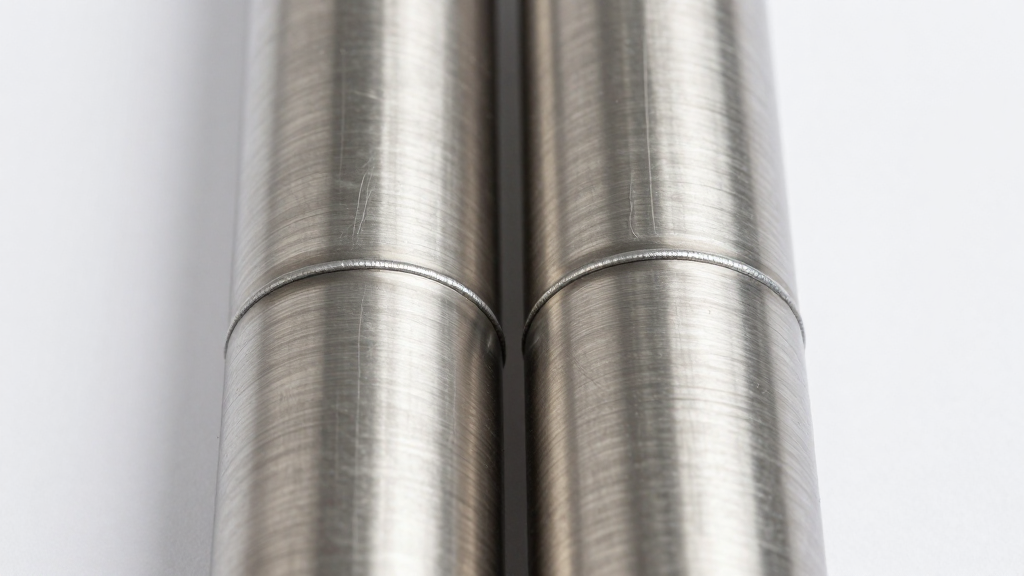
A stainless tube is either drawn from a solid billet with no seam at all, or roll-formed from a flat strip and closed along one longitudinal weld. Everything else – grade, size, finish – flows from that geometry. The differences that matter to a buyer come down to four points:
- Pressure integrity. Seamless tube has no weld seam, so there is no weakened zone, no crevice, no as-welded microstructure to act as a pressure or corrosion weak point. This is why ASME and ASTM reserve the highest-pressure services for seamless tube.
- Wall tolerance and concentricity. Seamless tube is pierced and pilgered from a billet, and wall thickness varies around the circumference and along the length. Welded tube is rolled from precision strip with a controlled wall, so the wall is tighter and more consistent – a real advantage for heat transfer and flow control.
- Surface finish. Welded tube starts from cold-rolled strip with a controlled 2B or BA surface; the weld is then bead-rolled and often polished flush. Sanitary welded tube can reach a measured Ra of 0.4-0.8 micrometer straight off the line. Seamless tube carries the marks of piercing and drawing and needs more polishing to reach the same finish.
- Cost. Welded tube is made from strip on a continuous roll-forming line; seamless tube is made from billet through a hot-piercing and cold-drawing route with lower yields. For the same OD, wall, and grade, welded tube is typically 15-40 percent cheaper – sometimes more in large diameters.
Key mental model: the spec follows the service, and the weld follows the spec. A249 and A269 are tubing specs (heat exchanger and general); A270 is a sanitary tubing spec; A312 is a piping spec. Seamless vs welded is a choice within each spec – and for high-pressure and high-temperature service, the spec or the code often removes the choice and mandates seamless.
How Seamless Tube Is Made (Extrusion/Pilgering) and Its Strengths
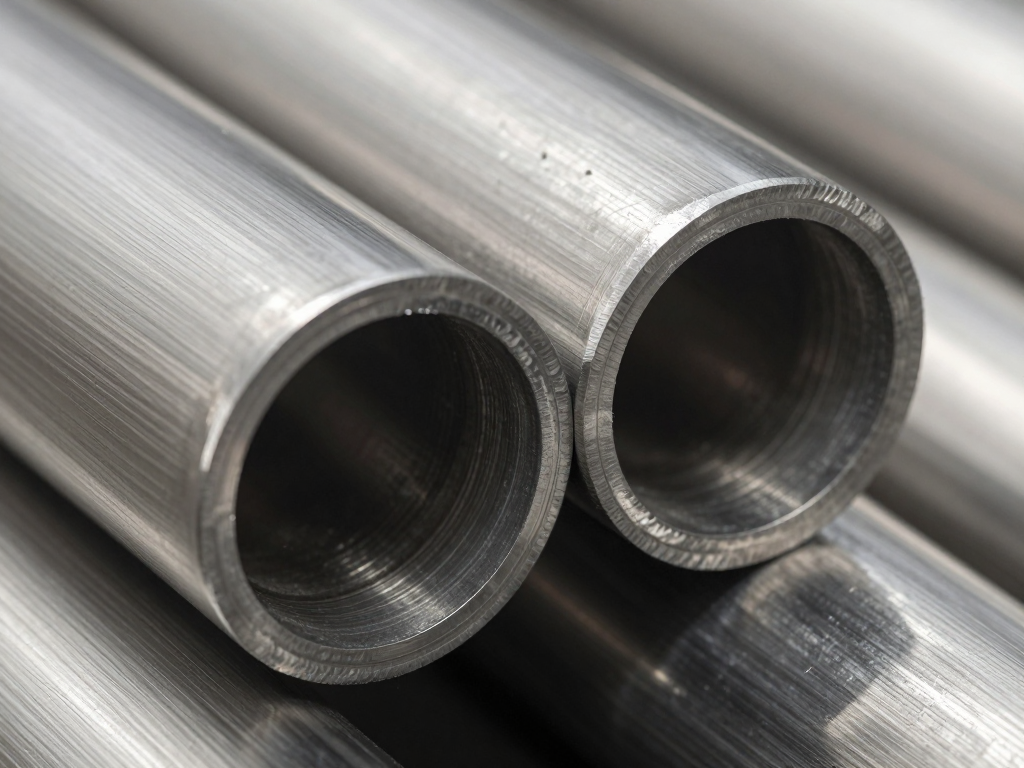
Seamless stainless tube starts as a round billet. The billet is heated and pierced on a rotary piercer (a Mannesmann-type plug mill) to form a hollow shell; the shell is then elongated, sized, and – for tighter tolerances and smaller sizes – cold-pilgered or cold-drawn over a mandrel on a draw bench. The result is a tube with no longitudinal seam of any kind.
The strengths of the seamless route are exactly the weaknesses of the weld:
- No weld seam, no weak zone. The wall is a single homogeneous structure around the full circumference. In pressure and cyclic service this is the dominant advantage – there is no cast weld microstructure, no bead underfill, no weld-line segregation to initiate fatigue or stress-corrosion cracking.
- Higher pressure rating for the same wall. Because there is no seam, the full nominal wall is effective everywhere. ASME B31.3 and the calculated Barlow pressure allow seamless tube to use a 1.0 joint efficiency factor; welded tube that is not 100 percent radiographed is derated (see the pressure table below).
- Better in high-temperature service. Boiler, superheater, and feedwater tubing run at temperatures where the weld seam and its heat-affected zone creep faster than the parent metal. Seamless tube is the default for these services – ASTM A213 (seamless) rather than A249 (welded) for the most demanding boiler duties.
- Available in heavier walls and larger diameters. The piercing route handles thick walls and larger ODs that would be expensive or impossible to form and weld from strip.
The trade-off is real: seamless tube has a looser wall tolerance (the billet does not pierce perfectly concentric), a less controlled inner surface, and a higher unit cost. For heat transfer where wall uniformity matters more than seam strength, welded tube is often the better engineering choice.
How Welded Tube Is Made (TIG/ERW) and Where It Wins on Cost
Welded stainless tube starts as cold-rolled strip – typically 2B or BA finish – slit to width. The strip is uncoiled, roll-formed through a series of rolls into a round tube shape, and the open seam is closed and fused. For stainless, the dominant process is autogenous TIG welding (GTAW) under inert gas, often with laser welding for thin-wall sanitary tube. ERW (electric-resistance welding) is used for larger-diameter and heavier-wall pipe and tube, including A312 pipe.
After welding, the weld bead is worked: the outside bead is trimmed or rolled flat, and for sanitary and heat-exchanger tube the inside bead is rolled, bead-hammered, or scarfing-flattened so the internal surface is close to flush. The tube is then redrawn, annealed, straightened, and polished to the specified finish. The result is a tube with:
- A tight, consistent wall – inherited from the precision strip, typically +/-10 percent or better on wall, far tighter than seamless.
- A controlled, repeatable surface – the 2B/BA strip surface carries through to the tube body, and the weld bead can be polished to blend in for sanitary service.
- Lower cost – continuous roll-forming from strip is far more efficient than billet piercing and cold drawing, so welded tube is the cheaper option at almost every size.
- A practical length limit. Welded tube can be produced in long single lengths (the strip coil just keeps feeding), while seamless tube is limited by the billet weight and the draw bench.
Where welded tube loses is the seam itself. The weld is a cast structure with a heat-affected zone on either side; in corrosive service the seam can be a preferential attack site; in pressure service the seam is derated unless it is 100 percent NDT-examined. For most low- and medium-pressure, sanitary, and structural service, the seam is fully acceptable – the spec and the inspection define how acceptable.
The Four Key Specs Compared: ASTM A249, A269, A270, A312
These four ASTM specifications are the ones overseas buyers cite most often. They are not interchangeable – they cover different services, different tolerance systems, and different test requirements. Confusing them is the most common RFQ error we see.
| Spec | Form | Service | Welded/Seamless | Typical Grade | Key Feature |
|---|---|---|---|---|---|
| ASTM A249 | Welded tube | Boiler, superheater, heat exchanger, condenser | Welded only (as-welded or cold-reduced) | TP304/L, TP316/L, 321, 347 | Mandates weld bead conditioning and flattening, flaring, and reverse-flattening tests on the weld |
| ASTM A269 | Tubing (welded or seamless) | General-purpose service | Both welded and seamless allowed | TP304/L, TP316/L | Lighter test regime than A249; the default “utility” stainless tube spec |
| ASTM A270 | Welded sanitary tube | Sanitary (food, dairy, beverage, pharma) | Welded (seamless permitted but rare) | TP304/L, TP316/L | OD/ID sized to ASME BPE inch dimensions; mandates internal bead removal and a measured Ra (typically 0.4-0.8 micrometer, 180-320 grit or electropolished) |
| ASTM A312 | Pressure piping (pipe) | Process piping, pressure piping | Both welded (ERW) and seamless | TP304/L, TP316/L, 321, 347, 904L, duplex | Large-diameter, heavier-wall pipe; the “piping” counterpart to the A249/A269 “tubing” specs |
The single most important distinction is tubing vs piping. A249, A269, and A270 are tubing specs – smaller OD, tighter tolerance, used inside equipment (heat exchangers, sanitary lines). A312 is a piping spec – larger OD, scheduled wall (SCH 10S/40S/80S), used to move fluid between equipment. A heat exchanger uses A249 tubes inside a shell; the nozzles connecting the shell to the plant use A312 pipe. They are sized, toleranced, and tested differently, and they are not a substitute for each other.
Pressure Rating: Seamless vs Welded (with comparison table)
Pressure rating is where the seamless vs welded choice shows up as a number. ASME B31.3 calculates allowable pressure from the Barlow formula using a joint efficiency factor (E) that penalizes welded tube for the seam:
- Seamless tube: E = 1.0 (full strength, no seam)
- Welded tube, 100 percent radiographed: E = 1.0 (the seam is fully verified)
- Welded tube, spot radiographed: E = 0.85
- Welded tube, not radiographed (most commercial A269/A270 welded): E = 0.85 for ERW, effectively lower in practice for as-welded thin tube
In practice, for the same OD, wall, and grade, a non-radiographed welded tube carries roughly 85 percent of the pressure of a seamless tube – and in cyclic service the gap widens because the weld seam is a fatigue initiator. The table below compares typical allowable pressures at 20C for 304L tube at three sizes.
| OD x Wall (mm) | Seamless Allowable Pressure (bar, E=1.0) | Welded Allowable Pressure (bar, E=0.85) | Pressure Gap |
|---|---|---|---|
| 25.4 x 1.65 (1″ x SCH 10S) | ~195 | ~166 | ~15% lower for welded |
| 50.8 x 3.05 (2″ x SCH 40S) | ~230 | ~196 | ~15% lower for welded |
| 114.3 x 6.02 (4″ x SCH 40S) | ~200 | ~170 | ~15% lower for welded |
These are calculated values (allowable stress ~137 MPa for 304L at 20C per ASME II, Barlow formula, S = P x OD / (2 x W x E) rearranged). Real design pressure also includes corrosion allowance, temperature derate, and code factor. The takeaway: for the same wall, seamless tube gives you the full pressure; welded tube gives you ~85 percent unless you pay for 100 percent radiography, at which point you lose most of the cost saving.
When the Code Removes the Choice
ASME B31.3, the Boiler and Pressure Vessel Code (Section I and Section VIII), and most petrochemical end-user specs (Shell DEP, Saudi Aramco SAES) mandate seamless tube for: boiler and superheater tubing (use A213, not A249); lethal-service piping (Category M); service above a temperature threshold (often above ~425C for austenitics); and any service with severe cyclic loading. In these cases welded tube is not a cheaper alternative – it is not permitted. Know the governing code before you write the RFQ.
Surface Finish and Sanitary Requirements (A270 vs A269)
Sanitary service – food, dairy, beverage, pharma, biotech – is governed by ASTM A270, which is built around surface finish and cleanability rather than pressure. A270 tube is welded, the internal weld bead is fully removed, and the tube is supplied to ASME BPE dimensions (fixed OD in inch sizes, not metric) with a specified internal roughness. A269, by contrast, is a general-purpose tube with no sanitary finish requirement.
For buyers, the surface finish conversation comes down to a measured Ra value and the polish method:
- A270 standard finish: internal Ra 0.8 micrometer max (approx. 180-240 grit), external Ra 0.8 max. This is the default for food and beverage.
- A270 polished finish: internal Ra 0.4 micrometer max (approx. 320 grit), common for dairy and some pharma.
- A270 electropolished (EP): internal Ra 0.25 micrometer or better after electropolishing, with a chromium-enriched passive layer; the pharma and biotech standard.
- A269 as-supplied: no Ra requirement; the surface is whatever the strip and the as-welded bead produce – typically ~1.0-1.5 micrometer with a visible weld bead zone. Not suitable for sanitary service without re-polishing.
Practical tip from the inspection desk: the single most common A270 reject is a weld bead that is not fully flush internally. Run a borescope or a finger-drag on the inside of an A270 tube at receipt – any felt ridge at the weld is a CIP (clean-in-place) dead leg and a bacteria trap, and the tube should not pass incoming inspection. A true A270 tube is smooth across the weld on the ID with no felt discontinuity.
The mechanical fit-up matters too. Sanitary systems use ASME BPE fittings (elbows, tees, ferrules, tri-clamp ends) sized to the same inch OD as A270 tube, so a 2-inch A270 tube (50.8 mm OD) fits a 2-inch sanitary fitting. Mixing A269 (metric OD, looser tolerance) with BPE fittings produces misaligned welds and crevice gaps – a recurring problem when buyers substitute A269 for A270 to save cost. Do not substitute; the cost saving is small and the cleanability problem is permanent.
Wall Thickness Tolerances: Seamless vs Welded
Wall tolerance is where welded tube beats seamless, and where heat-exchanger and finned-tube buyers in particular should pay attention. A heat exchanger relies on the wall being uniform to give uniform heat transfer and uniform thermal stress; a tube with +/-12.5 percent wall variation has a 25 percent spread in thermal resistance around the circumference.
The two specs set tolerance differently, and the seamless vs welded gap is real:
- ASTM A249 welded: wall tolerance +/-10 percent of nominal wall (and +/-7.5 percent for some thin walls), inherited from strip. Consistent and predictable.
- ASTM A269 welded: wall tolerance +/-10 percent (welded); seamless per ASTM A999/A1016 tables, typically +/-12.5 percent minimum, often +/-10 percent on smaller sizes.
- ASTM A269 seamless: wall tolerance +/-12.5 percent of nominal wall as a baseline (per ASTM A1016), with the additional allowance that no point can be more than +/-12.5 percent under or over the specified wall. Concentricity is looser than welded because the billet does not pierce perfectly.
- ASTM A312 pipe: seamless and welded pipe carry different tolerance tables. Welded A312 (ERW) holds +/-12.5 percent; seamless A312 also holds +/-12.5 percent but with more scatter in practice.
- ASTM A270 sanitary: the wall is held close (typically +/-10 percent) because the BPE system relies on the wall for weld prep and bend consistency.
For finned-tube heat exchangers, finned-on-the-outside tube, and any application where the wall is the heat-transfer path, the welded tube’s tighter wall is an engineering advantage that often outweighs the seamless tube’s pressure edge. Specify the tolerance explicitly in the RFQ – “welded per A249, wall +/-10 percent max” – and ask for the measured wall trace on the MTC.
Corrosion Resistance at the Weld Seam (What Buyers Must Know)
Stainless steel’s corrosion resistance comes from the chromium-oxide passive layer. At the weld seam, three things happen that buyers must understand, because they are the root of most premature corrosion failures on welded stainless tube:
- Cast microstructure and segregation. The weld pool solidifies as a cast structure with dendritic segregation; chromium and molybdenum are not as uniformly distributed as in the cold-worked and annealed parent strip. In borderline environments (mild chlorides, acidic media) the weld can be the first site of pitting.
- Sensitization in the heat-affected zone (HAZ). In the HAZ on either side of the weld, the metal passes through the 425-900C sensitization range, where chromium carbides precipitate at grain boundaries and deplete the adjacent matrix of chromium. The HAZ becomes locally less corrosion-resistant. This is why low-carbon grades (304L, 316L) or stabilized grades (321, 347) are specified for welded tube in corrosive service – “L” grades keep the HAZ corrosion-resistant.
- Iron contamination and heat tint. Welding produces a heat-tint oxide layer (straw to blue) on and beside the weld that is chromium-depleted relative to the base metal. If this tint is not removed by pickling or passivation, the tinted area corrodes preferentially. Carbon-steel handling tools can also embed free iron into the stainless surface, which rusts and initiates pitting.
Inspection-desk rule: for welded stainless tube in any corrosive or sanitary service, the weld seam and HAZ must be pickled and passivated (or mechanically polished then passivated) after welding. A welded tube supplied with a straw/blue heat tint on the weld has not been properly passivated and will pit first at the seam – regardless of the grade. Confirm passivation in the RFQ and check the weld color at receipt.
The practical grades for welded corrosive service are 316L (for chlorides and most process media), 304L (for non-chloride food and general service), and 321 or 347 (for high-temperature service where sensitization must be avoided and where a stabilizer is preferred over the low-carbon approach). For the most aggressive chloride service, duplex grades like 2205 are the upgrade path – and for these, the weld procedure and the nitrogen control are critical, so a competent supplier matters more than usual.
Price Premium: When Seamless Is Worth It and When It Isn’t
Seamless stainless tube carries a price premium over welded of typically 15-40 percent at small and medium sizes, and the premium can exceed 50 percent at large diameters or heavy walls where the piercing route is inefficient. The question is when that premium is money well spent and when it is waste.
Seamless is worth the premium when:
- The service is high-pressure or high-temperature (boiler, superheater, feedwater, hydrocarbon processing) – here the code often mandates seamless anyway, and the premium is not optional.
- The service is cyclic (thermal cycling, pressure cycling, vibration) – the weld seam is a fatigue initiator and seamless tube will outlast welded by a wide margin.
- The service is lethal or Category M per ASME B31.3 – seamless is required.
- The tube will be bent, formed, or swaged heavily downstream – a seamless tube has no seam to open or crack during cold working.
- The wall is heavy and the OD large, where welded tube cannot be made or the weld derate wipes out the cost advantage.
Welded is the right call (and seamless is waste) when:
- The service is low-to-medium pressure and non-lethal – A269 welded covers most utility and instrument tubing at a fraction of seamless cost.
- The application is sanitary (food, dairy, pharma) – A270 is welded by design; the ID finish and the bead removal matter, not the absence of a seam.
- The application is heat-transfer (heat exchanger, condenser) – the tighter wall of A249 welded gives more uniform heat transfer than seamless, and the service pressure is usually within the welded envelope.
- The application is structural or architectural – handrail, railing, structural frame, exhaust – where the tube carries no internal pressure and the seam is irrelevant; A554 (welded, not pressure-rated) is often the right spec here, cheaper again than A269.
- The OD is large and the wall is thin – welded tube from strip is the only economical route; seamless large thin-wall tube is rare and very expensive.
As a rule of thumb: if your service has a pressure code that mentions “seamless,” buy seamless. If your service is sanitary, heat-transfer, structural, or low-pressure utility, buy welded and spend the saving on a better grade (316L vs 304L) or a better surface finish. The cost gap almost always pays for a grade or finish upgrade.
Applications by Spec: Boilers, Food/Pharma, Heat Exchangers, Structural
Mapping the four specs to the four service families is the core of the buying decision. Here is how each spec lands in each application:
- Boiler, superheater, feedwater (high T, high P): use ASTM A213 seamless (TP304H, TP316H, TP321H, TP347H) for the highest-temperature duties, and ASTM A249 welded (TP304/L, TP316/L, 321, 347) for condenser and lower-temperature heat-exchanger tubes. A249 is the cost-effective welded alternative to A213 where the service temperature and pressure permit it; A213 is mandatory for the hottest, highest-pressure tubes.
- Food, dairy, beverage, pharma (sanitary): use ASTM A270 welded sanitary tube with internal bead removed and a measured Ra (0.8 for food, 0.4 for dairy, EP 0.25 for pharma). OD to ASME BPE inch dimensions. Grade 304L for non-corrosive food, 316L for dairy, brine, and pharma. Never substitute A269 for A270 in a sanitary line.
- Heat exchanger, condenser, cooler (heat transfer): use ASTM A249 welded for the tighter wall and lower cost, or ASTM A269 welded for less critical duties. Seamless A213 is used where pressure or temperature demands it. The welded tube’s +/-10 percent wall gives better thermal uniformity than seamless.
- General-purpose utility tubing (instrument, trace, low-pressure fluid): use ASTM A269 welded (or seamless for higher-pressure instrument loops). The default “utility” stainless tube spec – cheap, widely stocked, available welded or seamless.
- Process and pressure piping (large OD, plant piping): use ASTM A312 – seamless (SMLS) for high-pressure and high-temperature lines, welded (ERW or welded-and-redrawn) for medium-pressure process lines. A312 covers the SCH 10S/40S/80S pipe sizes that move fluid between equipment.
- Structural, handrail, architectural (no internal pressure): use ASTM A554 welded (not pressure-rated) for the lowest cost, or A269 welded if some pressure testing is wanted. Do not overspend on A312 or seamless for structural tube.
RFQ Checklist for Stainless Tube
The most common reason a stainless-tube order disappoints is a vague RFQ that leaves form, weld type, and finish open. Lock the following in every RFQ:
- Spec and form: “ASTM A249 welded,” “ASTM A269 seamless,” “ASTM A270 welded sanitary,” “ASTM A312 TP316L seamless (SMLS).” Do not write “stainless tube” alone – the spec is the contract.
- Grade and standard: TP304L, TP316L, TP321, TP347, or duplex 2205/2507, with the carbon limit stated (L grade for welded corrosive service). For cross-standard equivalents, confirm via the standards cross-reference guide.
- Dimensions: OD x wall x length, with tolerance basis. For sanitary A270, state the BPE inch size and the wall. For A312, state the NPS and SCH (10S/40S/80S) or the metric OD and wall.
- Weld type and bead treatment: TIG or ERW; for welded A249/A270, state “weld bead trimmed/rolled flush, internal bead removed” – this is mandatory for A270 and standard for A249 heat-exchanger tube.
- Surface finish (sanitary): for A270, state the internal and external Ra (0.8, 0.4, or EP 0.25 micrometer) and the polish grit (180/240/320) or electropolish. Roughness basis is covered in the Ra vs RMS roughness guide.
- Wall tolerance: for heat-exchanger and finned tube, state “+/-10 percent max” explicitly; do not leave it to the mill’s default.
- Heat treatment and passivation: solution-annealed (per the spec), pickled and passivated after welding. For welded corrosive service, state “weld seam pickled and passivated, no heat tint” – see the inspection points in the quality inspection checklist.
- NDT and test: for A249, request the flattening, flaring, and reverse-flattening test results on the weld; for A312 seamless, request hydrotest and, for higher pressure, UT or eddy-current. For welded A312, state whether spot or 100 percent radiography is required.
- End finish: plain, beveled (for welding), or threaded; for sanitary, tri-clamp ferrule ends or as-drawn for field welding.
- Standard and MTC: EN 10204 3.1 MTC with chemistry (C, Si, Mn, P, S, Cr, Ni, Mo) and mechanicals per heat; 3.2 third-party witnessed for project-critical or code work. Reading the certificate is covered in the MTC guide.
Structure the RFQ on the format in the quote-request template guide – spec, grade, form, OD x wall x length, qty, Incoterm – so the quotation comes back clean and comparable across suppliers. A vague “send price for 2-inch stainless tube” RFQ returns prices on four different specs, and you will spend a week reconciling them.
How Yihang Metal Supplies Stainless Tube
We supply the full range of welded and seamless stainless tube across the four key specs – A249, A269, A270, A312 – so you can buy the correct form for each service in one RFQ. Here is what a Yihang Metal stainless-tube quotation includes as standard:
- Spec range: A249 welded boiler/heat-exchanger tube, A269 welded and seamless general tube, A270 welded sanitary tube (ASME BPE dimensions), A312 seamless and ERW pressure pipe, plus A213 seamless and A554 structural welded for the cases that need them.
- Grade range: TP304/L, TP316/L, TP321, TP347, 904L, and duplex 2205/2507 – matched to the corrosive and temperature service, with “L” grades as the default for welded corrosive duty.
- Welded and seamless in parallel – so you get a like-for-like cost-and-pressure comparison at the exact OD, wall, and grade each service needs, instead of being pushed toward whichever form a single-route mill happens to make.
- Sanitary finish to Ra spec – A270 with internal bead fully removed, internal Ra 0.8 / 0.4 / electropolished 0.25 micrometer on request, with the polish and passivation certified on the MTC.
- Wall tolerance control – welded +/-10 percent for heat-exchanger duty; we report the measured wall on the MTC so you can verify finning and thermal uniformity.
- Pickled and passivated weld seams on all welded corrosive-service tube – no heat tint, no free-iron contamination – so the weld is not the corrosion weak point.
- EN 10204 3.1 MTC with chemistry (C, Si, Mn, P, S, Cr, Ni, Mo) and mechanicals per heat, and 3.2 third-party witnessed certificates for boiler, pharma, or project-critical work.
- Sea-worthy, moisture-barrier export packing – stainless tube rusts and pits in transit if exposed to chlorides from sea air or contaminated dunnage; see our export-packing checklist for the standard we apply to every stainless shipment.
Because we ship welded and seamless side by side across A249, A269, A270, and A312, we can give you an honest, same-grade, same-size cost comparison between the two routes – so your tube BOM is driven by the service (pressure, sanitary, heat-transfer, structural) and the governing code, not by whichever single form a one-route mill wants to sell.
Deciding between welded and seamless stainless tube for your boiler, heat exchanger, sanitary line, or pressure piping? Tell us the spec (A249 / A269 / A270 / A312), the grade (304L / 316L / 321 / 347 / duplex), the OD x wall x length, the service (pressure, temperature, fluid, sanitary class), and the quantity. The team at Yihang Metal (www.yihangmetal.com) will recommend the correct form – welded or seamless – matched to your service and code, with full EN 10204 3.1 documentation, controlled wall tolerance, and passivated weld seams. Send us your specifications today for a quoted price within 24 hours.