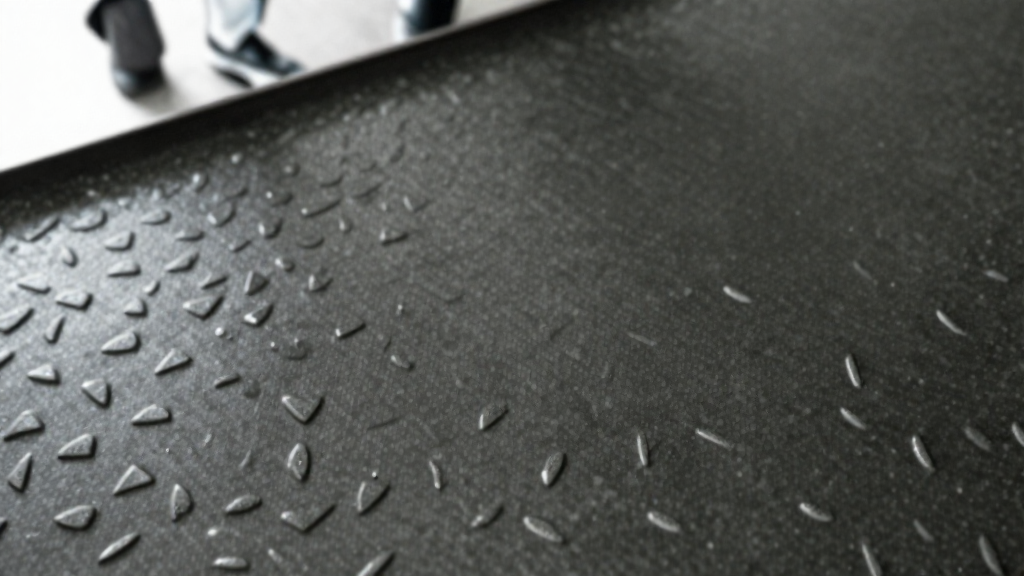
If you are sourcing carbon steel checker plate (also called chequered plate, tread plate, floor plate, or diamond plate) for truck bodies, trailer floors, stair treads, walkways, ship decks, or industrial platforms, the decision that decides whether the plate performs is not usually the grade – it is the pattern, the base thickness, and whether you specified “base” or “total” thickness. Checker plate is a hot-rolled carbon steel sheet with a raised pattern rolled onto one face for slip resistance, and the two mistakes that come back as rejected shipments are (1) ordering a pattern that does not meet the non-slip standard the end user’s inspector applies, and (2) quoting on total thickness (base plus pattern height) when the structural calculation was done on base thickness, or vice versa.
This guide breaks down what carbon steel checker plate is, the four raised patterns buyers actually meet (teardrop/lugger, 5-bar, diamond/lenticular, round), the base steel grades (Q235 / SS400 / S235JR / A36), the base-vs-total thickness question that causes most disputes, the applications and loading logic, and the coating decision for corrosive service. We supply checker plate from Yihang Metal to fabricators and project buyers, so the recommendations come from real RFQs.
What Carbon Steel Checker Plate Is
Checker plate is a hot-rolled carbon steel sheet on which a raised lug pattern has been rolled in-line at the mill, on one surface. The pattern provides mechanical slip resistance without coating or further processing. The base steel is a standard structural carbon grade – typically Q235 / Q235B (GB), SS400 (JIS), S235JR (EN), or A36 (ASTM) – chosen for its weldability and formability rather than for high strength. Because it is hot-rolled, the surface carries the characteristic dark mill scale unless pickled or shot-blasted.
The structural logic of checker plate is important: the raised pattern is for slip resistance, not for strength. The load-bearing cross-section is the flat base sheet. The lugs add a small amount of stiffness but are not counted in the structural thickness. This is why the base-vs-total thickness distinction matters so much on the RFQ – more on that below.
Key mental model: checker plate is a structural carbon steel sheet (load) with a rolled slip-resistant surface (safety). Specify the base steel grade for strength, the pattern for slip resistance, and the base thickness for structural calculation – never let the supplier quote “thickness” without saying whether it is base or base-plus-pattern.
The Four Raised Patterns Compared
The pattern is where most regional and standard mismatches happen. A buyer who specifies “checker plate” without naming the pattern can receive any of the four, and the end user’s inspector may reject a pattern that does not match the drawing or the local non-slip standard.
| Pattern | Appearance | Where standard | Typical lug height |
|---|---|---|---|
| Teardrop / lugger | Raised teardrop-shaped lugs, one direction | Europe (EN), common on EU specs | 0.6-1.2 mm |
| 5-bar (willow-leaf) | Five raised bars in a splayed/”willow leaf” arrangement | China (GB/T 3277), most common Asian export | 0.5-1.0 mm |
| Diamond / lenticular | Raised diamond/lens shapes, bidirectional | North America, general industrial | 0.6-1.2 mm |
| Round / dot | Raised round studs | Specialty, decorative, some marine | 0.5-1.0 mm |
For most export buyers the practical point is: name the pattern on the RFQ (or supply a drawing/photo reference), and confirm the pattern is available at the thickness you need. The 5-bar pattern is the default on Chinese mill output and is what most Asian-sourced checker plate ships as unless you specify teardrop or diamond.
Base Steel Grades and What They Mean
Because the pattern is not structural, the grade choice is the same as for flat structural sheet of equivalent thickness:
- Q235 / Q235B (GB/T 700) – the default Chinese structural carbon steel for checker plate; yield ~235 MPa, good weldability, the workhorse for floors and walkways.
- SS400 (JIS G3101) – Japanese equivalent, widely cross-quoted with Q235; yield ~235 MPa class.
- S235JR (EN 10025-2) – European structural grade for EU-spec projects; interchangeable with Q235/SS400 at this strength level.
- A36 (ASTM) – North American structural carbon; yield 250 MPa min, common on US-spec drawings.
For most checker-plate service these four are functionally interchangeable and the choice is driven by which standard the drawing cites. The structural-grade selection logic (when to step up to a higher-strength grade for a loaded deck) is covered in our A36 vs Q355 guide and our A36 vs A572 Grade 50 plate guide. The hot-rolled substrate question (why checker plate is hot-rolled, not cold-rolled) is in our cold-rolled vs hot-rolled guide.
Base vs Total Thickness: The Dispute That Repeats
This is the single most common checker-plate dispute. Checker plate has two relevant thicknesses:
- Base thickness – the flat sheet thickness, excluding the raised lugs. This is the thickness the structural engineer uses for load and deflection calculation.
- Total thickness – base thickness plus the lug height. This is what a caliper reads if you measure over a lug.
A quotation that says “3.0 mm checker plate” without qualification can mean either. If the structural calculation assumed 3.0 mm base and the mill shipped 3.0 mm total (i.e., ~2.2 mm base plus ~0.8 mm lug), the plate is structurally under-thick. If the buyer assumed 3.0 mm total and the mill shipped 3.0 mm base (i.e., ~3.8 mm total), the plate is over-weight and over-priced. Always specify “base thickness” on the RFQ and require the mill to quote and ship to base thickness, with the pattern height stated separately.
The flatness and thickness-tolerance basis for the base sheet is the same as for any hot-rolled plate; our carbon steel plate thickness tolerance guide and the flatness and coil-set guide cover the tolerance and flatness clauses that prevent a warped or under-gauge floor plate from reaching your fabricator.
Applications and the Loading Logic
Checker plate is specified by application, and the application sets the base thickness and the corrosion-protection route:
- Truck bodies and trailer floors – base 2.5-4.0 mm, pattern for load and forklift traffic; often painted or left black.
- Stair treads and walkways – base 2.5-5.0 mm depending on span and foot traffic; galvanized for outdoor or wet service.
- Ship decks and marine platforms – base 4.0-6.0 mm, requires marine-grade coating or hot-dip galvanizing; pattern chosen for wet non-slip performance.
- Industrial platforms and mezzanines – base 3.0-6.0 mm sized to the point load and deflection limit; the structural approach is in our construction steel requirements guide.
Coating: When to Galvanize or Paint Checker Plate
Bare hot-rolled checker plate rusts. For indoor dry service, a shop primer is enough; for outdoor, wet, or marine service, the plate must be galvanized or properly painted. The decision between hot-dip galvanizing, painting, and powder coat is covered in our galvanizing vs painting vs powder-coat guide – for checker plate in outdoor/wet service, hot-dip galvanizing after fabrication is the default because the zinc flows over the lugs and protects the raised edges where wear is highest.
Common Mistakes
- Quoting “thickness” without base/total. The number-one dispute. Specify base thickness explicitly.
- Not naming the pattern. “Checker plate” alone lets the mill ship any pattern; name teardrop / 5-bar / diamond, or attach a drawing.
- Counting the lugs in the structural thickness. The lugs are for slip, not strength; size the base sheet for the load.
- Skip-galvanizing a fabricated floor. Galvanize after cutting and punching so the zinc covers cut edges; galvanizing before fabrication leaves bare edges that rust.
- Ordering cold-rolled “checker plate”. True rolled checker plate is hot-rolled; embossed cold-rolled tread sheet exists but is a thinner, lighter product not suited to load-bearing floors.
What to Lock in Your RFQ
- Base steel grade and standard: e.g., “Q235B per GB/T 700” or “S235JR per EN 10025-2” or “A36 per ASTM”. Do not write “mild steel checker plate” alone.
- Base thickness + tolerance: state “base thickness 3.0 mm” with the pattern height (e.g., “5-bar pattern, lug height 0.7-1.0 mm”) so total is unambiguous.
- Pattern: name it (teardrop / 5-bar / diamond / round) or attach a reference drawing.
- Dimensions: width x length (common 1219 x 2438 mm / 4×8 ft, or 1500 x 6000 mm coil-cut sheet), with flatness class.
- Surface route: black (as-rolled), pickled, or shot-blasted + primed; and the post-fabrication coating (hot-dip galvanize / paint / powder).
- Standard and MTC: EN 10204 3.1 with chemistry and mechanicals per heat; reading the certificate is covered in our MTC guide.
For the RFQ structure, the quote-request template guide gives the spec format (grade, base thickness, pattern, size, qty, Incoterm) that returns a comparable quotation, and the export-packing checklist covers the packing that prevents transit rust on bare or primed checker plate.
How Yihang Metal Supplies Carbon Steel Checker Plate
We supply hot-rolled carbon steel checker plate in Q235 / SS400 / S235JR / A36 grades, in 5-bar, teardrop, and diamond patterns, at the base thickness your load case requires. A Yihang Metal checker-plate quotation includes:
- Grade range per GB/T 700, JIS G3101, EN 10025-2, and ASTM, at the structural carbon level your drawing cites.
- Base thickness called out explicitly with pattern height stated separately, so there is no base-vs-total ambiguity.
- Pattern options (5-bar, teardrop, diamond) confirmed available at your thickness before quoting.
- Surface and coating route – black, pickled, shot-blasted + primed, or hot-dip galvanized after fabrication.
- EN 10204 3.1 MTC with chemistry and mechanicals per heat, and cut-to-size sheets in standard or custom dimensions.
- Sea-worthy, moisture-barrier export packing – bare checker plate rusts in transit if exposed; see our export-packing checklist.
Because we ship the full structural-grade and pattern range side by side, we can give you a like-for-like cost comparison at the exact base thickness and coating route each application needs – so your floor-plate specification is driven by the load case and the service environment, not by which single pattern a one-product mill wants to push.
Not sure which checker-plate pattern, grade, and base thickness to specify? Tell us the application (truck floor, stair tread, walkway, ship deck, platform), the span and load, and the service environment (dry indoor, outdoor, marine). The team at Yihang Metal will recommend the base steel grade, base thickness, pattern, and coating route that gives you a floor plate that meets the non-slip and load requirement at the lowest cost – and back it with full EN 10204 documentation. Send us your specifications today for a quoted price within 24 hours.