Hydraulic Cylinder Tube and Honed Tube Buying Guide: Honed vs Skived & Roller Burnished Bores, Grades, and Tolerances (SAE 1020, 4130, E355)
Every hydraulic cylinder in the world starts as a tube. The hydraulic cylinder tube that becomes the barrel must hold pressure, guide the piston, and let seals run millions of cycles without leaking — all of it decided by the bore finish, the tolerance class, and the grade you specify before the order is placed. If you are an engineer or procurement manager sourcing cylinder barrels from China, this guide covers honed tube versus skived and roller burnished (SRB) tube, the H8/H9 tolerance system, the grades that matter — SAE 1020, 1026, E355/ST52, and 4130 — standard sizes, and exactly what to write on an RFQ.
1. What Hydraulic Cylinder Tube Is and Why the Bore Finish Matters
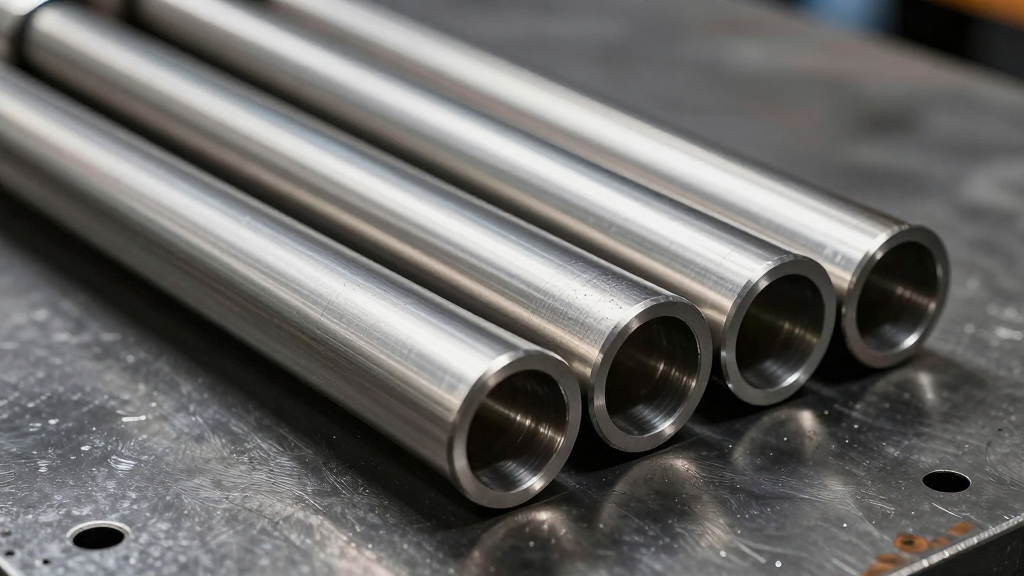
A hydraulic cylinder tube is a precision hollow section, seamless or welded, whose bore becomes the working surface of the cylinder — the cylinder barrel. The piston and its seals travel inside that bore on every stroke, so the tube does three jobs at once: it contains system pressure, guides the piston, and serves as the sealing surface. Fail any one and you get a leak or a scored piston.
The bore is what does the work, which is why the honed bore finish — the microgeometry of the inside surface — matters more than outside appearance. Bore roughness is specified as Ra — the arithmetic average of the surface profile — in microns. Above roughly 1.6 Ra a bore chews through seals within days and lets fluid bypass the piston; below roughly 0.1 Ra it cannot hold an oil film and runs metal on metal. The practical working band for cylinder bores is 0.2–0.8 µm Ra, with 0.4 µm Ra the most common specification in the industry.
Finish is not the only number on the drawing. Roundness and straightness control how seal loads distribute, and diameter tolerance controls the seal fit — so the buying decision is always a package: surface finish, tolerance, straightness, and grade, verified together and confirmed by the mill certificate before the tube leaves the factory.
2. Honed Tube vs Skived & Roller Burnished (SRB) Tube: The Two Bore Finishing Methods
Two production methods finish a cylinder bore, and they are not interchangeable on cost, speed, or surface quality.
Honed tube
Honed tube is bored with abrasive stones in a rotating, oscillating head. The stones remove stock — typically 0.05–0.15 mm — grind out roundness and straightness errors in the incoming tube, and leave the classic 30–45° cross-hatch whose valleys retain oil. Honing is corrective: it pulls a bore into H8 or even H7 at a controllable 0.4–0.8 µm Ra, on seamless or welded tube alike, but it is slow per meter and therefore more expensive.
Skived and roller burnished (SRB) tube
Skived and roller burnished (SRB) tube is finished in a single high-speed pass: a skiving cutter trims a thin layer, typically 0.1–0.3 mm, off the bore, then hardened rollers cold-work the surface flat. The result is very smooth — 0.2–0.4 µm Ra — at feed rates several times faster than honing, which is why SRB dominates high-volume cylinder barrel production, especially on welded tube. Trade-offs: no cross-hatch oil pockets, fine spiral feed lines from the skive, and a work-hardened surface layer — usually harmless, but worth knowing with marginal lubrication or heavy side loading.
| Characteristic | Honed tube | Skived & roller burnished (SRB) |
|---|---|---|
| Process principle | Abrasive stones, rotating and oscillating | Skiving cutter, then roller burnishing |
| Material removed | 0.05–0.15 mm, in several passes | 0.1–0.3 mm, in one pass |
| Achievable surface finish | 0.4–0.8 µm Ra (0.2 possible) | 0.2–0.4 µm Ra |
| Typical bore tolerance | H8, H7 achievable | H8, H9 typical |
| Surface pattern | 30–45° cross-hatch, holds oil | Fine spiral feed lines, low oil retention |
| Corrective ability | Corrects roundness and straightness | Limited; removes only what it skives |
| Production speed | Slow to moderate per meter | Very fast; ideal for long runs |
| Relative cost | Higher | Lower |
| Typical use | Seamless precision barrels, demanding H8 bores | High-volume welded cylinders, mobile machinery |
How to choose? For heavy side loads, long strokes, or strict seal-life tests, the oil-retaining cross-hatch of honed tube is safer. For tens of thousands of meters a year of standard bores, SRB is the standard economics of the industry — most cylinder barrels made in China and Italy today are skived and roller burnished, not honed.
3. Key Bore Specifications: Ra Surface Finish, Dimensional Tolerance (H8/H9), Straightness
Three numbers define a usable cylinder bore: surface finish, diameter tolerance, and straightness. Buyers who specify all three on the RFQ get exactly the barrel they need; buyers who write only “hydraulic tube” get whatever is in stock.
Surface finish (Ra)
Finish is measured with a profilometer per ISO 4287, 0.8 mm cutoff typical. Industry norms: 0.4–0.8 µm Ra for honed barrels, 0.2–0.4 µm Ra for SRB, 0.3–0.5 µm Ra on many OEM drawings. A specified Ra is an average — ask that the profile be free of deep isolated scratches; a single 5 µm score is a leak path the 0.4 Ra average hides.
Dimensional tolerance (H8/H9)
Hydraulic tube tolerance class is expressed per ISO 286. H8 is the standard for machined cylinder bores; H9 the economical choice for lower-pressure or seal-tolerant designs. The H position means the bore may only be larger than nominal, never smaller — exactly what a seal needs.
| Bore ID (mm) | H8 tolerance (mm) | H9 tolerance (mm) |
|---|---|---|
| 25 | +0.033 / 0 | +0.052 / 0 |
| 40 | +0.039 / 0 | +0.062 / 0 |
| 63 | +0.046 / 0 | +0.074 / 0 |
| 100 | +0.054 / 0 | +0.087 / 0 |
| 160 | +0.063 / 0 | +0.100 / 0 |
| 200 | +0.072 / 0 | +0.115 / 0 |
| 300 | +0.081 / 0 | +0.130 / 0 |
| 400 | +0.089 / 0 | +0.140 / 0 |
Straightness
Good cylinder tube holds straightness of 0.3–0.5 mm per meter, prorated over length — for example 0.3 mm/m with a maximum of 1.5 mm over 6 m, or 2.0 mm over 12 m on large sizes. Bowed tube shows up as uneven seal wear, so verify straightness at receiving rather than assuming it from the certificate.
4. Tube Grades: SAE 1020/1026, E355, 4130, ST52
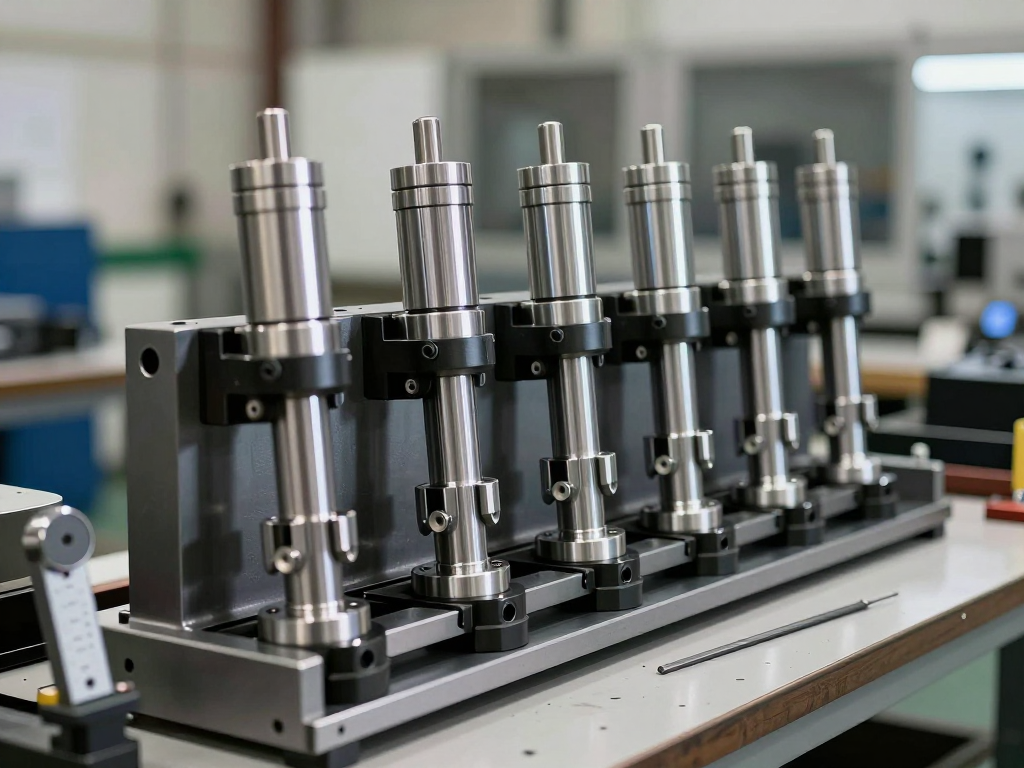
Grade selection sets pressure capability, weldability, machinability, and cost. Four grades cover the great majority of cylinder barrels made worldwide.
| Grade | Standard / spec | Yield strength (min) | Tensile strength | Typical use | Relative cost |
|---|---|---|---|---|---|
| SAE 1020 | ASTM A519 / SAE J524 | 290–365 MPa | 410–560 MPa | Low-pressure cylinders, welded barrels | $ |
| SAE 1026 | ASTM A519 | 350–420 MPa | 480–620 MPa | Standard welded cylinder barrel grade, US-style specs | $ |
| E355 tube (ST52) | DIN 2391-1 / EN 10305-1 | 355 MPa (wall ≤ 16 mm) | 490–630 MPa | Default European cylinder barrel grade; hydraulic tube of choice in EU designs | $$ |
| AISI 4130 | ASTM A519 / AMS 6370 | 460 MPa (normalized); up to 690 MPa (QT) | 560–930 MPa | High-pressure and weight-critical cylinders, aerial lifts | $$$ |
Reading the grade table
SAE 1020 and 1026 are carbon steels delivered cold-drawn and stress-relieved or normalized. They weld easily — which is why welded cylinder barrels dominate in these grades — and at 290–420 MPa yield comfortably cover working pressures of 16–25 MPa (160–250 bar).
The E355 tube (also sold as ST52) is the defining grade of DIN 2391 precision tube, the European hydraulic standard, with a guaranteed minimum yield of 355 MPa. Stress-relieved E355 is the default request on European cylinder drawings, and the safe default when a drawing names no grade.
AISI 4130 chromium-molybdenum tube buys weight reduction: at 460–690 MPa yield it allows roughly 25–35% thinner walls than 1026 at the same pressure. It costs more and needs controlled preheat (150–250 °C on thick sections) when welded, and is specified where the cylinder must be light and strong — aerial lifts, mobile cranes, systems at 31.5 MPa (315 bar) and above.
5. Outer Diameter Options: Cold-Drawn, Turned, or Ground (for Chrome Plating)
The bore spec gets most of the attention, but the outside diameter matters for mounting, welding, or plating. Three finishes cover the market:
- Cold-drawn OD — the economical standard. Tolerance h10/h11 (for a 100 mm OD, about +0/−0.22 mm), Ra 1.6–3.2 µm. Fine for barrels welded into end caps.
- Turned (peeled) OD — removes scale and the decarburized layer of hot-finished stock; tolerance h9/h10, Ra around 1.6–3.2 µm. Used when the barrel is machined to exact OD after delivery.
- Ground OD — tolerance h7/h8, Ra 0.4–0.8 µm, supplied when the outside is a functional surface. This is the required preparation for chrome plating: rods are ground, plated with hard chrome typically 20–30 µm, then finished to final diameter — order the pre-plate ground size to allow for plating thickness.
Specify the OD finish deliberately: an unground cold-drawn OD your workshop will machine is the economical choice; ground is only necessary where the surface is functional. State your intent to final-machine in-house and the supplier quotes the right starting condition.
6. Seamless vs Welded Honed Tube: Which Bore Quality Is Achievable
Both routes deliver a working cylinder bore — the difference is starting material and price.
Seamless tube starts as a pierced, hot-worked hollow, cold-drawn to size and stress-relieved, with no weld seam — so the pressure boundary has no weldment to inspect or risk. Honed seamless tube is the classic spec for high-pressure cylinders and oilfield, press, and test-rig work — honing the drawn bore comfortably achieves H8 at 0.4 µm Ra, free of seam defects — at the highest cost of the options.
Welded honed tube is made from rolled strip joined by ERW, induction, or laser welding, then cold-drawn and stress-relieved. The economics are decisive: roughly 15–30% cheaper than seamless, and modern practice — clean edges, weld normalization, full draw reduction through the seam — produces seams that pass flattening, flaring, and hydrostatic tests. After skiving and roller burnishing, welded barrels routinely measure H8/H9 at 0.2–0.4 µm Ra and dominate mobile machinery cylinders up to roughly 25–28 MPa — the majority of the world’s production.
For service above 28–31.5 MPa, fatigue-rated duty, or a seamless drawing history, buy seamless. For volume production of standard mobile cylinders, welded SRB is the proven, far cheaper route — provided the certificate documents the seam, the heat number, and the hydrostatic or NDT result.
7. Standard Sizes: ID from 25mm to 400mm, Wall Thickness, Lengths up to 12m
Cylinder tube is produced in a ladder of standard bore sizes, each in a family of wall thicknesses, in lengths from 5 to 12 meters.
| Bore ID (mm) | Typical wall thicknesses (mm) | Common grades | Typical application |
|---|---|---|---|
| 25–50 | 4–10 | SAE 1020/1026, E355 | Tie-rod cylinders, material handling |
| 63–125 | 6–20 | E355, SAE 1026, 4130 | Excavator cylinders, mobile machinery |
| 160–250 | 10–35 | E355, 4130 | Tipper and telehandler rams |
| 300–400 | 16–50 | E355, SAE 1026 (hot-finished) | Hydraulic presses, marine cylinders |
Wall thickness is the pressure design variable, following the thin-cylinder hoop stress formula, with standard walls stepped in 1–2 mm increments up to roughly 50 mm on the largest bores. Lengths are mill random 5–8 m, or fixed up to 12 m, cut to ±2 mm with chamfered ends. For export, tube is bundled, oiled or dry as specified, with capped ends on wooden skids — ask for burr-free ends and a swabbed-clean ID before packing.
8. Measuring the Bore: Air Gauges, Bore Micrometers, and Surface Profilometers
Because the tolerance band is only a few hundredths of a millimeter, bore verification is a discipline, not a formality. The instruments:
- Air gauges — the standard for bore diameter and roundness. An air plug reads back-pressure against clearance with resolution to 0.5–1 µm, reporting diameter, taper, and lobing in seconds. This is the instrument that certifies an H8 claim.
- Bore micrometers — three-point internal micrometers resolving 0.001 mm for spot checks at receiving — slower and technique-sensitive, but the independent cross-check a buyer can run himself.
- Surface profilometers — stylus instruments measuring Ra per ISO 4287 with a 0.8 mm cutoff. Take readings at three or more positions along the bore, rotating 90° between readings; Ra climbing toward the ends indicates a worn stone or taper.
- Straightness and roundness checks — a calibrated straightedge or laser sweep verifies the 0.3–0.5 mm/m claim; a roundness machine catches lobing a two-point micrometer misses.
A mill test certificate tells you what the tube was made from. It does not tell you what the bore measures today — verify H8, Ra, and straightness at receiving, and keep the air-gauge printout when you do.
A practical acceptance plan: air-gauge 100% of bores where the contract demands it, or a statistical sample (commonly three tubes per bundle) with profilometer readings and a straightness check on one tube per length group — the protocol a third-party inspector (SGS, Bureau Veritas, Intertek) runs before shipment.
9. Common Cylinder Applications: Construction Equipment, Mobile Machinery, Hydraulic Presses
Cylinder barrel demand clusters in three industries, and each pushes the spec in a different direction.
Construction equipment — excavators, loaders, telehandlers — runs bores of roughly 50–200 mm in E355 or 1026 welded SRB tube at 20–31.5 MPa. Service is shock-loaded, so straightness and end-cap weld quality are the reliability drivers. Most excavator cylinders in production use skived and roller burnished welded barrels.
Mobile machinery — tipper trucks, agricultural equipment, forklift masts — shares the volume market, and telescopic multi-stage rams (2–4 stages) demand roundness because each stage seals on the barrel behind it. Here 4130 appears where weight pays: aerial work platforms and truck-mounted cranes cut barrel weight 25–35% by switching from 1026.
Hydraulic presses use the big bores — 200–400 mm and larger — in seamless stock at 25–35 MPa, typically honed rather than skived: massive seals and long strokes need the oil-retaining cross-hatch, and low piece counts make honing economics win.
10. RFQ Checklist for Honed Tube (what to specify: ID tolerance, Ra, straightness, grade, MTC)
A complete RFQ for honed tube or SRB tube takes one minute to write and saves weeks of claims. Use this checklist:
- Bore ID and tolerance class — “100 mm H8 per ISO 286”, not “100 mm tube”. If you will final-machine the bore, order the parent bore with an allowance.
- Surface finish — “0.4 µm Ra max, cross-hatch 30–45°” for honed; “0.4 µm Ra max” for SRB.
- Straightness and roundness — “0.3 mm/m straightness, max 1.5 mm over 6 m; roundness 0.03 mm”.
- Grade and standard — SAE 1020/1026 per ASTM A519, E355 per DIN 2391-1/EN 10305-1, or 4130; seamless or welded; delivery condition (BK, stress-relieved, normalized, QT).
- OD condition — cold-drawn, turned, or ground; OD tolerance; plating allowance if the surface will be hard-chromed 20–30 µm.
- Wall thickness and length — nominal wall, length and tolerance (±2 mm typical), end preparation and deburring.
- Quantity and packing — meters or pieces, bundle weights, oiled or dry surface, export packing.
- Documentation — mill test certificate (MTC) per EN 10204 3.1, or 3.2 with third-party witnessing; heat numbers; hydrostatic or NDT results for welded; option of third-party inspection at the mill.
Two warnings. First, tolerance class drives price — H8 costs meaningfully more than H9 because of finishing-line rejection rates, so do not overspecify. Second, name the manufacturing standard on the RFQ: “hydraulic tube” alone means nothing in a claim — the grade, condition, and test level in writing are what a certificate, a surveyor, and your legal team will point at later.
11. How Yihang Metal Supplies Hydraulic Cylinder Tube
Yihang Metal (www.yihangmetal.com) supplies hydraulic cylinder tube to manufacturers and traders worldwide from integrated tube mills in Jiangsu and Shandong, and every order is managed as an engineered product, not a commodity. That means: seamless and welded tube in SAE 1020, 1026, E355/ST52, and 4130; bores from 25 mm to 400 mm in both honed tube and skived and roller burnished finishes; H8/H9 tolerances verified by air gauge; Ra 0.2–0.8 µm confirmed by profilometer; straightness to 0.3–0.5 mm/m; lengths to 12 m; and full documentation — EN 10204 3.1 certificates, heat traceability, and optional third-party inspection before loading.
Because Yihang Metal ships mill-direct in mixed or dedicated containers, buyers get the mill’s price rather than a distributor’s markup, with export packing built for ocean transit — oiled or dry as specified, capped, and skidded. Every sales engineer reads drawings and tolerances for a living, so spec questions are answered with numbers and test evidence, not sales literature.
Request a Quote for Your Cylinder Tube Order
Specifying cylinder tube correctly — grade, bore tolerance, Ra, straightness, and documentation — separates barrels that run a decade from barrels that leak in a season. Send Yihang Metal your drawing or RFQ checklist with bore size, tolerance class (H8/H9), Ra finish, straightness, grade (SAE 1020, 1026, E355/ST52, 4130), length, and quantity, and you will receive a detailed quotation with the manufacturing standard, certificate format, inspection options, and a delivery schedule to your port. Request a quote today at www.yihangmetal.com — and get hydraulic cylinder tube quoted the way engineers actually spec it: on numbers, tolerances, and certificates.