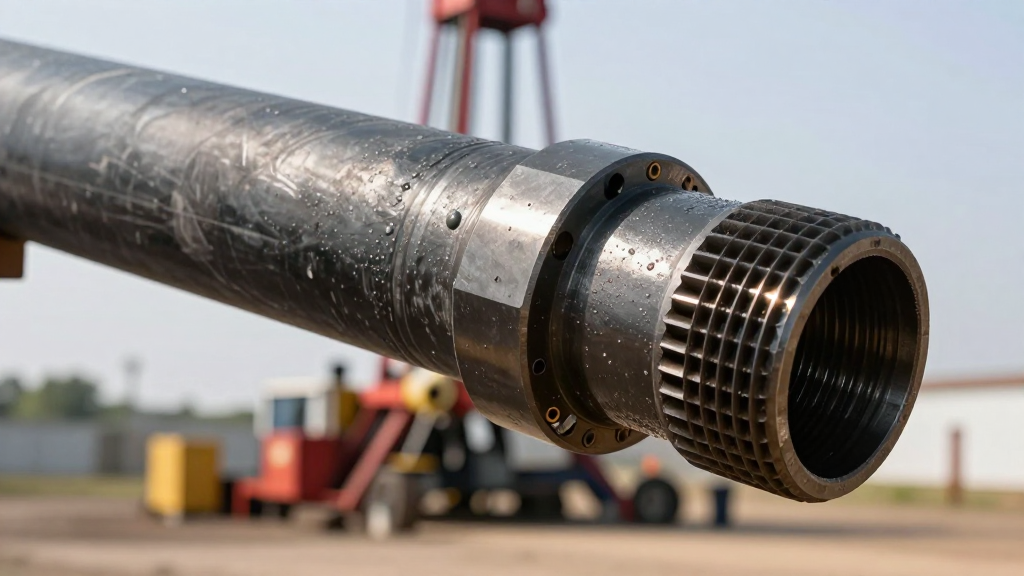
If your well program calls for casing and tubing, the specification you write today decides what is still standing in the hole five years from now – and how much of your drilling budget is spent on steel that never comes back into inventory. OCTG, or oil country tubular goods, is the product family that lines the wellbore, carries produced fluids to surface, and transmits the torque that drills the well. The grade and connection you choose between a 55,000 psi J55 string and a P110 string can differ in cost by 30-50 percent – and the cheapest option is the one that fails in a sour well. As a Chinese exporter supplying casing and tubing under API 5CT, we have quoted all of it, so this guide covers what the grade numbers mean, which connections fit which service, and exactly what belongs on your RFQ.
This guide is written for procurement engineers, drilling managers, and steel traders sourcing from China. It covers the API 5CT grade ladder (J55, K55, N80, L80, P110), the difference between casing pipe and tubing oil and gas operations actually use, thread types from STC to premium connections, heat treatment, sizes and weights, testing and certification, and a ready-to-use RFQ checklist – all from real quotations and inspection reports.
1. What OCTG Is: Casing, Tubing, and Drill Pipe Explained
OCTG (oil country tubular goods) covers three product families that serve completely different jobs downhole:
- Casing – the large-diameter pipe (typically 4-1/2 in to 13-3/8 in, up to 20 in) cemented into the hole to line the wellbore and isolate formations. Casing is the biggest OCTG cost on any well, which is why it dominates most RFQs for casing pipe.
- Tubing – the smaller-diameter pipe (typically 2-3/8 in to 4-1/2 in) run inside the casing to carry oil, gas, or injection fluids to surface. Tubing takes the most severe combined loading – tension, internal pressure, and often corrosive produced fluids.
- Drill pipe – the rotating string that drills the hole, governed by API 5D rather than API 5CT, with thick-wall bodies welded to heavier tool joints at each end. A common buying error is lumping drill pipe into a casing and tubing RFQ; it is a different standard, chemistry, and supply base.
Casing and tubing are specified to API Spec 5CT – the governing standard for seamless and welded casing and tubing – with threads to API 5B; “OCTG” on a quotation means casing and tubing, with drill pipe quoted separately.
2. The API 5CT Grade Ladder: What Each Number Means
The grade letter and number in API 5CT encode the pipe’s minimum yield strength in thousands of psi (ksi): J55 means a minimum yield of 55,000 psi; P110 means 110,000 psi. A higher grade number nearly always means a stronger, more expensive pipe – and, for the sour-service grades, a stricter hardness ceiling. The five grades below cover the overwhelming majority of what wells actually order:
| Grade (API 5CT) | Min Yield (psi / MPa) | Max Yield (psi / MPa) | Min Tensile (psi / MPa) | Key Characteristic |
|---|---|---|---|---|
| J55 | 55,000 / 379 | 80,000 / 552 | 75,000 / 517 | Standard shallow-to-medium well grade; hot-rolled or normalized; most economical |
| K55 | 55,000 / 379 | 80,000 / 552 | 95,000 / 655 | Same yield as J55 but higher tensile for collapse-heavy loading |
| N80 | 80,000 / 552 | 110,000 / 758 | 100,000 / 689 | Two classes – N80-1 (normalized) and N80-Q (quenched and tempered) |
| L80 | 80,000 / 552 | 95,000 / 655 | 95,000 / 655 | Max hardness 23 HRC; the workhorse sour-service grade (L80-1) |
| P110 | 110,000 / 758 | 140,000 / 965 | 125,000 / 862 | Fully quenched and tempered; deep wells, high pressure; not for sour service |
Three practical points. First, N80 is not one product: N80-1 is normalized while N80-Q is quenched and tempered with tougher properties – always specify the class, and N80-Q is the one most buyers want. Second, L80 caps hardness at 23 HRC and tightens the yield window to 80-95 ksi, which is what makes it suitable for hydrogen sulfide environments. Third, above the ladder sit C90 and T95 (sour service at higher strength) and Q125 (very deep, very high pressure). In short: J55 casing anchors shallow and moderate wells, N80 casing handles medium depth, L80 answers sour service, and P110 does the deep, high-pressure work.
3. Casing vs Tubing vs Drill Pipe: Diameter, Wall, and Function
The fastest way to read an OCTG quotation is by product line – diameter, wall, weight, and standard differ sharply between the three families:
| Product | Typical OD Range | Typical Wall | Weight Range | Function / Standard |
|---|---|---|---|---|
| Casing | 4-1/2 in to 13-3/8 in (114.3-339.7 mm), up to 20 in (508 mm) | 0.205-0.562 in (5.2-14.3 mm) | 9.5 to 114 lb/ft | Lines the borehole, isolates zones – API 5CT; surface, intermediate, and production strings |
| Tubing | 2-3/8 in to 4-1/2 in (60.3-114.3 mm) | 0.125-0.337 in (3.2-8.6 mm) | 4.7 to 12.75 lb/ft | Production conduit inside casing – API 5CT; exposed to corrosive produced fluids |
| Drill pipe | 2-3/8 in to 6-5/8 in (60.3-168.3 mm), most often 3-1/2 in and 5 in | 0.280-0.690 in (7.1-17.5 mm) body wall | Stated per size with tool joints | Rotates the bit, transmits torque – API 5D; welded tool joints |
Casing strings run in decreasing diameters – 13-3/8 in, 9-5/8 in, then 7 in is a classic sequence – with tubing as the smallest string centered inside. Casing pipe is therefore specified in concentric OD steps; match the ladder to the drilling plan, not just to a single size.
4. Connections: STC, LTC, Buttress, and Premium
On OCTG the thread is a structural member, not an assembly detail – the joint is the most highly stressed part of the string, and connection choice is the most common cause of field failures in otherwise well-designed wells. API 5B defines the standard thread forms; proprietary designs cover everything tougher:
| Connection | Thread Form | Sealing | Joint Efficiency / Use |
|---|---|---|---|
| STC (Short Threaded & Coupled) | API round thread, 8 threads per inch (10 TPI on small tubing sizes) | Interference on thread crests | ~60-80% of body strength; shallow wells, low tension |
| LTC (Long Threaded & Coupled) | Same round thread form, longer thread length | Interference on thread crests | Higher tension capacity than STC; the default for much J55/K55 casing |
| BC (Buttress) | API buttress, 5 threads per inch, steep load flank | Sealing flank interference | ~80-100% tension efficiency; good for external pressure and high-tension strings |
| Premium | Proprietary designs (e.g., VAM TOP, Hydril Series 500, Tenaris Blue) | Metal-to-metal seal + torque shoulder | Gas-tight, high pressure, high torque; costly, licensed, longer lead time |
Rule of thumb: STC and LTC suit shallow-to-medium wells with modest tension; buttress (BC) is the standard where high tension or external pressure dominates; and a premium connection – VAM TOP, Hydril 563, Tenaris Blue and similar licensed designs – is required where the string must hold gas-tight, survive repeated make-and-break, or pass through deviated holes. Premium joints add 15-30 percent to cost and come from licensed threading shops with specified make-up torque – so confirm the shop holds the relevant license; unlicensed “lookalike” premium threads are among the highest-risk substitutes on the market.
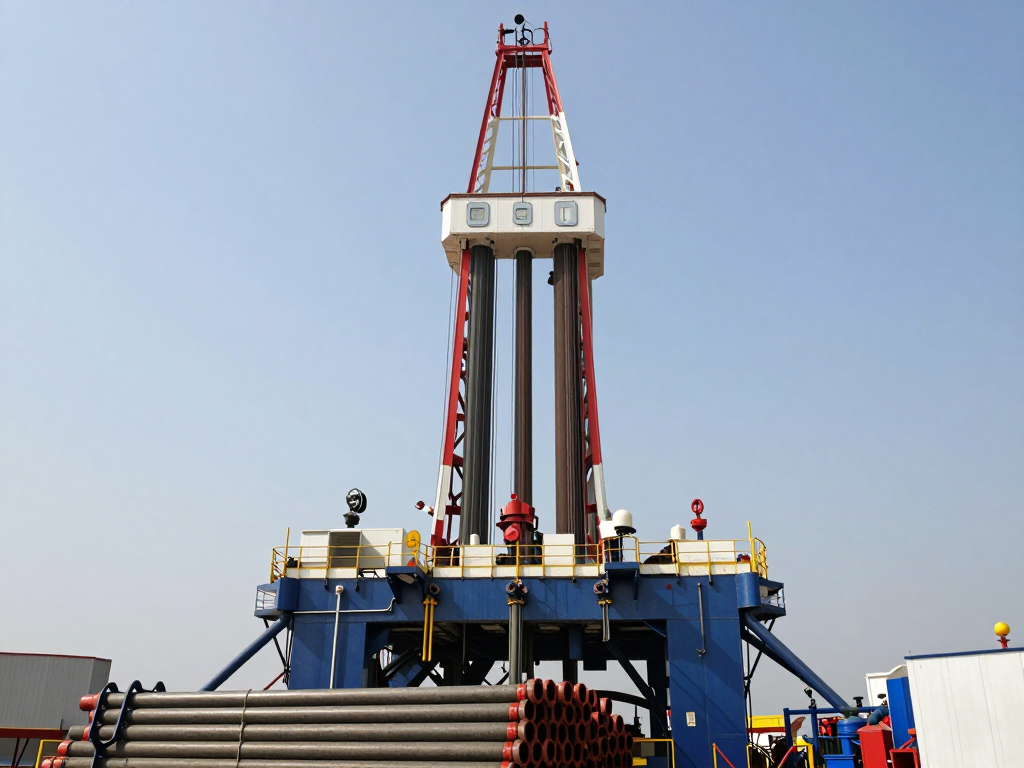
5. Pipe Body vs Coupling: Why Couplings Are Often a Higher Grade
On threaded-and-coupled pipe, the coupling is the short, heavier female end that joins two pipe bodies – and it is frequently ordered in a higher grade than the pipe body itself. Cutting threads removes cross-section from the pipe end, and the coupling must carry the full joint load through its own threads, so a J55 body commonly ships with K55 or N80 couplings, and an N80 body with L80 couplings, making sure the joint – not the body – is not the weak link. Coupling stock also has a heavier wall than the body.
Two procurement consequences follow. First, state the coupling grade and type on the RFQ (e.g., “J55 body, N80 coupling, LTC, API 5B”) – leaving it open lets the mill ship lowest-cost couplings that may limit joint strength exactly where field loads are worst. Second, same-grade or higher-grade couplings are the API 5CT norm; if the coupling is your design limit, step its grade up rather than the body grade – cheaper than moving the whole string up the ladder.
6. Downhole Environments: Corrosive, Sour, and HPHT Service
Grade selection is about the environment as much as the depth – name one of these three service families on every RFQ:
- Sweet service (CO2 only, no significant H2S) – J55, K55, N80, and P110 all work, with choice driven by depth and pressure. Where CO2 corrosion is severe, martensitic stainless grades such as L80-13Cr are the fix.
- Sour service (H2S present) – governed by NACE MR0175 / ISO 15156, which limit hardness and strength to prevent sulfide stress cracking. L80-1 (max 23 HRC) is the standard sour-service grade; C90 and T95 extend sour capability to higher yield. P110 must not be selected for sour service – the most common grade error in the industry, and it fails by cracking, often without warning.
- HPHT wells – P110 or Q125 for strength, with 13Cr, 22Cr duplex, or 25Cr super-duplex selected as temperature and CO2 climb. Specifying P110 for an L80 job wastes money; specifying L80 for a P110 job can kill the well.
Also put bottom-hole temperature and pressure, H2S and CO2 partial pressures, pH, and packer or stimulation loads on the RFQ – a specification naming only “API 5CT, 7 in, 26 lb/ft” leaves the dangerous decisions to someone else.
7. Manufacturing: Seamless vs ERW, and Heat Treatment Routes
API 5CT permits both seamless and ERW (electric resistance welded) manufacture for the lower grades: H40, J55, K55, and N80 may be seamless or ERW. Everything critical above that – L80, C90, T95, and P110 – must be seamless, because a longitudinal weld is a weakness in high-pressure, sour, or fatigue-loaded service. In practice nearly all casing and tubing sold worldwide – and virtually all P110 – is seamless pipe; ERW is a cost-driven niche, and an offer of ERW P110 or ERW L80 is not API 5CT compliance – reject it on that basis alone.
Heat treatment route decides the microstructure, and therefore the properties, of each grade:
- J55 / K55 – hot-rolled or normalized; no quench-and-temper required, which is why they are cheap and lack the toughness of the Q&T grades.
- N80-1 – normalized only. N80-Q – quenched and tempered: austenitized in the region of 850-900 deg C, water-quenched, then tempered in the region of 600-680 deg C (roughly 1100-1250 deg F) to balance strength and toughness.
- L80-1 – quenched and tempered or normalized and tempered, always with the 23 HRC hardness ceiling enforced at the coupling too.
- P110 – mandatory full quench and temper; the tempering window lands the yield between 110,000 and 140,000 psi.
When buying N80-Q, L80, or P110, ask which mill and heat-treated plant made the pipe – heat treatment consistency shows up in the hardness traverse across the wall, and on every MTC the yield, tensile, elongation, and hardness values per heat are the first things a good buyer checks (see our MTC reading guide).
8. Sizes and Weights: OD, Weight Classes, and Drift Diameter
OCTG is ordered by OD in inches + nominal weight per foot, not by schedule. The weight class fixes the wall: a 7 in casing exists as 17, 20, 23, 26, 29, 32, and 35 lb/ft variants, each with its own ID. The sizes buyers actually order:
| OD (in / mm) | Common Casing Weights (lb/ft) | Typical Wall Range (in) |
|---|---|---|
| 4-1/2 in / 114.3 | 9.5, 10.5, 11.6 | 0.205-0.337 |
| 5-1/2 in / 139.7 | 14, 15.5, 17, 20, 23 | 0.244-0.415 |
| 7 in / 177.8 | 17, 20, 23, 26, 29, 32 | 0.231-0.450 |
| 9-5/8 in / 244.5 | 36, 40, 43.5, 47, 53.5 | 0.352-0.545 |
| 13-3/8 in / 339.7 | 48, 54.5, 61, 68, 72 | 0.330-0.514 |
Two numbers drive size selection. Drift diameter: the drift mandrel (a 6 ft gauge bar) is pushed through every length and must clear the smallest tool or string you plan to run later; API 5CT drift is typically the nominal ID minus 1/8 in (3.2 mm) for moderate sizes, with larger allowances on big diameters – confirm the exact value for your size and weight. And length ranges: R1 is 20-24 ft (6.10-7.32 m), R2 is 28-32 ft (8.53-9.75 m), and R3 is 38-42 ft (11.58-12.80 m), with R2 the market default.
9. Testing and Certification: API Monogram, Hydrostatic, MTC, Third-Party Witnessing
Certification is where counterfeit and off-spec OCTG is caught, so the paper trail is a buying criterion, not a formality:
- API Monogram license – the mill must hold an active 5CT license. Verify the number on api.org; “API standard” wording alone proves nothing.
- Hydrostatic test – every pipe is pressure-tested end to end; test pressure is calculated so hoop stress stays at or below 80 percent of the specified minimum yield, and pressure and hold time appear on the certificate.
- Drift and dimensional testing – every length must pass the drift mandrel for its size and weight, and threads are gaged per API 5B with make-up records.
- Non-destructive testing – ultrasonic or electromagnetic inspection per API 5CT for surface and internal defects, with the method and acceptance standard named on the certificate.
- MTC and witnessing – the mill test certificate (EN 10204 3.1 minimum) carries chemistry and mechanicals per heat; for critical strings order EN 10204 3.2 – third-party witnessed testing with the inspector present at the mill.
On every purchase, insist the MTC identify heat number, chemistry, and yield/tensile/hardness results for the exact grades above – and compare them against the API 5CT tables in this article before payment. Our MTC reading guide shows where each number sits on a real certificate.
10. Buying for Resale vs End Use: What Changes in Specification
The same pipe is specified differently depending on who is buying it:
- Resale / trading buyers – buy market-standard stock: seamless API 5CT in the most liquid combinations (J55, N80-Q, L80-1, and P110 in 5-1/2 in, 7 in, 9-5/8 in, R2, STC/LTC for J55 and buttress for higher grades), with API monogram, complete MTC, and clean export packing. Run-of-mill is acceptable; exotic connections are not, because they are unsellable without operator approval.
- End users (operators) – specify exactly: grade + class (N80-Q not N80), OD + weight + wall, connection including make-up torque, drift, sour-service limits per NACE, special NDT, witnessed testing, and traceability per heat to the mill.
Tell your supplier which you are. A distributor-grade quotation is cheaper and faster; an operator-grade quotation carries the tests, witnesses, and documentation that let a well program be approved.
11. RFQ Checklist for OCTG
Send these twelve points on every casing and tubing inquiry and the quotation will return comparable and usable – the list is built from RFQs that actually produce clean orders at Yihang Metal:
- Standard and edition – API 5CT (latest edition), seamless, plus API 5B for threads.
- Grade with class – e.g., J55, K55, N80-1, N80-Q, L80-1, L80-13Cr, or P110 – never “N80” alone.
- Size – OD in inches with mm, plus wall thickness as a cross-check.
- Weight class – nominal weight in lb/ft, e.g., 7 in, 26 lb/ft; confirm the ID it implies.
- Connection – STC, LTC, BC, or premium with the proprietary name; coupling grade; make-up torque if specified.
- Length range and quantity – R1/R2/R3, joints vs tons, and total string length.
- Drift diameter – the exact drift value for the size/weight, not “standard drift”.
- Service conditions – depth, bottom-hole pressure and temperature, H2S/CO2 partial pressures, pH.
- Couplings – grade (same or higher than body) and whether supplied with the pipe or separate.
- Testing and documentation – hydrostatic, NDT method, MTC per EN 10204, 3.1 vs 3.2 witness, API monogram verification.
- Inspection – third-party agency (SGS, BV, TUV, Intertek) at the mill, and who witnesses what.
- Commercials – Incoterm, port, packing, and delivery window. Our quote-request template gives the full format.
Practical tip: never leave “connection” blank. More than half of the failed OCTG orders in our files trace back to a buyer who specified grade and size but left the thread type to the supplier’s default – and the field crews found out when a gas-tight string would not make up to spec at the wellhead.
12. How Yihang Metal Supplies Casing and Tubing
Yihang Metal supplies seamless API 5CT casing and tubing from licensed Chinese mills across the full buying range – J55, K55, N80-1, N80-Q, L80-1, L80-13Cr, and P110 – in the sizes that matter (4-1/2 in to 13-3/8 in casing; 2-3/8 in to 4-1/2 in tubing), with STC, LTC, buttress, and premium threading available. A Yihang Metal OCTG quotation includes:
- API monogrammed mill product with mill name and license number stated, and MTCs per EN 10204 3.1 as standard, 3.2 with third-party witnessing on request.
- Grade, class, and connection called out exactly – N80-Q versus N80-1 distinguished, coupling grades stated, premium threads from licensed shops with make-up data.
- Service-verified grade selection – we cross-check your grade against the downhole conditions on your RFQ and flag mismatches (sour wells on P110, for example) before they cost you a well.
- Third-party inspection and documentation – SGS, Bureau Veritas, TUV, or Intertek witnessing at the mill, with hydrostatic, drift, and NDT records attached.
- Export-grade packing and loading – OCTG moves as bundles or flat-rack / container loads per the export-packing checklist, with thread protectors and end caps on every joint.
We sell from mill programs and check your specification against the same API 5CT tables this guide uses – so the quotation you receive is pipe you can actually run, not a price against a guess.
Ready to specify your casing or tubing order? Send us the twelve-point checklist above – grade with class, size and weight, connection, length range, drift, service conditions, and destination port. The team at Yihang Metal will confirm the grade against your well conditions, quote from licensed API 5CT mill programs, and deliver a priced offer with full certification within 24-48 hours. Submit your RFQ today via www.yihangmetal.com.