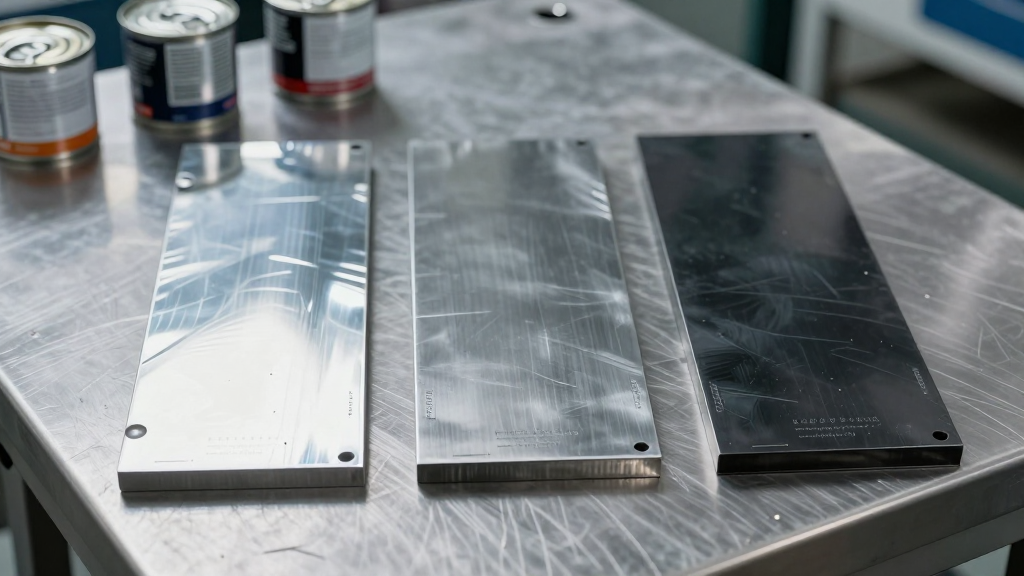
If you are sourcing thin steel for food cans, beverage ends, aerosols, crown caps, or general packaging, you are almost certainly choosing between two materials that look similar on a spec sheet but behave differently in your tooling: tinplate (tin-coated steel) and Tin-Free Steel, TFS – also sold as ECCS (Electrolytic Chromium-Coated Steel). Both start as the same low-carron blackplate. Both arrive as bright, thin (0.13–0.50 mm) coil. But the surface coating changes how they lacquer, weld, draw, and resist the contents – and choosing the wrong one is the most common reason packaging-steel RFQs go wrong.
In this guide we break down what each coating is, how tinplate and TFS compare on corrosion resistance, lacquer adhesion, welding, formability, and cost, and – just as importantly – when the cheaper ECCS option is the better engineering choice. We have supplied both from Yihang Metal to can-makers and crown-cap producers across Asia, the Middle East, and Africa, so the recommendations below come from real orders, not a mill brochure.
What Tinplate and Tin-Free Steel (TFS/ECCS) Actually Are
Both products begin as blackplate – cold-rolled, annealed, temper-rolled low-carbon steel strip, typically to EN 10202 or ASTM A599. The difference is entirely in the surface coating applied in a final electrolytic line:
- Tinplate – a layer of metallic tin (Sn) is electrolytically deposited on both sides, then reflowed (melted) to give a bright, shiny, tin-iron alloy layer at the interface. Coating weight is designated per side in g/m² (e.g., E2.8/2.8 = 2.8 g/m² each side) or by the ASTM system (e.g., #25, #50, #100). Standard: EN 10202, ASTM A623/A630.
- TFS / ECCS – instead of tin, a very thin layer of chromium (Cr, ~0.5–1.5 mg/m²) plus chromium oxide (Cr₂O₃, ~5–10 mg/m²) is electrolytically deposited. The coating is far thinner than tin (measured in milligrams, not grams) and is matte gray. Standard: EN 10202 (ECCS), ASTM A657.
- TSF-Ti / low-chromium variants – newer ECCS-type products with reduced hexavalent-chromium process chemistry (ROHS/REACH compliant), functionally equivalent for most can-making.
Because ECCS uses no tin, it was originally developed in the 1970s as a strategic alternative during tin-price shocks – and it has stayed relevant because chromium-coated steel actually outperforms tinplate in two specific ways: lacquer adhesion and resistance to sulfide staining. The trade-off is that ECCS cannot be soldered and must be welded differently.
Key mental model: tinplate protects by a metallic tin barrier plus a thin alloy layer. ECCS protects by an extremely thin, hard chromium-oxide film that is designed to hold lacquer, not to protect bare. For almost all modern packaging, the lacquer does the real protecting – which is why ECCS works so well.
Tinplate vs TFS/ECCS: Composition, Coating, and Performance Compared
Here is the side-by-side at the properties a can-maker or packaging buyer actually specifies against.
| Property | Tinplate (E2.8/2.8 typical) | TFS / ECCS |
|---|---|---|
| Coating metal | Tin (Sn), electrolytically deposited + reflowed | Chromium metal + chromium oxide (Cr/Cr₂O₃) |
| Coating weight (per side) | 1.0–11.2 g/m² (E1.0 to E11.2) | ~0.5–1.5 mg/m² Cr + 5–10 mg/m² Cr₂O₃ (far thinner) |
| Standard | EN 10202, ASTM A623/A630 | EN 10202 (ECCS), ASTM A657 |
| Surface appearance | Bright, shiny, mirror-like (or stone/matte finish available) | Matte gray, slightly metallic |
| Lacquer adhesion | Good | Excellent – the Cr₂O₃ layer is an ideal key for organic coatings |
| Corrosion resistance (bare, unlacquered) | Better – tin is a genuine barrier and is sacrificial to steel in many foods | Poorer bare – ECCS must be lacquered to resist corrosion |
| Sulfide stain resistance (protein foods, meat, fish) | Can show black FeS staining unless heavily lacquered | Excellent – chromium does not form sulfides |
| Weldability (resistance welding) | Good – copper-chromium electrode wheels, standard parameters | Poorer – the hard Cr layer wears electrodes faster; needs slightly higher current or edge strip of coating |
| Solderability | Yes (traditional side-strip soldering, now rare) | No – ECCS cannot be soldered |
| Formability / drawing | Good; soft tin acts as a lubricant in drawing | Good, but coating is brittle – can crack under severe draw, relies on lacquer |
| Typical cost | Higher (tin is a priced metal; coating weight drives cost) | Lower (no tin; chromium coating is very thin) |
Corrosion Resistance: Why the Answer Depends on the Product Inside
This is where buyers most often mis-specify. “Which is more corrosion resistant?” has no single answer – it depends on what the can holds.
- Acidic foods (tomato, citrus, cola, fruit juices): Tinplate is the classic choice. Tin is sacrificial to steel in these media – it corrodes preferentially, protecting the steel substrate and preventing iron pickup that would discolor the product. Heavily lacquered ECCS is also used for beverage cans (especially DRD/drawn cans), but the protection there comes from the lacquer, not the metal.
- Protein / sulfur-containing foods (meat, fish, asparagus, peas): These release sulfur compounds during retort that react with steel to form black iron sulfide (FeS) stains. ECCS is markedly better here – chromium does not form sulfides – which is why fish and meat cans historically favored TFS bodies with tinplate ends.
- Dry / non-corrosive products (crown caps, dry-food lids, general closures): ECCS is usually preferred – cheap, lacquers well, no functional disadvantage.
- Aerosols and general-line cans: Both work; the choice follows the product chemistry and the welding/forming route.
For external corrosion – storage, transit, warehouse humidity – both rely on lacquer plus the underlying temper of the blackplate. ECCS’s superior lacquer adhesion actually helps here: the coating is less likely to lift at scratches and exposed edges.
Lacquer Adhesion, Welding, and Forming – What Changes in Your Tooling
Three downstream operations drive most of the real-world difference between tinplate and ECCS:
- Lacquer / coating adhesion. ECCS was practically designed to hold lacquer. The chromium-oxide film gives organic coatings (epoxy-phenolic, vinyl, polyester) a mechanical key that tinplate’s smooth tin surface cannot match. If you are running two-piece drawn cans with heavy interior lacquer and need to survive retort and aggressive filling, ECCS lacquer adhesion is a real advantage. It also means you can sometimes run a thinner lacquer film on ECCS and save cost.
- Resistance welding (can-body side seam). Tinplate welds cleanly on standard copper-alloy electrode wheels. ECCS’s chromium layer is hard and electrically resistive – it wears electrodes faster and often needs a slightly higher welding current, or a narrow edge strip where the coating is removed so the electrode contacts bare steel. Most modern welders handle ECCS fine, but confirm your welding line is set up for it before committing a full order.
- Forming and drawing. Tin’s softness gives tinplate a mild lubricity bonus in drawing. ECCS coating is hard and slightly brittle; under severe draw ratios it can micro-crack, so very deep-draw parts sometimes need a compatible drawing lubricant or a pre-lacquered ECCS coil rated for draw (often sold as TFS for DRD). For shallow-drawn ends, caps, and closures there is no practical difference.
Practical tip from the line: if your can-maker tells you they have “only ever run tinplate,” ask whether their welder is set up for ECCS and request a small trial coil. The switch is usually straightforward, but the electrode-wear and current parameters are the things that catch people out.
Coating-Weight Notation: Reading Tinplate and ECCS Specs Without Confusion
Tinplate coating weight is the single most important – and most often misread – line on the spec. The notation differs by standard:
- EN 10202 (metric): E2.8/2.8 means 2.8 g/m² on each side. E5.6/2.8 means 5.6 g/m² on the top side and 2.8 g/m² on the reverse (differential coating). Common food-can body weights are E2.8/2.8 or E5.6/2.8; heavy-duty ends may run E11.2/11.2.
- ASTM A623 (lb/base box): #25, #50, #75, #100, #135 etc. A #50 coating is approximately 5.6 g/m² per side. “Differential” coatings are written as #50/25.
- Surface finish: bright, stone, silver, matte – matters for appearance and lacquer key. Specify it; do not leave it to the mill’s default.
- ECCS: coating is so thin it is specified as a minimum chromium and chromium-oxide mass (mg/m²), and in practice almost all ECCS meets a single commercial grade. The variables that matter on an ECCS spec are surface cleanliness, lacquer adhesion rating, and freedom from stains.
- Temper (hardness): designated T1–T6 (EN) or CA-T1–T6 (ASTM). T3 is a typical can-body temper; T5/T6 for stiff ends and crowns. Temper is a property of the blackplate, identical for tinplate and ECCS.
If you want to compare the two on cost, compare at the temper and thickness your application needs – not at “tinplate vs ECCS” in the abstract. The ECCS saving comes from removing the tin metal and running a thinner coating; the saving is real but it is not unlimited.
Where Tinplate Is Still the Smarter Buy (Don’t Over-Specify ECCS)
ECCS is cheaper, but it is not always right. Choose tinplate when:
- The product is acidic and you rely on tin’s sacrificial protection. Tomato paste, citrus juices, cola – the tin is doing chemical work the lacquer alone cannot match.
- The can or component is unlacquered or lightly lacquered and the bright tin appearance is part of the product (decorative tins, certain caps).
- Your line is set up for tinplate and a coating switch is not justified by the volume or the cost saving.
- You need solderability for a legacy side-seam process (rare today, but some closure and specialty lines still solder).
- The buyer or end-customer specifies tinplate on their packaging standard – common in regulated food and some export markets.
Choose TFS / ECCS when:
- The product is sulfur/protein-rich (meat, fish, pet food) and sulfide staining is a risk.
- The can is fully lacquered and you want the best possible lacquer adhesion and retort resistance.
- The application is closures, crown caps, dry-food lids, or general line where bare corrosion is not the failure mode.
- Tin price volatility is a budget concern and the engineering allows the switch.
- You are running two-piece drawn (DRD/DWI) cans where ECCS lacquer performance is an advantage.
What to Lock in Your RFQ: Coating, Temper, Finish, and Dimensions
The most common reason a packaging-steel shipment disappoints is not the coating family – it is a vague RFQ. To get what you actually need, specify all of the following:
- Product and coating designation: “Tinplate E2.8/2.8 per EN 10202” or “ECCS per EN 10202 / ASTM A657, Cr ≥ 0.5 mg/m².” Do not write “tinplate coil” alone.
- Surface finish: bright / stone / matte for tinplate; surface class for ECCS. State it explicitly.
- Temper: T1–T6 (or CA equivalent) matched to the forming operation. T3 for bodies, T5–T6 for stiff ends and crowns.
- Thickness and tolerance: nominal thickness (e.g., 0.20 mm) plus tolerance per EN 10202 / ASTM A623. Packaging steel is thin, so a ±0.01 mm swing matters to your tooling.
- Width, coil ID, and max coil weight: width with tolerance, 508 mm ID standard for packaging lines, coil weight to your handling limit.
- Lacquer request (if pre-lacquered): interior/exterior, lacquer type (epoxy-phenolic, vinyl, polyester), film weight (g/m²), curing, and whether the coil is to be lacquered in-line or supplied bare for your coater.
- Standard and MTC: EN 10204 3.1 as standard; for food-contact and regulated export, request food-contact compliance documentation (overall migration, heavy-metal limits) alongside the MTC. For project work, EN 10204 3.2 witnessed certification is available on request.
- Packaging: VCI paper, horizontal or vertical eye-to-sky packing, pallet or stillage, sea-worthy for long transit.
For a deeper view of the surface-defect vocabulary to put on your spec and inspection sheet – slivers, sticker stain, rust, pinholes – our steel coil and sheet surface-defects buyer guide lays out the clauses that prevent most disputes. And if you are new to sourcing from China, the how to import steel from China guide covers the documents, Incoterms, and QC steps that apply to packaging steel just as much as to structural plate.
How Yihang Metal Supplies Tinplate and TFS/ECCS for Packaging Buyers
We source both coating families so you can compare them like-for-like in one RFQ rather than chasing two suppliers. Here is what a Yihang Metal packaging-steel quotation includes as standard:
- Tinplate in E1.0 to E11.2 coating weights (equal or differential), bright/stone/matte finish, T1–T6 temper, per EN 10202 / ASTM A623.
- TFS / ECCS per EN 10202 / ASTM A657, with chromium and chromium-oxide mass confirmed on the certificate, supplied bare or pre-lacquered to your spec.
- Food-contact compliance documentation alongside the EN 10204 3.1 MTC, and 3.2 third-party witnessed certificates when your end-customer requires them.
- Custom widths, coil IDs, and slit-to-width strips for cap and crown production, with thickness tolerance controlled for high-speed press lines.
- Pre-lacquered coil options – interior epoxy-phenolic, exterior polyester – matched to your retort and filling conditions, with lacquer adhesion tested before dispatch.
- Export packing – VCI-lined, edge-protected, sea-worthy – suitable for long ocean transit to can-making plants worldwide.
Because we ship tinplate and ECCS side by side, we can also give you an honest cost-and-performance comparison at the exact temper, thickness, and coating weight your application needs – so the decision is driven by the product inside the can and your total cost of ownership, not by which product a single-line mill wants to push. For food and beverage buyers, our food-grade stainless selection guide covers the adjacent equipment-grade question for filling and processing lines.
Not sure whether tinplate or TFS/ECCS is right for your cans, caps, or closures? Tell us the product, the filling/retort conditions, the forming and welding route, and the target cost. The team at Yihang Metal will recommend the coating family, weight, temper, and finish that gives you the best performance per can – and back it with full EN 10204 documentation and food-contact compliance. Send us your specifications today for a quoted price within 24 hours.