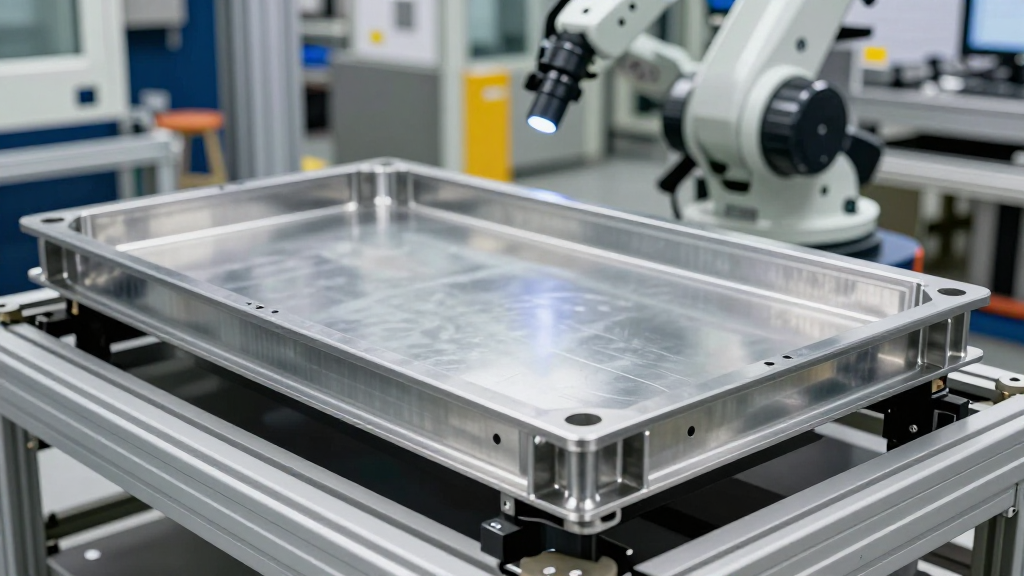
If you are sourcing steel for an electric vehicle (EV) battery enclosure – the tray, cover, and protection structure that sits under the cabin and holds the battery pack – you are choosing between a small set of steel grades that have to do four jobs at once: carry the pack’s weight, survive a crash without intrusion, resist corrosion for the vehicle life, and stay light enough not to kill range. That is a harder combination than ordinary automotive body steel, and specifying the wrong grade is the most common reason an EV battery-housing RFQ comes back over-weight, over-cost, or failing crash review.
In this guide we break down which steel grades buyers actually specify for EV battery housings, how high-strength steel (HSS), advanced high-strength steel (AHSS), and press-hardened / hot-stamped steel (PHS) compare on strength, weight, formability, and cost, and – just as importantly – when a conventional grade is still the right call. We have supplied battery-housing steel from Yihang Metal to Tier-1 and Tier-2 automotive suppliers across Asia, so the recommendations below come from real RFQs and real forming feedback.
What an EV Battery Housing Asks of the Steel
The battery enclosure is one of the most heavily loaded steel assemblies in an EV. The grade choice is driven by four requirements that pull in different directions:
- Strength and crashworthiness. The enclosure has to resist bottom impact (a road-debris strike that penetrates the pack is a thermal-runaway event), side-pole intrusion, and crash loads, all without deforming into the cells. That pushes the design toward high-strength and ultra-high-strength steels in the crash-critical members.
- Stiffness for pack rigidity. The pack is part of the vehicle’s structural stiffness – in many skateboard platforms the battery enclosure contributes to torsional rigidity. The steel has to deliver modulus and section stability, not just yield strength.
- Weight. The pack is already the heaviest single component in the vehicle; every kilogram saved in the enclosure extends range. That pushes the design toward thinner, higher-strength gauges and sometimes toward aluminum – but steel keeps the cost and crash advantage.
- Corrosion resistance. The enclosure sits under the vehicle, exposed to salt, water, and stone chips for the vehicle life. Electro-galvanized (EG) or hot-dip galvanized (GI) substrate with a corrosion-protection coating is effectively mandatory; bare steel is not an option for a through-life enclosure.
The grades that satisfy this combination come from the high-strength and advanced high-strength steel families, almost always supplied as electro-galvanized or hot-dip galvanized coil for corrosion protection.
Key mental model: battery-housing steel is not “the strongest steel available” – it is the lightest steel that still passes the crash case at the gauge you can form. A 1500 MPa press-hardened steel used everywhere would be over-specified and unformable; the housing is a welded assembly of grades matched to each member’s job.
Steel Grades for EV Battery Housings Compared
Here is the side-by-side at the properties an automotive buyer or battery-pack engineer actually specifies against. The families are ordered roughly by strength tier.
| Family | Typical grades | Yield / UTS (MPa) | Role in the housing | Relative cost |
|---|---|---|---|---|
| Mild / IF steel (galvanized) | DC06, DX54D, IF | ~140-180 / 270-350 | Non-critical covers, shields, deep-drawn tray bottom where formability dominates | Lowest |
| HSS (high-strength) | HC340LA, HC380LA, DP500-DP600 | ~340-420 / 500-650 | General structural members, cross-members, brackets, the main tray body | Low |
| AHSS (advanced high-strength) | DP780-DP1000, CP800, TRIP800 | ~500-700 / 780-1000 | Crash-critical side frames, intrusion beams, reinforcement plates | Medium |
| UHSS / PHS (press-hardened / hot-stamped) | 22MnB5 (PHS 1500), PHS 2000 | ~1000-1200 / 1500-2000 | Side-pole intrusion protection, high-load cross-members (after hot stamping) | Highest |
| Galvanized substrate (all above) | EG (electro-galvanized) or GI (hot-dip) coating | — | Through-life corrosion protection – effectively mandatory | Adder on all grades |
Where Each Grade Belongs in the Housing Assembly
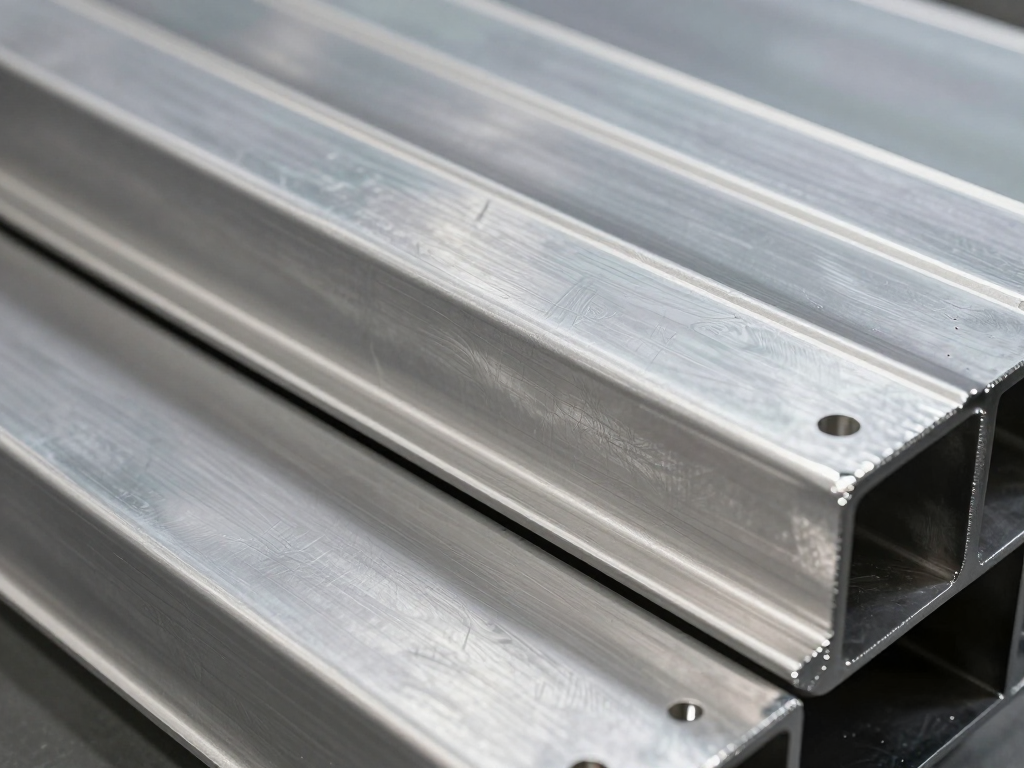
A battery enclosure is a welded assembly, not a single stamping. The grade is chosen per part:
- Tray bottom (deep-drawn): a formable grade – mild IF steel or a lower-strength DP – because the draw depth is significant and the panel is large. Here formability wins over strength; the bottom is not the primary crash path.
- Side frames and longitudinal rails: the crash-critical structure. DP780-DP1000 (AHSS) for energy absorption, stepping up to 22MnB5 press-hardened steel (PHS 1500) for the side-pole intrusion zone where the load case is a rigid pole into the pack side.
- Cross-members and brackets: HSS (HC340LA / DP500-600) – enough strength to carry the pack weight and tie the structure together, formable enough to weld in.
- Cover / top plate: often a lighter-gauge HSS or even mild galvanized – the cover is a service access panel, not a crash member.
- Reinforcement and intrusion plates: PHS or UHSS where local load cases demand it.
The reason a buyer ends up with a multi-grade BOM is that no single grade does all jobs well. A common mistake is over-specifying PHS everywhere to “be safe” – the result is an unformable, expensive housing. The right RFQ lists the grade per part.
Strength, Formability, and the Galvanizing Complication
Two engineering realities dominate battery-housing steel selection:
- Strength-formability trade-off. As strength goes up, formability (elongation) goes down. A DP600 can be stamped at room temperature with normal tooling; a 1500 MPa PHS cannot – it must be hot-stamped (formed hot in a die, then die-quenched to martensite). Hot stamping is a specialist process; confirm your stamper is set up for it before specifying PHS, or the part cannot be made. For buyers sourcing the steel only (not the stamping), the key is to match the grade to the stamper’s process.
- Galvanizing on high-strength steel. Corrosion protection is mandatory, but applying a zinc coating to AHSS/PHS is not trivial. Electro-galvanized (EG) gives a thin, formable coating suited to high-strength substrates; hot-dip galvanized (GI) is thicker and cheaper but can affect surface and forming. PHS with an Al-Si coating (aluminized) is the standard for hot-stamped parts – the Al-Si layer survives the austenitizing heat without burning off, unlike zinc. So for PHS crash members, specify Al-Si coated 22MnB5, not galvanized.
- Welding the assembly. The housing is resistance-spot-welded and laser-welded. Mixed-grade joints (e.g., DP600 to PHS) need a qualified WPS. Laser welding of galvanized steel in overlap requires venting of the zinc vapor. These are process details, but they affect whether the grade you specify can actually be joined.
- Dimensional tolerance. A battery enclosure mates to the vehicle body and to the cells; flatness and springback control matter. Higher-strength steels spring back more, so tighter tolerance requires tighter die control or post-form sizing.
Practical tip from the engineering desk: if your stamper tells you a part “can’t be made in that grade,” the issue is almost always the formability-vs-strength trade-off or the galvanizing compatibility, not the grade itself. The fix is usually to either step the grade down one tier, switch GI to EG (or to Al-Si for PHS), or move the part to a hot-stamp route – not to abandon the strength target.
Where Conventional Steel Is Still the Right Call
Not every EV battery component needs AHSS or PHS. Use conventional / mild galvanized steel when:
- The part is a cover, shield, or service panel with no crash function – mild galvanized (DX54D / DC06) is correct and far cheaper.
- The pack is for a low-speed or light-duty vehicle (golf carts, low-speed utility EVs, scooters) where the crash case is modest – HSS or even mild steel suffices.
- The enclosure is a bolt-on skid rather than a structural member – the vehicle body carries the load, and the housing just holds the cells.
- Cost is the overriding constraint and the load case allows it.
Step up to AHSS / PHS when the part is in the crash path, when the platform relies on the pack for structural stiffness, or when the vehicle is a passenger EV subject to side-pole and bottom-impact regulation. For the broader context of automotive steel grades across the whole vehicle – body, chassis, powertrain – our automotive steel materials guide is the companion read.
What to Lock in Your RFQ: Grade, Coating, Gauge, and Tolerance
The most common reason a battery-housing steel order disappoints is not the grade family – it is a vague RFQ that leaves coating and tolerance open. Specify all of the following:
- Grade per part, with standard: e.g., “HC340LA per EN 10268,” “DP600 per EN 10338,” “22MnB5 PHS (Al-Si coated) per VDA 239-100.” Do not write “high-strength steel” alone.
- Coating matched to the process: EG or GI for cold-stamped HSS/AHSS; Al-Si coated for hot-stamped PHS. State the coating weight/type and that it is compatible with the stamper’s route.
- Gauge (thickness) and tolerance: nominal thickness with tolerance per EN 10131 / EN 10051 or VDA 239. Battery housings run thin (often 1.0-2.5 mm), so a ±0.02 mm swing matters to the weld and the weight.
- Width, coil ID, and flatness: width with tolerance, 508 mm ID, and a flatness class suited to high-speed stamping (e.g., special flatness for exposed/structural panels).
- Surface class: exposed vs unexposed, oiled or dry, free of defects that would telegraph through paint. See our steel coil surface-defects guide for the surface-class clauses that prevent disputes.
- Standard and MTC: EN 10204 3.1 as standard, with chemistry and mechanicals (yield, UTS, elongation, BH if applicable) confirmed per heat; 3.2 witnessed certification for PPAP / project-critical automotive work.
- Traceability and PPAP support: heat/lot traceability and the documentation set your PPAP submission requires – automotive buyers cannot accept un-traceable coil.
For adjacent grade questions, the A36 vs A572 Grade 50 guide covers structural-plate strength selection (relevant to skid and bracket design), and the cold-rolled vs hot-rolled guide covers the substrate route – battery-housing steel is almost always cold-rolled (for gauge and tolerance control) before coating, so the cold-rolled substrate is the right starting point. For the high-strength, wear- and impact-critical members, the wear-resistant steel guide and the shipbuilding high-strength plate guide cover adjacent high-strength families.
How Yihang Metal Supplies Steel for EV Battery Housings and Enclosures
We source the full strength tier – from mild galvanized to AHSS and Al-Si-coated PHS – so you can buy the right grade per part in one RFQ. Here is what a Yihang Metal battery-housing steel quotation includes as standard:
- Grade range per VDA 239-100 / EN 10268 / EN 10338: mild IF and DC/DX galvanized, HSS (HC340LA-DP600), AHSS (DP780-DP1000, CP), and 22MnB5 PHS with Al-Si coating for hot-stamped intrusion members.
- Coating matched to the process – EG and GI for cold-stamped grades, Al-Si for PHS – with coating weight/type confirmed on the certificate.
- EN 10204 3.1 MTC with chemistry and mechanicals (yield, UTS, elongation) per heat, and 3.2 third-party witnessed certificates for PPAP / project-critical automotive work.
- Heat/lot traceability and PPAP documentation support – the certificate set automotive buyers need for their submission, not just a mill cert.
- Custom widths, coil IDs (508 mm), and tight gauge/flatness tolerances for high-speed stamping lines, with surface class matched to exposed or unexposed application.
- Sea-worthy export packing – moisture-barrier, edge-protected, palletized – suitable for long transit to Tier-1 and Tier-2 stamping plants.
Because we ship the full strength tier side by side, we can also give you a like-for-like cost-and-weight comparison at the exact gauge and coating each part needs – so the housing BOM is driven by the crash case and the weight target, not by which single grade a one-product mill wants to push.
Not sure which steel grades to specify for your EV battery housing or enclosure? Tell us the platform (passenger EV, commercial, light-duty), the crash cases it has to pass, the stamping route you have available (cold stamp vs hot stamp), and the target weight. The team at Yihang Metal will recommend the grade-per-part, coating, gauge, and tolerance that gives you a housing that passes review at the lowest weight and cost – and back it with full EN 10204 documentation and PPAP traceability. Send us your specifications today for a quoted price within 24 hours.