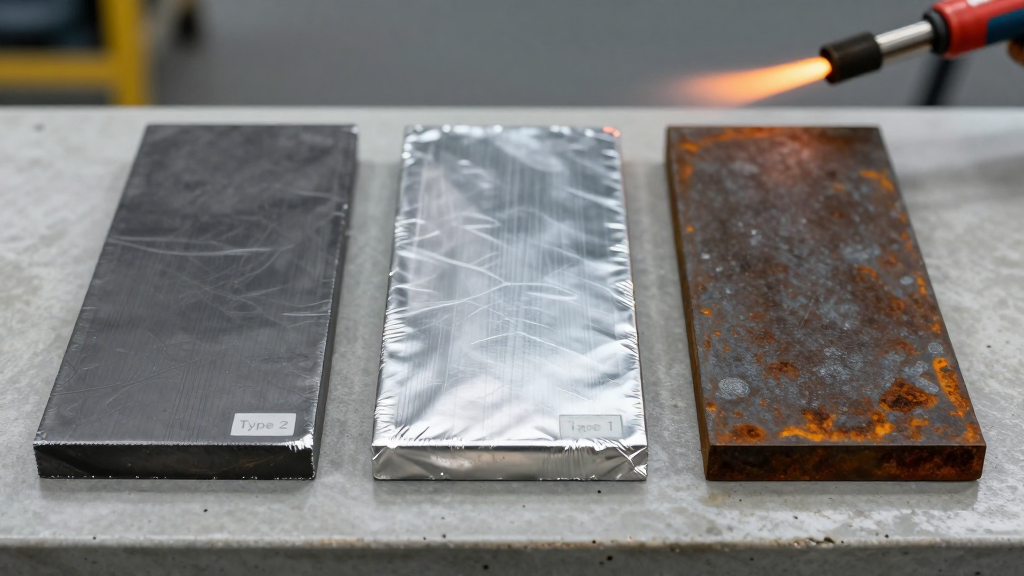
If you are sourcing steel that has to survive heat – an automotive exhaust system, a heat-exchanger tube bundle, a furnace or oven wall, a residential fireplace, a BBQ, or a chimney flue – you are almost certainly looking at aluminized steel, and you have to pick between two coatings that look similar but are engineered for different jobs: Type 1 (an aluminum-silicon alloy coating) and Type 2 (a pure aluminum coating). Specify the wrong type and you either get a part that fails its high-temperature oxidation test, or one that costs more and forms less well than it needed to. The Type 1 vs Type 2 decision is the single biggest cost-and-performance lever in an aluminized-steel RFQ.
This guide breaks down aluminized steel Type 1 vs Type 2: coating composition and structure, how each is made (hot-dip vs continuous), the temperature range each survives, formability and weldability, the applications each is actually specified for, and the ASTM A463 coating-weight notation (AS-70, AS-120, AS-240, AS-300) buyers must put on a PO. We supply aluminized steel coil and sheet from Yihang Metal to exhaust-system manufacturers, heat-exchanger fabricators, and appliance OEMs, so the recommendations below come from real RFQs and real forming feedback.
What Aluminized Steel Actually Is
Aluminized steel is carbon-steel substrate onto which an aluminum (or aluminum-silicon) coating is metallurgically bonded by hot-dipping in a molten bath, following ASTM A463. The coating gives the steel the high-temperature oxidation resistance and reflectivity of aluminum while keeping the strength, formability, and cost of steel. Two coating types are defined:
- Type 1 – aluminum-silicon alloy coating (typically ~90% Al, ~10% Si). The silicon suppresses the brittle iron-aluminum intermetallic layer that forms between the coating and the steel, keeping the coating thin, ductile, and formable. Type 1 is the grade specified for high-temperature applications (exhaust, heat exchangers, furnaces) up to ~600-650 deg C continuous service.
- Type 2 – pure aluminum coating (commercially pure aluminum, no silicon). Without silicon, a thicker, harder iron-aluminum intermetallic layer forms, so the coating is thicker and less formable – but it delivers superior atmospheric and corrosion resistance at milder temperatures. Type 2 is specified for weathering / atmospheric-corrosion applications (cladding, ducting, refrigeration cabinets) and for moderate-temperature use.
Both are produced by continuous hot-dip coating (similar in principle to hot-dip galvanizing, but in an aluminum or Al-Si bath rather than a zinc bath), then skin-passed for flatness and surface.
Key mental model: Type 1 = heat resistance (thin Al-Si, formable, exhausts and furnaces). Type 2 = corrosion resistance (thick pure Al, less formable, cladding and cabinets). They are not interchangeable – picking Type 2 for a 600 deg C exhaust will fail the oxidation test, and picking Type 1 for a 50-year weathering panel over-spends on a coating that won’t outlast Type 2 in plain atmospheric exposure.
Type 1 vs Type 2 Aluminized Steel – Side by Side
| Property | Type 1 (Al-Si coating) | Type 2 (pure Al coating) |
|---|---|---|
| Coating composition | ~90% Al + ~10% Si alloy | Commercially pure aluminum |
| Coating structure | Thin, ductile; Si limits intermetallic growth | Thicker, with a harder Fe-Al intermetallic layer |
| Typical coating weight (ASTM A463) | AS-70, AS-120 (lighter, ~25-120 g/m2 total both sides) | AS-240, AS-300 (heavier, ~240-300 g/m2 total both sides) |
| Continuous service temperature | Up to ~600-650 deg C (excellent high-temp oxidation resistance) | Up to ~400-450 deg C (better at milder temps) |
| Atmospheric corrosion resistance | Good | Excellent (thicker pure-Al barrier) |
| Formability / drawability | Very good – thin ductile coating bends with the steel | Fair – thicker coating can crack on tight bends |
| Weldability | Good (resistance, MIG); coating must be removed at weld zone for some processes | Fair; thicker coating complicates welding |
| Heat reflectivity | High (~reflects radiant heat) | High |
| Relative cost | Baseline | Slightly higher (heavier coating) |
| Primary applications | Automotive exhaust, catalytic-converter shells, heat shields, heat-exchanger tubes, furnace/oven walls, fireplaces, BBQs | Building cladding, roofing, ducting, refrigeration cabinets, grain bins, kiln exteriors, milder-temp weathering parts |
Type 1 – the High-Temperature Workhorse (Exhausts, Heat Exchangers, Furnaces)
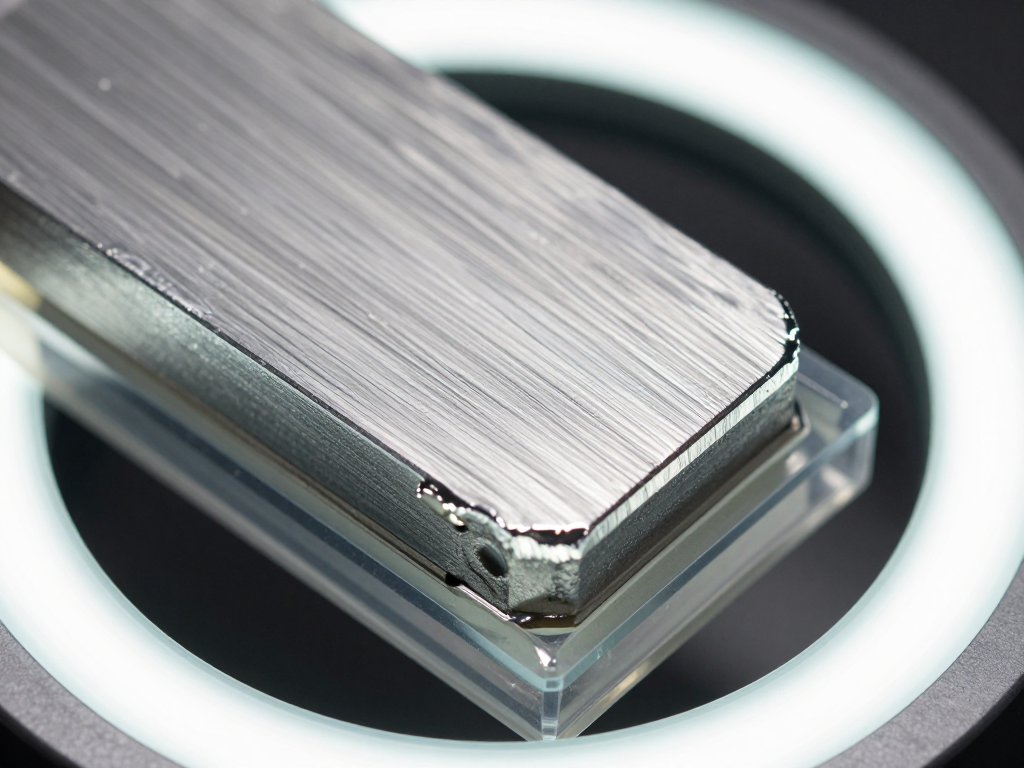
Type 1 aluminized steel is the grade specified wherever the part sees sustained heat above ~450 deg C. The aluminum-silicon coating forms a stable aluminum-oxide skin at temperature that blocks further oxidation of the steel substrate, and the silicon keeps the coating ductile enough to survive forming, stamping, and tube-rolling without flaking. The dominant applications are:
- Automotive exhaust systems – mufflers, resonators, tailpipes, exhaust manifolds, heat shields. Type 1 is the standard OEM exhaust material where stainless is over-specified; it handles exhaust-gas temperature and road-salt splash at a fraction of the cost of 409/439 stainless. For the broader automotive-grade context, our automotive steel materials guide covers the full body/chassis/exhaust grade map.
- Heat exchangers – tube bundles, fins, and plates in residential and commercial HVAC, water heaters, and process heat exchangers, where the coating resists flue-gas condensation and elevated temperature.
- Furnaces, ovens, kilns, and fireplaces – inner walls, baffles, and ducting exposed to radiant and convective heat.
- BBQ grills, range backs, and cooking cavities – where heat reflectivity and oxidation resistance at moderate temperature matter.
- Catalytic-converter shells and thermal-reactor housings.
The defining failure mode to avoid is exceeding the coating’s temperature ceiling – above ~700 deg C the Al-Si coating begins to degrade and the steel substrate oxidizes. If your continuous service temperature is above ~650 deg C, step up to a stainless (409, 439, 304) rather than pushing Type 1 beyond its range.
Type 2 – the Atmospheric-Corrosion and Cladding Grade
Type 2 aluminized steel is specified where the load is long-term atmospheric or mild-temperature corrosion, not high heat. The thicker pure-aluminum coating provides a more effective barrier to moisture, salt, and industrial atmosphere than Type 1’s thinner Al-Si layer, at the cost of formability and high-temperature performance. Typical applications:
- Building cladding, roofing, and siding where a metallic (non-painted) corrosion-resistant finish is wanted.
- HVAC and appliance ducting, refrigeration cabinets – indoor/mild-temperature corrosion environments.
- Grain bins, silos, and storage tanks exposed to weather.
- Kiln and dryer exteriors, muffle exteriors, and other parts where the outer skin sees weather, not the fire.
Because the Type 2 coating is thicker and less ductile, forming and welding are more constrained: tight bends can crack the coating, and welding requires coating removal at the weld zone. If your part needs deep drawing or tight-radius forming and atmospheric corrosion resistance, you may be better served by a pre-painted galvanized or Galvalume substrate – the coating-weight logic is the same as our A653 G60 vs G90 galvanized coating-weight guide.
How Aluminized Compares with Galvanized and Stainless
Buyers often weigh aluminized against two alternatives. The trade-offs:
- Vs galvanized (zinc-coated) steel. Zinc melts at ~419 deg C and the coating degrades rapidly above that – so galvanized steel cannot serve the high-temperature applications where aluminized Type 1 excels. Conversely, for ambient-temperature corrosion protection, galvanized is cheaper and more easily welded. The hot-dip-vs-electro and zinc-coating logic in our galvanized coil hot-dip vs electro guide explains why zinc is the right answer below ~400 deg C and aluminized is the right answer above it.
- Vs stainless (409, 439, 304). Stainless outperforms aluminized on both temperature and corrosion but at 2-4x the cost. For exhaust and heat-exchanger applications where the temperature ceiling is ~600 deg C and the corrosion load is moderate, Type 1 aluminized is the cost-engineered default; stainless is reserved for higher temperature, longer life, or aggressive corrosion.
Forming, Welding, and the Coating-Weight Decision
Three fabrication realities dominate aluminized-steel selection:
- Formability tracks coating type. Type 1’s thin, ductile Al-Si coating survives stamping, drawing, roll-forming, and tube-rolling with minimal flaking – it is the formable grade. Type 2’s thicker pure-Al coating is more prone to cracking on tight bends and deep draws; design generous radii and avoid severe forming.
- Welding requires coating management. Both types can be resistance-welded (spot, seam) for exhaust and duct assemblies, but fusion welding (MIG/TIG) generally requires the coating to be ground away from the weld zone to avoid aluminum contamination and porosity in the weld. Confirm your fabricator’s process before specifying.
- Coating weight per ASTM A463. Type 1 is typically AS-70 or AS-120 (lighter); Type 2 is typically AS-240 or AS-300 (heavier). Heavier coating = more corrosion/temperature protection but worse formability. Match the coating weight to the application – exhaust thin-wall tube commonly uses AS-70/AS-120 Type 1, while cladding uses AS-240/AS-300 Type 2.
Practical tip from the engineering desk: the most common aluminized-steel rejection is “coating flaked at the bend” on a Type 2 part that was specified where Type 1 should have been – the buyer picked Type 2 for “more corrosion resistance” without checking formability. If the part is formed and runs hot, it is Type 1; if it is flat or gently formed and serves weather, it is Type 2. The coating type follows the application, not the other way around.
What to Lock in Your RFQ: Type, Coating Weight, Substrate, Tolerance
The most common reason an aluminized-steel order disappoints is a vague RFQ that leaves “type” blank. Specify all of the following:
- Type explicitly: “ASTM A463 Type 1” or “ASTM A463 Type 2.” Do not write “aluminized steel” alone – the two types are engineered for different applications and are not interchangeable.
- Coating weight: AS-70 / AS-120 (Type 1) or AS-240 / AS-300 (Type 2), total both sides, per ASTM A463.
- Substrate grade and standard: e.g., “Type 1 on DC04 cold-rolled substrate per EN 10130” or “Type 1 on ASTM A1008 DS.” The substrate decides formability; our cold-rolled vs hot-rolled guide and the carbon-steel sheet for bending and forming guide cover the substrate selection that aluminized coating sits on top of.
- Thickness, width, flatness, and coil ID: nominal thickness with tolerance (exhaust tube runs thin, often 1.0-2.0 mm, so a small tolerance swing matters), width with tolerance, 508 mm ID, and flatness class suited to the downstream forming route.
- Surface class and oiled/dry: aluminized coil is commonly supplied oiled or with a surface treatment for transit; confirm surface class for parts that will be painted or exposed. The surface-defect clauses that prevent disputes are covered in our steel coil surface-defects guide.
- Standard and MTC: EN 10204 3.1 MTC with chemistry (substrate), coating weight confirmation, and coating-type declaration per heat. For cross-standard specification (ASTM vs EN vs JIS), our standards cross-reference guide maps the equivalents; for reading the certificate itself, the MTC guide is the companion read.
For the RFQ structure itself, the quote-request template guide gives the spec format (type, coating weight, substrate, size, qty, Incoterm) that returns a clean, comparable quotation – and we stock aluminized coil in the common Type 1 AS-120 form referenced in our ASTM A463 aluminized steel coil listing.
How Yihang Metal Supplies Aluminized Steel Coil and Sheet
We supply both ASTM A463 Type 1 (Al-Si, high-temperature) and Type 2 (pure-Al, atmospheric-corrosion) aluminized steel coil and sheet, so you can buy the correct type per application in one RFQ. Here is what a Yihang Metal aluminized-steel quotation includes as standard:
- Both coating types per ASTM A463 – Type 1 (AS-70, AS-120) for exhausts, heat exchangers, furnaces; Type 2 (AS-240, AS-300) for cladding, ducting, weathering parts – on cold-rolled substrate grades matched to your forming requirement.
- Substrate grade range per EN 10130 / ASTM A1008 / GB, with formability matched to the downstream stamping, drawing, or tube-rolling route.
- EN 10204 3.1 MTC with substrate chemistry, coating weight, and coating-type declaration per heat; 3.2 third-party witnessed certificates for automotive-PPAP or project-critical work.
- Custom thicknesses (incl. thin exhaust gauges), widths, coil IDs (508 mm), and flatness classes for high-speed stamping and tube-mill lines, with surface class matched to exposed or painted application.
- Sea-worthy, moisture-barrier export packing – aluminized coating can stain and oxidize in transit if exposed, so packing and surface protection matter; see our export-packing checklist for the standard we apply.
Because we ship both types side by side, we can also give you a like-for-like cost-and-performance comparison at the exact gauge and coating weight each part needs – so your aluminized-steel BOM is driven by the actual service temperature and corrosion load, not by which single type a one-product mill wants to push.
Not sure whether to specify Type 1 or Type 2 aluminized steel for your part? Tell us the application (exhaust, heat exchanger, furnace, cladding, ducting), the continuous service temperature, the forming route (stamping, drawing, tube-rolling), and the corrosion environment. The team at Yihang Metal will recommend the coating type, weight, substrate grade, and tolerance that gives you the right heat or corrosion resistance at the lowest cost – and back it with full EN 10204 documentation. Send us your specifications today for a quoted price within 24 hours.