
If you are sourcing steel for data center server racks, cabinets, cable trays, and equipment frames – the physical skeleton that holds the servers, switches, PDUs, and cabling in a hyperscale or colocation hall – you are choosing a narrow set of cold-rolled steel grades that have to do four jobs at once: carry the dead weight of dense IT equipment, stay dimensionally flat so 19-inch rack units slide in, accept a powder-coat finish that survives decades of handling, and form cleanly into the perforated doors, rails, and brackets that define a rack’s airflow and EMI behavior. That is a stricter combination than general fabrication steel, and specifying the wrong grade or surface is the most common reason a rack-steel RFQ comes back with doors that warp, holes that don’t line up, or a finish that chips in transit.
This guide breaks down which steel grades buyers actually specify for data center racks and cabinets: cold-rolled carbon steel (CRCA / SPCC / DC01) as the workhorse, the role of galvanized and electro-galvanized substrates for corrosion control, the grade for heavy structural frames, the gauge and flatness logic for perforated doors and rails, the powder-coating and EMI-shielding considerations, and the standards (EIA-310, IEC 60297) that govern 19-inch rack geometry. We supply rack and cabinet steel from Yihang Metal to rack OEMs and data-center EPC contractors, so the recommendations below come from real RFQs and real stamping-line feedback.
What a Data Center Rack Asks of the Steel
A server rack or cabinet is a welded and bolted steel assembly – frame uprights, rails, doors, side panels, cable trays, mounting brackets – and the steel has to satisfy four requirements that pull in different directions:
- Dimensional stability and flatness. A 42U cabinet has dozens of mounting holes on a strict EIA-310 / IEC 60297 pitch; the rails and frame must stay flat so 19-inch rack units slide in without binding. That pushes the design toward cold-rolled steel for its tight thickness tolerance and flatness, and away from hot-rolled. Our cold-rolled vs hot-rolled guide covers why CR is the right substrate for gauge-and-tolerance-critical parts.
- Strength for dead load. A fully populated rack can carry 1,000-2,000 kg of IT equipment; the frame uprights and base must resist that load plus seismic sway. Heavy structural frame members use a higher-strength or thicker carbon steel; lighter rails and doors use thinner cold-rolled.
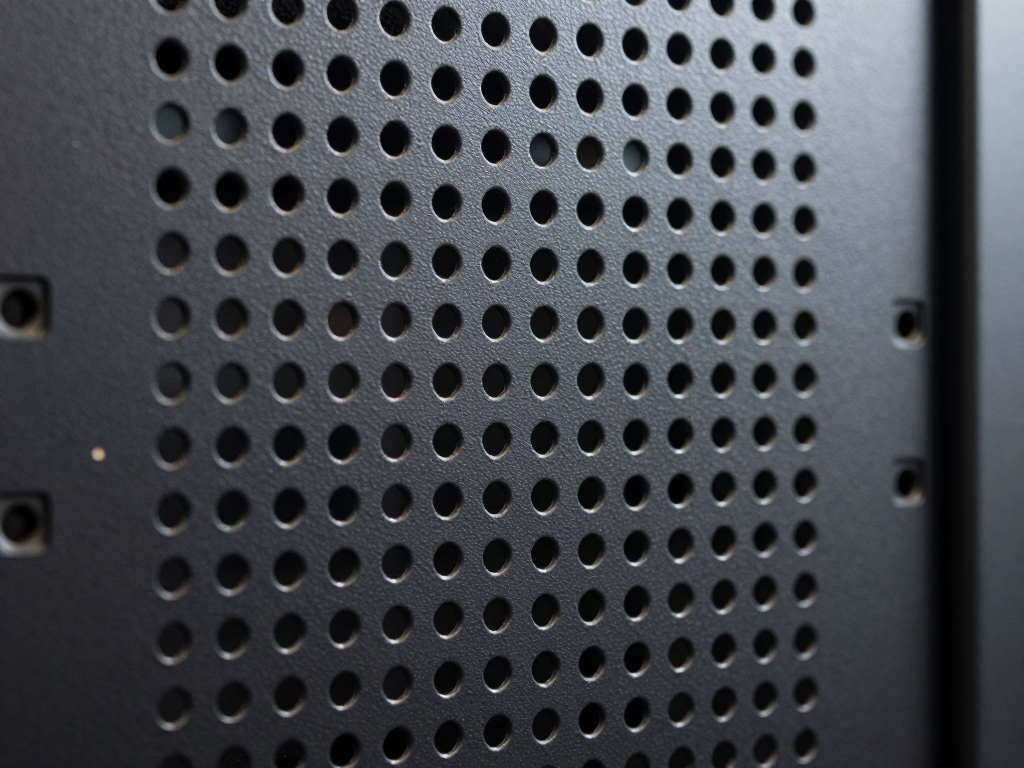
- Formability for perforation and bending. Rack doors are heavily perforated (50-80% open area for airflow), rails are punched and bent to complex profiles, and brackets are stamped. The steel must punch cleanly without burr and bend without cracking.
- Finish and corrosion resistance. The rack sits in a controlled but decades-long-service environment; a powder-coat finish over a properly prepared (often pre-galvanized or phosphated) substrate is standard. The coating choice is covered in our galvanizing vs painting vs powder-coat guide.
The grades that satisfy this combination come from the cold-rolled carbon-steel family, with galvanized variants for corrosion-critical or outdoor/edge deployments.
Key mental model: rack steel is not “the cheapest cold-rolled sheet” – it is a flatness-and-gauge-controlled, formable, paintable substrate specified to a standard (EIA-310 geometry, EN 10130 / ASTM A1008 grade). A generic “mild steel sheet” RFQ returns doors that warp and holes that drift; a grade-and-tolerance-specified RFQ returns a rack that assembles.
Steel Grades for Data Center Racks and Cabinets Compared
Here is the side-by-side at the properties a rack OEM or procurement engineer actually specifies against:
| Component | Typical grade | Typical gauge (mm) | Why this grade |
|---|---|---|---|
| Door panels, side panels, top covers (perforated) | SPCC / DC01 / ASTM A1008 CS (cold-rolled carbon steel) | 1.0-2.0 | Best flatness, punchable perforation, clean powder-coat adhesion |
| Vertical rails, mounting flanges (bent profiles) | SPCC / DC01, or SPCC-SD (deep-drawing) for complex bends | 1.5-2.5 | Formable into channel/angle rail profiles, holds hole pitch |
| Frame uprights, base, heavy structural members | Q235 / S235 / A36 structural, or thicker cold-rolled | 2.5-4.0+ | Carries the 1,000-2,000 kg dead load plus seismic |
| Cable trays, ladder, basket | Galvanized steel (GI / EG) per EN 10346 | 1.0-2.5 | Corrosion protection where cables abrade and condensation forms |
| Outdoor / edge cabinet enclosures | Galvanized or Galvalume substrate + powder coat | 1.5-2.5 | Weather resistance for edge / modular data-center deployments |
| EMI shielding panels (shielded cabinets) | Galvanized steel + conductive gasket; sometimes stainless | 1.0-2.0 | Conductive, continuous surface for shielding effectiveness |
Where Each Grade Belongs in the Rack Assembly
A rack or cabinet is a welded and bolted assembly, not a single stamping. The grade and gauge are chosen per component:
- Perforated doors and side panels: thin cold-rolled carbon steel (SPCC/DC01, 1.0-1.5 mm). Cold-rolled gives the flatness and surface finish that lets a high-open-area perforation pattern stay flat and accept powder coat without telegraphing. The cutting route matters – laser or turret-punch; our laser vs plasma vs waterjet guide covers which process suits thin perforated sheet, and the carbon-steel sheet for laser-cutting guide covers the flatness and surface-condition detail that decides whether perforations come out clean.
- Vertical rails and mounting flanges: cold-rolled carbon steel (1.5-2.5 mm) bent into channel or angle profiles. The EIA-310 / IEC 60297 19-inch mounting pitch depends on these rails holding tolerance after bending – so temper and bend-radius control matter.
- Frame uprights, base, and cross-members: a structural carbon steel (Q235/S235/A36) or thicker cold-rolled, sized for the dead load and seismic case. For structural-plate selection logic, our construction steel requirements guide covers the strength-and-section approach.
- Cable trays, ladder, and basket: galvanized steel (hot-dip GI or electro-galvanized EG) for corrosion protection where cables abrade the surface and condensation forms under raised floors. The galvanizing-vs-electro logic in our hot-dip vs electro-galvanized guide decides which.
- Outdoor / edge cabinet enclosures: a galvanized or Galvalume substrate under powder coat, for weather resistance in modular and edge data-center deployments.
The reason a rack BOM spans several grades is that no single grade does all jobs well: a heavy structural steel is too thick and rough for a perforated door, and a thin cold-rolled door-grade sheet is too light for a frame upright. The right RFQ lists the grade and gauge per component.
Flatness, Gauge Tolerance, and the Perforation Problem
Two fabrication realities dominate rack-steel selection:
- Flatness on perforated panels. A door with 60% open-area perforation has almost no residual stiffness, so the incoming sheet must be flat and stress-relieved or the finished door warps. Cold-rolled steel with a special-flatness class (per EN 10131 / ASTM A1008) is the answer; hot-rolled sheet will not hold flatness after perforation. Specify flatness explicitly for any perforated panel.
- Gauge tolerance and hole pitch. Rack mounting holes are on a strict pitch (EIA-310: 1.75 in / 44.45 mm unit, 15.875 mm hole spacing). A gauge swing of +/-0.05 mm on a bent rail changes the hole-line geometry enough to bind a rack unit. Specify tight thickness tolerance (EN 10131) for rails and flanges.
- Punchability and burr. High-perforation panels are turret-punched or laser-cut; the steel must punch cleanly without burr that would interfere with sliding IT equipment or snag cables. Cold-rolled CS grades (SPCC, DC01) punch cleanly; harder grades burr.
- Surface for powder coat. Powder-coat adhesion depends on a clean, phosphated substrate; cold-rolled steel accepts pretreatment and powder coat uniformly. Surface defects telegraph through powder coat – the surface-class clauses that prevent disputes are in our steel coil surface-defects guide, and the roughness basis is in our Ra vs RMS surface-roughness guide.
Practical tip from the engineering desk: if a finished rack door warps after powder-coat bake, the root cause is almost always residual stress in the incoming cold-rolled sheet (not the coating). The fix is to specify a stress-relieved / skin-passed, special-flatness cold-rolled substrate – not a thicker sheet, and not a different coating. Baking just reveals the stress that was already there.
Standards, EMI Shielding, and the 19-Inch Geometry
Three specification topics decide whether a rack-steel order meets the OEM’s drawing:
- EIA-310 / IEC 60297 geometry. The 19-inch rack standard defines panel width (19 in / 482.6 mm), rack-unit height (1U = 1.75 in / 44.45 mm), and mounting-hole pitch. The steel grades and tolerances must hold this geometry after forming and welding – it is non-negotiable for interoperability.
- EMI shielding (shielded cabinets). Cabinets for sensitive or classified equipment require electromagnetic shielding, which means a continuous conductive steel surface, conductive gasketing at door seams, and sometimes a galvanized or stainless substrate. Shielding effectiveness depends on surface continuity and joint design, not just material.
- Standards cross-reference. Rack OEM drawings cite a mix of ASTM (A1008, A36), EN (10130, 10346), JIS (G3141 SPCC), and GB equivalents. Confirming grade equivalence prevents a wrong-substrate shipment; our ASTM vs DIN vs JIS standards guide covers the mapping.
What to Lock in Your RFQ: Grade, Gauge, Flatness, Finish
The most common reason a rack-steel order disappoints is a vague RFQ that leaves flatness and surface class open. Specify all of the following:
- Grade and standard per component: e.g., “SPCC per JIS G3141” or “DC01 per EN 10130” for doors/rails; “Q235/S235 per GB/EN” or “A36 per ASTM” for frame uprights; “DX51D+Z galvanized per EN 10346” for cable trays. Do not write “mild steel sheet” alone.
- Gauge (thickness) and tolerance: nominal thickness with EN 10131 / ASTM A1008 tolerance. Rack steel runs thin (1.0-2.5 mm for most components), so a +/-0.05 mm swing matters to hole pitch and weld fit-up. Hardness conversions across spec systems are in our HB/HRC/HV hardness guide.
- Flatness class: special flatness (per EN 10131) for perforated doors and panels; standard flatness acceptable for formed rails.
- Surface class and finish: oiled or dry, free of defects that would telegraph through powder coat; surface roughness matched to the powder-coat pretreatment. For raw substrate surface control, the surface-defects guide and roughness guide give the clauses.
- Coating spec (if pre-coated substrate): for outdoor/edge cabinets, specify galvanized or Galvalume substrate + powder coat, with coating weight; the coating-decision logic is in our galvanizing vs painting vs powder guide.
- Width, coil ID, and cut length: width with tolerance, 508 mm ID for stamping lines, cut-to-length sheets for cabinet panels.
- Standard and MTC: EN 10204 3.1 MTC with substrate chemistry and mechanicals per heat; 3.2 third-party witnessed certification for hyperscale / project-critical rack programs. Reading the certificate is covered in our MTC guide.
For the RFQ structure, the quote-request template guide gives the spec format (grade, gauge, flatness, size, qty, Incoterm) that returns a clean, comparable quotation, and the quality inspection checklist covers the receipt-inspection points (flatness, gauge, surface, certificate match) that catch a wrong-grade or warped shipment before it reaches the stamping line.
How Yihang Metal Supplies Steel for Data Center Racks and Cabinets
We supply the full rack-steel range – cold-rolled carbon steel for doors, rails, and panels; structural carbon steel for frames; galvanized steel for cable trays and outdoor enclosures – so you can buy the correct grade and gauge per component in one RFQ. Here is what a Yihang Metal rack-steel quotation includes as standard:
- Grade range per EN 10130 / JIS G3141 / ASTM A1008 (SPCC, DC01, DC04 for doors and rails), structural Q235/S235/A36 for frames, and galvanized DX51D+Z / EG per EN 10346 for cable trays and edge-cabinet enclosures.
- Special flatness cold-rolled sheet for perforated doors and panels, with tight EN 10131 gauge tolerance for hole-pitch-critical rails.
- EN 10204 3.1 MTC with chemistry and mechanicals (yield, UTS, elongation) per heat, and 3.2 third-party witnessed certificates for hyperscale / project-critical programs.
- Custom widths, coil IDs (508 mm), cut-to-length sheets, and surface classes for high-speed stamping and turret-punch lines, with surface matched to powder-coat pretreatment.
- Sea-worthy, moisture-barrier export packing – cold-rolled rack steel rusts in transit if exposed, so packing and surface protection matter; see our export-packing checklist for the standard we apply.
Because we ship the full grade range side by side, we can also give you a like-for-like cost comparison at the exact gauge and flatness class each rack component needs – so your rack BOM is driven by the EIA-310 geometry and the load case, not by which single grade a one-product mill wants to push.
Not sure which steel grades and gauges to specify for your data center racks or cabinets? Tell us the component (door, rail, frame, cable tray, edge enclosure), the rack standard (EIA-310 / IEC 60297), the perforation pattern and open area, and the finish route (powder coat, pre-galvanized). The team at Yihang Metal will recommend the grade, gauge, flatness class, and tolerance that gives you a rack that assembles cleanly and holds geometry at the lowest cost – and back it with full EN 10204 documentation. Send us your specifications today for a quoted price within 24 hours.