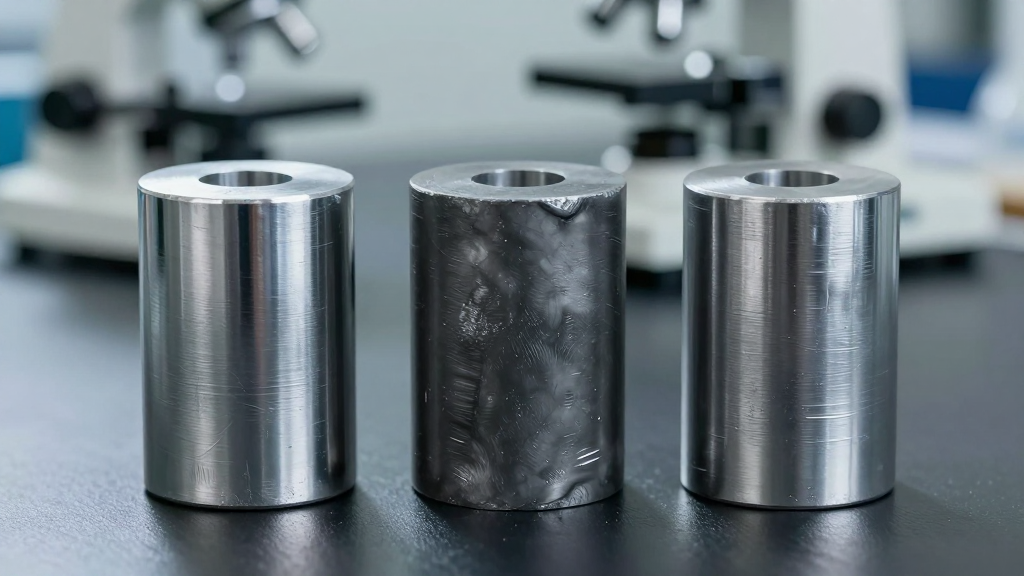
If you are specifying steel and the RFQ says only “mild steel” – or worse, the buyer and supplier each mean something different by it – you are already on the path to a wrong-grade shipment. Mild steel, carbon steel, and alloy steel are not three competing products; they are three nested categories defined by chemistry, and the difference between them decides whether the part welds, hardens, wears, or fails. A “mild steel” bar and a “4140 alloy steel” bar can look identical on a rack, but one will not harden in a quench and the other will – and quoting “mild steel” for a part that needs through-hardening is how a hardened shaft comes back soft.
This guide explains the difference between mild steel, carbon steel, and alloy steel, gives you a chemistry-and-properties comparison, shows which grades sit in each category (A36 / Q235 / 1018 on the mild side; 1045 / 1095 in higher-carbon; 4130 / 4140 / 4340 in alloy), and tells you how to choose by application. We supply all three families from Yihang Metal, so the recommendations come from real RFQs.
The Three Categories, Simply
Steels are classified by what is in them beyond iron:
- Mild steel = low-carbon steel, typically under 0.25% carbon. Very ductile, very weldable, cheap, and the structural workhorse. It does not harden through by heat treatment (only by carburizing the surface). Examples: A36, Q235, S235, AISI 1018, 1020.
- Carbon steel = steel whose properties come mainly from carbon content. Mild steel is a subset (the low-carbon end). The category also includes medium-carbon (0.30-0.60% C, e.g., 1045) and high-carbon (>0.60% C, e.g., 1095) grades, which do harden and are used for wear and edge.
- Alloy steel = steel with significant alloying elements (chromium, molybdenum, nickel, vanadium) added beyond carbon, to raise strength, hardenability, toughness, or corrosion/heat resistance. Examples: 4140, 4130, 4340 (low-alloy); stainless and tool steels are high-alloy.
The nesting matters: all mild steel is carbon steel, but not all carbon steel is mild, and alloy steel is a separate chemistry branch. This is why “mild steel” on an RFQ is imprecise – it tells the supplier “low carbon, weldable” but does not pick a grade, a standard, or a hardenability requirement.
Key mental model: the three names describe carbon content and alloying, not quality or “strength” in general. Mild = low carbon, ductile, non-hardening. Higher carbon = hardenable, less weldable. Alloy = added elements for hardenability/toughness/strength beyond what carbon alone gives. Pick by what the part must do (weld, harden, wear, carry load), not by the category name.
Mild vs Carbon vs Alloy: Compared
Here is the side-by-side at the properties a buyer actually specifies against:
| Property | Mild steel (low-C) | Higher-carbon steel | Alloy steel (low-alloy) |
|---|---|---|---|
| Carbon range | <0.25% | 0.30-1.0%+ | 0.20-0.55% + alloys |
| Example grades | A36, Q235, 1018, 1020 | 1045, 1095 | 4130, 4140, 4340 |
| Weldability | Excellent | Fair to poor (needs preheat) | Fair (needs preheat/procedure) |
| Through-hardenability | None (case-harden only) | Yes (shallow at low C, deeper at high C) | Yes (deep, due to alloys) |
| Ductility / formability | Highest | Lower as C rises | Moderate |
| Typical use | Structural, plate, sheet, tube | Wear parts, edges, springs | Shafts, gears, high-strength parts |
| Cost | Lowest | Low-medium | Higher |
Read the table two ways. First, as carbon rises (mild to high-carbon), strength and hardenability rise but weldability and ductility fall – the classic trade-off. Second, alloy steel adds hardenability and toughness without simply piling on carbon, which is why a 4140 shaft can be through-hardened and still weldable with procedure, where a plain high-carbon bar of the same strength would be brittle and crack-prone.
Mild Steel: The Structural Workhorse
Mild steel is what most structural plate, sheet, tube, and bar is made from, because it is cheap, weldable, and ductile enough to form and bend. The grades buyers meet most:
- A36 (ASTM) – the default North American structural carbon steel; yield 250 MPa.
- Q235 / Q355 (GB) – Chinese structural grades; Q235 ≈ A36, Q355 is the higher-strength step-up. The choice between them is covered in our A36 vs Q355 guide.
- AISI 1018 / 1020 – low-carbon machinery steel for shafts, pins, and parts that are carburized (case-hardened) rather than through-hardened.
Mild steel is the right choice when the part carries static load, welds, or forms – and the wrong choice when the part must harden, resist wear, or hold an edge. The structural-grade selection logic (when to step from A36 to a higher-strength grade like A572) is in our A36 vs A572 Grade 50 guide, and the substrate question (hot-rolled vs cold-rolled mild steel) is in our cold-rolled vs hot-rolled guide.
Higher-Carbon Steel: When You Need Hardenability and Wear
Once the part must harden, wear, or hold an edge, mild steel is the wrong pick and you move up the carbon range:
- Medium-carbon (e.g., 1045, ~0.45% C) – machinery steel for shafts, gears, and bolts that are heat-treated for strength; harder and stronger than 1018 but less weldable.
- High-carbon (e.g., 1095, ~0.95% C) – used for springs, edged tools, and wear parts; hardenable to high hardness but brittle and difficult to weld.
The spring-steel family (which sits in the carbon/alloy border for spring applications) is covered in our 65Mn vs 60Si2Mn vs SUP9 spring-steel guide, and the hardness-value system that these grades are heat-treated to is in our HB / HRC / HV hardness conversion guide.
Alloy Steel: Strength, Toughness, and Deep Hardenability
Alloy steel adds chromium, molybdenum, nickel, or vanadium to achieve what carbon alone cannot – deep hardenability, high toughness, and high strength after heat treatment:
- 4140 (Cr-Mo, ~0.40% C) – the classic through-hardenable alloy steel for shafts, gears, and high-strength parts; weldable with preheat and procedure.
- 4130 (Cr-Mo, ~0.30% C) – lower-carbon Cr-Mo, widely used in tubing for aerospace and roll cages; more weldable than 4140.
- 4340 (Ni-Cr-Mo) – high-toughness alloy steel for heavily loaded, through-hardened parts; the step up from 4140 when toughness is critical.
The reason alloy steel exists is hardenability: alloying elements let the steel harden through the full section in a quench, where a plain carbon steel of the same carbon level would harden only at the surface. For a thick shaft that must be strong to the core, alloy steel is the answer; for a thin bracket that only needs surface wear resistance, a carburized mild steel or a medium-carbon steel may be enough.
How to Choose by Application
- Structural load, welding, forming -> mild steel (A36, Q235, Q355, 1018).
- Machinery part needing heat-treated strength -> medium-carbon (1045) or alloy (4140) depending on section size and toughness.
- Through-hardened, heavily loaded shaft/gear -> alloy steel (4140, 4340).
- Wear part, edge, or spring -> high-carbon (1095) or a dedicated spring steel.
- Stainless / corrosion resistance -> a stainless grade (a high-alloy branch); the machinable and cutlery sub-families are in our free-machining and cutlery stainless guide.
For the standards mapping (how A36, S235, Q235, 1018, 4140 cross-reference across ASTM, EN, JIS, GB), our ASTM vs DIN vs JIS standards guide covers the equivalence.
Common Mistakes
- Calling everything “mild steel”. “Mild” means low-carbon and non-hardening; using it for a part that must harden or wear guarantees a soft or failed part.
- Specifying a grade that can’t through-harden for a thick section. A plain carbon steel hardens only at the surface of a thick part; use alloy steel for through-hardening.
- Welding high-carbon or alloy steel like mild steel. Higher carbon and alloy content need preheat and qualified procedure; welding them as if they were A36 causes cracking.
- Quoting “carbon steel” without carbon range or grade. Carbon steel spans 0.05% to 1.0%+ carbon – name the grade (e.g., 1045) or the standard, not just “carbon steel”.
- Confusing alloy steel with stainless. Stainless is a high-alloy branch (high chromium for corrosion); low-alloy steels like 4140 are not corrosion-resistant.
What to Lock in Your RFQ
- Grade and standard: e.g., “A36 per ASTM A36”, “1045 per ASTM A108”, “4140 per ASTM A322 / ASTM A331”. Do not write “mild steel” or “carbon steel” alone.
- Carbon range or spec if the grade allows variation, and the heat-treat condition (annealed, Q&T, normalized) for hardenable grades.
- Form and dimensions: bar (round/hex/square), plate, tube, or coil; with size and tolerance.
- Hardness or mechanical requirement for heat-treated parts (target HRC, with the conversion basis in our HB/HRC/HV guide).
- Standard and MTC: EN 10204 3.1 with chemistry (including carbon and alloy content) and mechanicals per heat; reading the certificate is covered in our MTC guide.
For the RFQ structure, the quote-request template guide gives the spec format (grade, condition, size, qty, Incoterm) that returns a comparable quotation.
How Yihang Metal Supplies Mild, Carbon, and Alloy Steel
We supply all three families – mild/structural carbon (A36, Q235, Q355, 1018), higher-carbon (1045, 1095), and low-alloy (4130, 4140, 4340) – in bar, plate, tube, and coil forms. A Yihang Metal quotation includes:
- Grade and standard called out explicitly (with carbon/alloy chemistry on the MTC), so “mild”, “carbon”, and “alloy” are never ambiguous.
- Heat-treat condition (annealed, normalized, Q&T) for hardenable grades, with target mechanicals.
- Full form range – round/hex/square bar, plate, sheet, tube, coil – in standard and custom dimensions.
- EN 10204 3.1 MTC with chemistry (C, Mn, Cr, Mo, Ni, V) and mechanicals per heat, and 3.2 third-party witnessed certificates for project-critical programs.
- Sea-worthy, moisture-barrier export packing – bare carbon and alloy steel rusts in transit; see our export-packing checklist.
Because we ship mild, carbon, and alloy steel side by side, we can give you a like-for-like cost comparison across the category that fits each part – so your grade selection is driven by what the part must do (weld, harden, wear, carry load), not by which single grade a one-product mill wants to push.
Not sure whether your part needs mild, higher-carbon, or alloy steel? Tell us the part (shaft, bracket, gear, wear plate, spring, structural member), the load and heat-treat requirement (welded? hardened? target HRC?), and the service environment. The team at Yihang Metal will recommend the correct grade, standard, and heat-treat condition that meets the functional requirement at the lowest cost – and back it with full EN 10204 documentation. Send us your specifications today for a quoted price within 24 hours.